
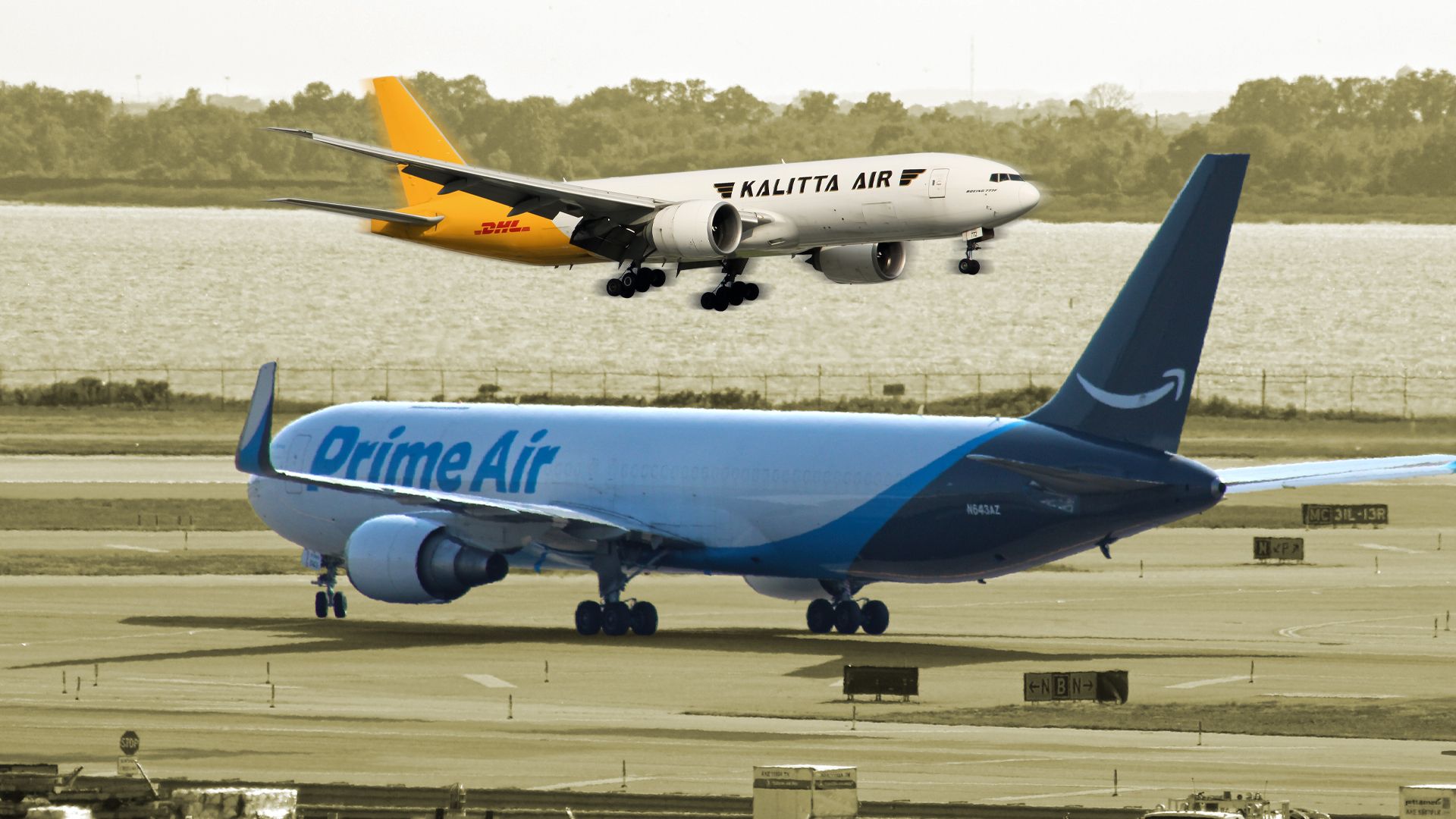
In the competitive air cargo market, the choice of aircraft can significantly impact operational efficiency and profitability. Two prominent players in this arena are the Boeing 767 and 777 freighters, both recognized for their reliability and adaptability. While they may seem similar at first glance, these aircraft embody distinct philosophies of flight and serve different operational needs.
Design and Operational Distinctions
The Boeing 767 Freighter is designed for versatility and balance, making it an ideal choice for regional and medium-haul freight operations. Introduced in the early 1980s, this aircraft was developed to fill the gap between smaller jets and the larger Boeing 747. The 767 features a twin-aisle fuselage and an efficient wing design, allowing for straightforward loading and maintenance. Both the 767-300F and the Boeing converted freighter (BCF) models can carry approximately 116,000 lb (52 tons) of payload, accommodating up to 24 standard pallets on the main deck.
This aircraft has become a staple for companies like FedEx, UPS, and DHL, thanks to its fuel efficiency and operational flexibility. Its ability to operate from shorter runways makes it especially valuable in areas with limited ground infrastructure. The 767 is often employed in high-frequency networks, where quick turnarounds and reliable service are essential.
In contrast, the Boeing 777 Freighter, which entered service in 2009, represents a significant advancement in cargo aviation. Designed primarily as a dedicated freighter, the 777F incorporates reinforced floor beams and advanced technology to support its impressive payload capacity of 227,000 lb (approximately 103 tons). The aircraft is powered by two General Electric GE90-110B1 engines, which deliver over 110,000 lb of thrust each, allowing it to cover distances of 4,970 NM (approximately 9,200 km) nonstop.
The 777F is tailored for long-haul operations, connecting major global hubs such as Shanghai to Frankfurt and Memphis to Dubai. Its design prioritizes efficiency and endurance, making it a preferred choice for airlines looking to replace older four-engine freighters like the 747-400F.
Economic Considerations and Market Position
When assessing the economics of these freighters, operational costs play a critical role. The 767F offers exceptional cost-per-trip efficiency, particularly suited for express logistics. Its two-crew glass cockpit and twin-engine configuration help lower operational costs, while its quick turnaround times—often under an hour—make it a favorite for overnight delivery services.
Conversely, the 777 Freighter excels in terms of volume and long-distance efficiency. Although its trip costs are higher, the unit cost per ton-mile remains competitive when fully loaded. This efficiency is crucial for large operators such as Qatar Airways Cargo and Lufthansa Cargo, which have integrated the 777F into their fleets to enhance profitability and reduce emissions.
The market position of the 767 Freighter is notable, with over 1,300 aircraft produced or converted to freighter configurations. Boeing plans to continue production into the early 2030s, bolstered by the aircraft’s role in the US Air Force’s KC-46A Pegasus program.
Meanwhile, the 777 Freighter has established itself as a leader in high-capacity, long-range cargo operations since its launch. As of March 2025, Boeing had delivered 43 777F aircraft, reflecting ongoing demand despite the approach of the new 777-8F model. Additionally, the trend of converting passenger aircraft to freighters is gaining momentum, extending the utility of the 777 platform into the next decade.
The environmental impact of air cargo operations is increasingly under scrutiny. The 767F’s smaller size naturally leads to lower fuel consumption and emissions on shorter routes. According to Boeing, it produces around 19% lower emissions per ton-mile compared to older trijet models. The 777F, while larger, remains efficient for long-haul journeys, achieving up to 18% lower fuel burn per ton-mile than four-engine freighters.
Both aircraft comply with the latest International Civil Aviation Organization (ICAO) noise standards and are approved for the use of sustainable aviation fuel (SAF) blends, with operators like FedEx and Qatar Airways already conducting commercial flights using these fuels.
In summary, the Boeing 767 and 777 Freighters serve as complementary assets in the global air cargo market. Their distinct capabilities—one focused on flexibility for regional operations and the other on efficiency for long-haul routes—enable Boeing to maintain its leadership in the freighter segment. As the industry evolves, both aircraft will continue to play crucial roles, adapting to the changing dynamics of global trade and logistics.


