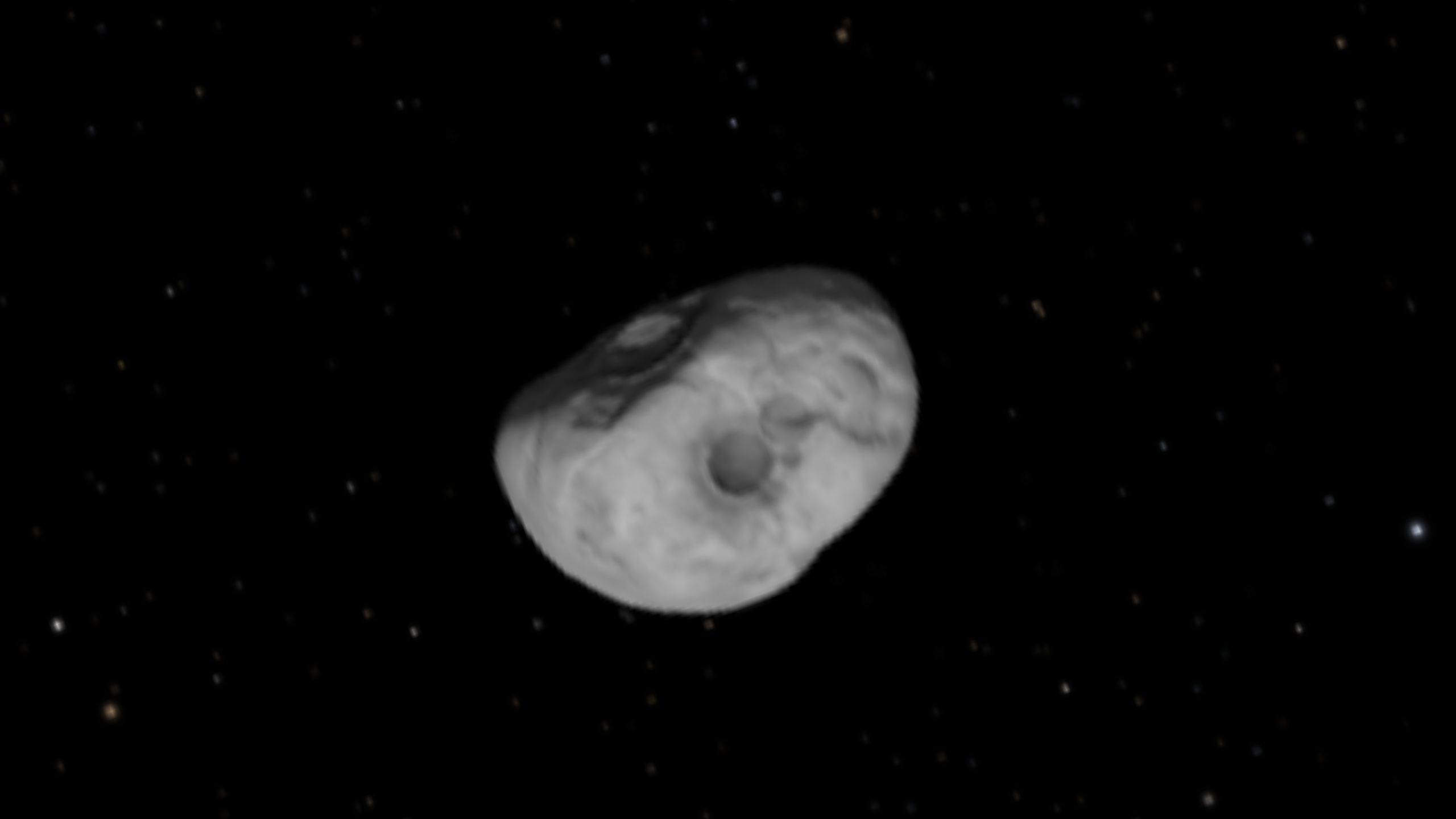
NASA is set to release a series of high-resolution photographs of the interstellar object known as 3I/ATLAS, which could provide significant insights into its nature. Captured by the Mars Reconnaissance Orbiter’s HiRISE camera between October 1 and October 7, 2025, these images are expected to clarify whether 3I/ATLAS is a natural celestial body or something more unusual. The release had been delayed due to a recent US government shutdown that concluded on November 12, 2025, but an agency source confirmed that once cleared, these will be the sharpest images of the object to date.
The upcoming photographs are anticipated to surpass the clarity of previous images taken by the Hubble Space Telescope on July 21, 2025. NASA aims to use this release to provide researchers with a definitive opportunity to examine the object’s structure. Harvard astrophysicist Avi Loeb has expressed considerable interest in 3I/ATLAS due to its distinctive characteristics, including an anti-tail that extends toward the Sun, a behavior not typically observed in standard comets. Loeb argues that these features necessitate detailed examination and believes that clearer images will facilitate a better understanding of the object’s nucleus.
Loeb has been critical of the delay in releasing the images, suggesting that the administration’s handling of scientific data should not have hindered its timely dissemination. He emphasized that the release of data is essential for resolving the true nature of 3I/ATLAS, stating, “Only the release of data, and not bureaucratic handling, will clarify what 3I/ATLAS actually is.” He further noted that the new images will provide a crucial side-view perspective, offering spatial resolution three times better than that of Hubble. Even if the solid nucleus cannot be fully resolved, the brightest pixel in the images could allow researchers to estimate its diameter accurately.
As 3I/ATLAS travelled past Mars in early October, rumors emerged suggesting the object may have fragmented during its close encounter with the Sun. However, observers later confirmed that it remained intact, alleviating concerns that vital scientific information had been lost. The object is now moving quickly towards Jupiter, where it will be tracked by NASA’s Juno spacecraft. Additionally, the European Space Agency’s JUICE mission will monitor its trajectory and brightness as it journeys through the outer solar system. 3I/ATLAS is projected to exit the solar system entirely by March 2026.
NASA expects the forthcoming photographs to help determine whether 3I/ATLAS behaves like a typical large comet or something more atypical. The presence of its anti-tail remains a primary motivation for renewed scrutiny, as its structure does not fit standard models describing the behavior of dust and gas around cometary bodies. Loeb has indicated that measuring the nucleus may provide critical insights into the object’s origin.
The source within NASA has explained that the upcoming images will present the highest resolution ever captured of 3I/ATLAS’s surface features. Analysts intend to utilize this material to compare its brightness patterns against known interstellar samples. The release of these HiRISE images may finally bring clarity to the speculation surrounding 3I/ATLAS since its detection, potentially confirming or refuting claims regarding its artificial construction.
As the scientific community eagerly awaits the release, the central question remains: will the images reveal a natural interstellar body, or could they suggest that 3I/ATLAS is something closer to an alien spacecraft?