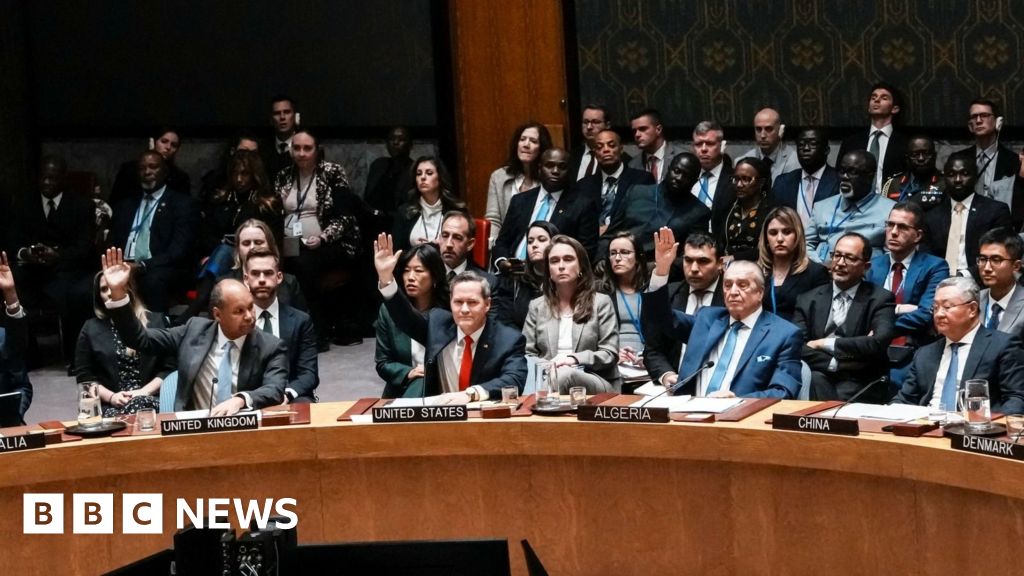
UPDATE: The UN Security Council has just voted to endorse Donald Trump’s controversial 20-point plan for Gaza, marking a significant shift in international policy. This urgent resolution, backed by 13 countries including the UK, France, and Somalia, aims to establish an International Stabilisation Force (ISF) to support peace efforts in the region.
The resolution passed without any votes against, although Russia and China chose to abstain. The ISF is designed to facilitate the “permanent decommissioning of weapons” held by non-state armed groups, particularly targeting Hamas. The group has already rejected the resolution, stating it fails to address Palestinian rights and demands.
The ISF’s responsibilities will include disarming Hamas and ensuring the safety of civilians and humanitarian aid routes. This controversial aspect of the plan has raised alarms about the neutrality of the force. Hamas criticized the initiative, asserting that assigning the ISF such roles transforms it into a biased entity favoring occupation.
In a statement following the vote, Hamas declared,
“Assigning the international force with tasks and roles inside the Gaza Strip, including disarming the resistance, strips it of its neutrality, and turns it into a party to the conflict in favour of the occupation.”
The implications of this resolution are profound, as it indicates a shift in how global powers view the conflict.
The proposal also includes the creation of a newly trained Palestinian police force in Gaza, a significant change from the current situation where the police operate under Hamas’s control. Mike Waltz, the US ambassador to the UN, emphasized the importance of the ISF, stating it would be “tasked with securing the area, supporting the demilitarization of Gaza, dismantling the terrorist infrastructure, removing weapons, and ensuring the safety of Palestinian civilians.”
The initial phase of Trump’s plan, which involves a ceasefire between Israel and Hamas, began on October 10. Waltz described this as a “fragile, fragile first step,” indicating the precarious nature of the current situation. The draft resolution even hints at the potential formation of a Palestinian state, a topic that has historically faced strong resistance from Israel.
As this situation develops, the international community will be closely monitoring the actions of the ISF and the reactions from Hamas and other Palestinian groups. The urgency of this resolution reflects the high stakes involved in the ongoing conflict, as millions of lives are impacted by these decisions.
Stay tuned for updates on this evolving story as the implications of the UN Security Council’s vote unfold, affecting not just Gaza but the broader Middle East landscape.