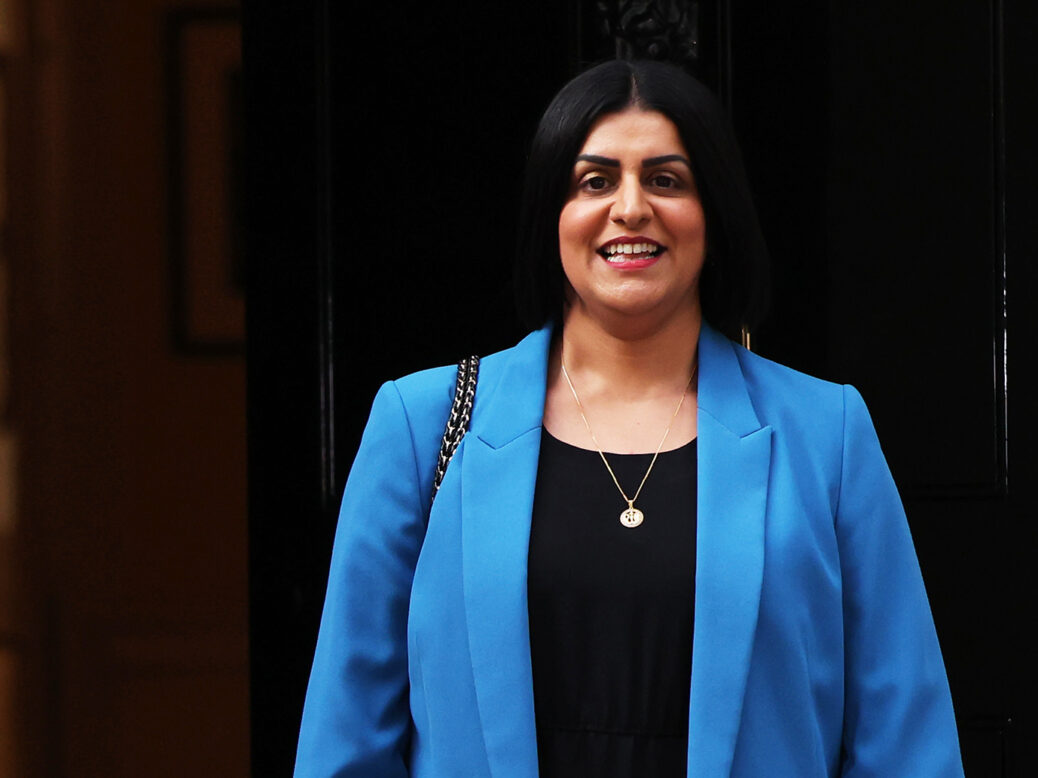
BREAKING: Shabana Mahmood’s new asylum reform package has sent shockwaves through Westminster, igniting urgent debate on immigration in the UK. As the political landscape shifts, Mahmood’s proposals, presented as a moral mission, seek to redefine how Britain approaches asylum seekers amid rising numbers.
JUST ANNOUNCED: Mahmood insists that a country without secure borders is less safe, framing her reforms as essential for national security. The Home Office reported over 50,000 people granted refugee status in 2023, a stark contrast to the 40,000 asylum claims approved over five years during the 1990s. This represents a significant transformation in the asylum landscape.
The proposed reforms come as the UK grapples with a record influx of asylum seekers, many of whom are not the poorest globally but rather individuals from the lower-middle class with the means to travel. The distinction between humanitarian and economic migration is blurring, complicating the asylum application process. Authorities have detected nearly 200,000 small-boat arrivals since 2018, with no signs of the trend reversing.
The recent crises, including the war in Ukraine and repression in Hong Kong, have highlighted the urgent need for protection, but claims are increasingly arising from diverse regions such as India, Turkey, and Syria. This complexity places immense pressure on local communities, affecting housing, healthcare, and social cohesion.
Mahmood’s reforms propose a new class of “semi-permanent” refugees, allowing individuals to live and work in the UK for years but without the security of permanent residency. Critics argue this could lead to long-term limbo for many, stalling integration and heightening social tensions.
IMMEDIATE RELEVANCE: As communities react to these proposals, the anger witnessed during the migrant-hotel protests underscores a growing concern over the impact of rapid population changes. Mahmood’s approach, rooted in the Blue Labour tradition, seeks to balance national security with compassion, emphasizing the need for a fair and workable system.
WHAT’S NEXT: The reforms are set to be debated in Parliament, with widespread implications for the UK’s immigration policies. Mahmood’s insistence on creating a system that is both firm and fair could redefine the future of asylum in Britain. Critics from the left argue that this shift prioritizes enforcement over humanitarian commitments, raising ethical questions about the treatment of asylum seekers.
As Britain stands at a crossroads, the urgency for reform is clear. Mahmood’s proposals represent a pivotal moment, compelling the nation to reconsider its asylum policies in light of modern realities. The dialogue surrounding these reforms will be crucial in shaping the future of immigration in the UK.
Stay tuned for further updates as this story develops.