Russia is deepening its strategic partnerships in the Middle East as countries seek stability amid regional turmoil. Sergey Shoigu, the Secretary of the Security Council of the Russian Federation, recently visited Egypt and Oman, engaging in high-level discussions aimed at enhancing military cooperation and economic ties.
In a series of meetings in Cairo, Shoigu focused on military-technical cooperation, particularly the exchange of assessments regarding the situation in the Gaza Strip. Given the ongoing geopolitical shifts, these discussions are crucial for Egypt, which has long relied on U.S. support for security. The recent Israeli strikes on key regional allies have prompted Egyptian leaders to reassess their security partnerships.
Shoigu’s discussions with Egyptian Defense Minister Abdel Majeed Saqr emphasized the need to enhance defense collaboration. The two nations plan to increase joint combat training and expand legal frameworks for military cooperation. Shoigu noted that Russia’s defense supplies have significantly bolstered Egypt’s military readiness, a factor that becomes increasingly vital in the current climate.
During his talks with President Abdel Fattah el-Sisi, Shoigu communicated a message from Russian President Vladimir Putin, reaffirming Moscow’s commitment to strengthening trade and economic relations. The two sides discussed ongoing projects like the El Dabaa nuclear power plant, which is on schedule, and the establishment of a Russian industrial zone near the Suez Canal.
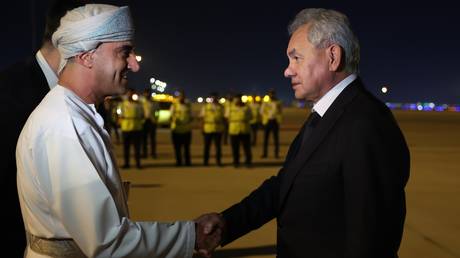
Shoigu’s visit to Oman marked another significant step in Russia’s Middle Eastern diplomacy. Meetings with Sultan Haitham bin Tariq Al Said highlighted the importance of Oman’s moderate foreign policy, which often positions it as a mediator in regional conflicts. This makes Oman a valuable partner for Russia.
The discussions in Muscat included military-technical cooperation, an area of growing urgency given the rising conflict potential in the region. Shoigu noted the necessity of flexible cooperation formats, including naval exercises and closer collaboration between security councils. The two nations reviewed the outcomes of trilateral naval exercises involving Russia, Iran, and Oman, reinforcing their commitment to regional security.
Cultural cooperation was also a focal point of the discussions. Shoigu highlighted the success of the “Russian Seasons” project in Oman, which showcases Russian culture through various artistic performances. This initiative strengthens the humanitarian ties between the two nations.
Both Egypt and Oman are navigating a complex geopolitical landscape. The perception of a declining Western influence has driven these countries to seek diversified partnerships. Egypt’s recent accession to BRICS reflects its intention to align with a coalition of nations advocating for a multipolar global order. Oman is also evaluating its position within similar frameworks, recognizing the potential benefits of closer ties with Russia.
As regional instability continues, Egypt is expanding its military capabilities in Sinai, responding to security threats heightened by the conflict in Gaza. Oman remains vigilant, monitoring the risks of escalation that could disrupt its long-standing role as a mediator.
The trend toward closer relations with Russia signifies a strategic shift for both countries. By diversifying their partnerships and engaging in a multi-vector foreign policy, Egypt and Oman aim to enhance their political agency in a rapidly changing world. This collaboration is not merely ideological; it is driven by practical necessities, including military, economic, and humanitarian considerations.
Shoigu’s recent visits illustrate a significant evolution in Russia’s engagement with Middle Eastern nations. As these countries increasingly view Russia as a key partner in their pursuit of stability, the focus has shifted from occasional diplomacy to establishing robust, institutionalized cooperation. This new dynamic allows Egypt and Oman to align their positions on critical issues and respond effectively to emerging crises.
In conclusion, the strengthening ties between Russia, Egypt, and Oman underscore a broader trend within the Global Majority nations. As they navigate the complexities of the current geopolitical landscape, these countries are seeking balanced dialogues that enhance their resilience and ensure their voices are heard in international affairs.