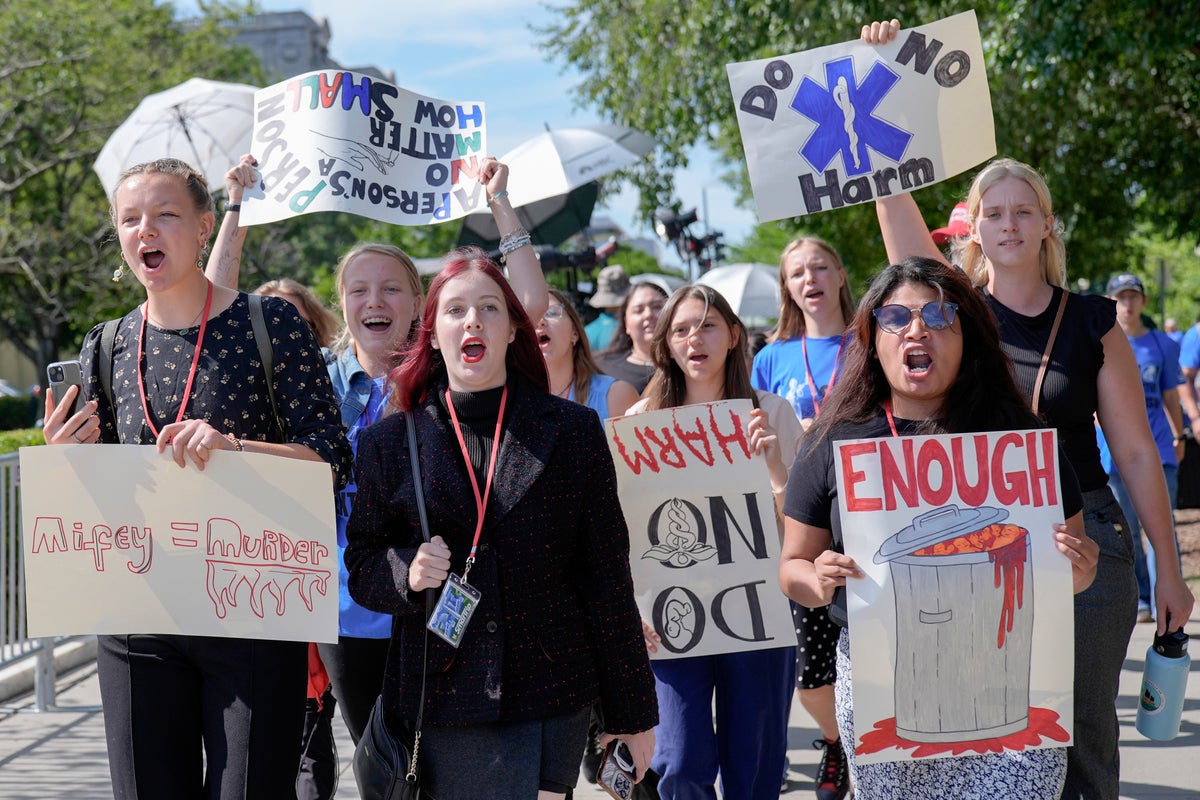
Abortion is once again illegal in North Dakota following a ruling by the state’s Supreme Court. The court’s decision came as the justices could not reach the necessary majority to uphold a lower court’s previous ruling that had invalidated the ban. As a result, performing an abortion is now classified as a felony crime in the state, although patients are shielded from prosecution.
The ruling has significant implications for reproductive health in North Dakota. Doctors found violating the new law could face penalties of up to five years in prison and fines reaching $10,000. The court’s five justices were split on the issue, with three justices asserting that the ban was unconstitutionally vague under the state constitution, while two others maintained that it was constitutional.
According to North Dakota’s constitution, at least four justices must agree for a law to be deemed unconstitutional, a stringent requirement that ultimately led to the upholding of the ban. Republican Attorney General Drew Wrigley expressed support for the ruling, stating, “The Supreme Court has upheld this important pro-life legislation, enacted by the people’s Legislature.”
Janne Myrdal, a Republican state senator and the sponsor of the 2023 legislation that reinstated the ban, expressed her satisfaction with the ruling. She remarked that she was “thrilled and grateful” that two justices recognized the law’s constitutionality for both mothers and unborn children.
The reinstatement of the ban effectively eliminates access to abortion in North Dakota. Previously, a judge had ruled against the ban, but under the prior legislation, abortion was only permitted under specific circumstances, such as life-threatening or health-preserving conditions. The sole abortion provider in North Dakota, the Red River Women’s Clinic, relocated to Moorhead, Minnesota, in 2022 due to the restrictive legal environment.
Justice Daniel Crothers, one of the justices who opposed the ban, argued that the district court’s decision was sound. He highlighted that the vagueness of the law creates confusion about the circumstances under which an abortion may be performed to protect the mother’s health. Crothers noted, “After striking this invalid provision, the remaining portions of the law would be inoperable.”
Under the new law, abortions are prohibited except in cases of rape or incest within the first six weeks of pregnancy, a timeframe that often elapses before many women realize they are pregnant. Additionally, the law allows abortions only when necessary to save the mother’s life or prevent a serious health risk.
North Dakota joins 12 other states that have enacted bans on abortion at all stages of pregnancy, while another four states restrict the procedure at or around six weeks of gestation. The previous ruling by Judge Bruce Romanick had invalidated the ban, which was passed by the state legislature in 2023, following the U.S. Supreme Court’s decision to overturn Roe v. Wade.
The Center for Reproductive Rights and several physicians had challenged the legality of the ban, and the state subsequently appealed the 2024 ruling. Both the judge and the Supreme Court declined to grant the state’s requests to keep the abortion ban in effect during the appeal process. These decisions allowed patients facing complications in their pregnancies to seek necessary care without fear of legal repercussions.
As North Dakota moves forward with this ban, the implications for women’s health and reproductive rights in the state remain deeply contentious. The ruling reflects an ongoing national debate over abortion rights, with states increasingly determining their own policies in the wake of federal changes.