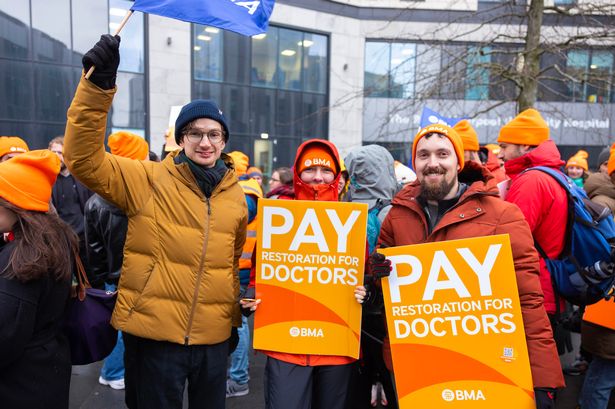
UPDATE: A significant strike by resident doctors is underway, impacting hospitals across England, including Liverpool, from November 14 to November 19, 2023. This action has left an average of 17,236 doctors absent each day, raising urgent concerns about patient care during a critical time of year.
The resident doctors, previously known as junior doctors, are demanding a 26% pay increase to counteract the erosion of their earnings due to inflation. The British Medical Association (BMA) has voiced strong opposition to the government’s claims that a 29% pay settlement over the last three years was sufficient to resolve previous disputes. Health Secretary Wes Streeting criticized the BMA for refusing to present the government’s last proposal— which included more training opportunities and career advancements— to its members for a vote.
As the strike unfolds, the NHS has warned of significant service disruptions. The timing coincides with increased demand for urgent and emergency care, exacerbated by winter pressures. Despite the strike, the NHS reported that over 95% of planned care proceeded, with more than 850,000 patients receiving elective care during this period, surpassing activity levels seen during a previous strike in July.
Sir James Mackey, NHS chief executive, has urged the BMA to re-engage in negotiations, emphasizing that continued strike action is detrimental to both patients and healthcare staff. He stated, “This is bad for patients, bad for staff, and bad for the NHS.”
In response, Dr. Jack Fletcher, chair of the BMA’s resident doctors committee, indicated a willingness to reach a deal post-strike if the government addresses critical issues surrounding jobs and pay. He highlighted the urgent need for measures to tackle the “absurd situation” of insufficient training posts that have left many UK-trained doctors unemployed. He advocated for a pay increase that translates to “a pound an hour, in today’s money, extra each year for a first-year resident doctor,” with a commitment locked in for the coming years.
The urgency of this strike cannot be overstated as it directly impacts healthcare delivery at a time when hospitals are already under strain. The potential fallout from this prolonged dispute could have lasting effects on the NHS workforce and patient care standards across the country.
As developments continue, all eyes are on the BMA and the government to see if a resolution can be achieved before further strikes are necessary. The healthcare community and patients alike are hoping for a swift resolution to this escalating situation.