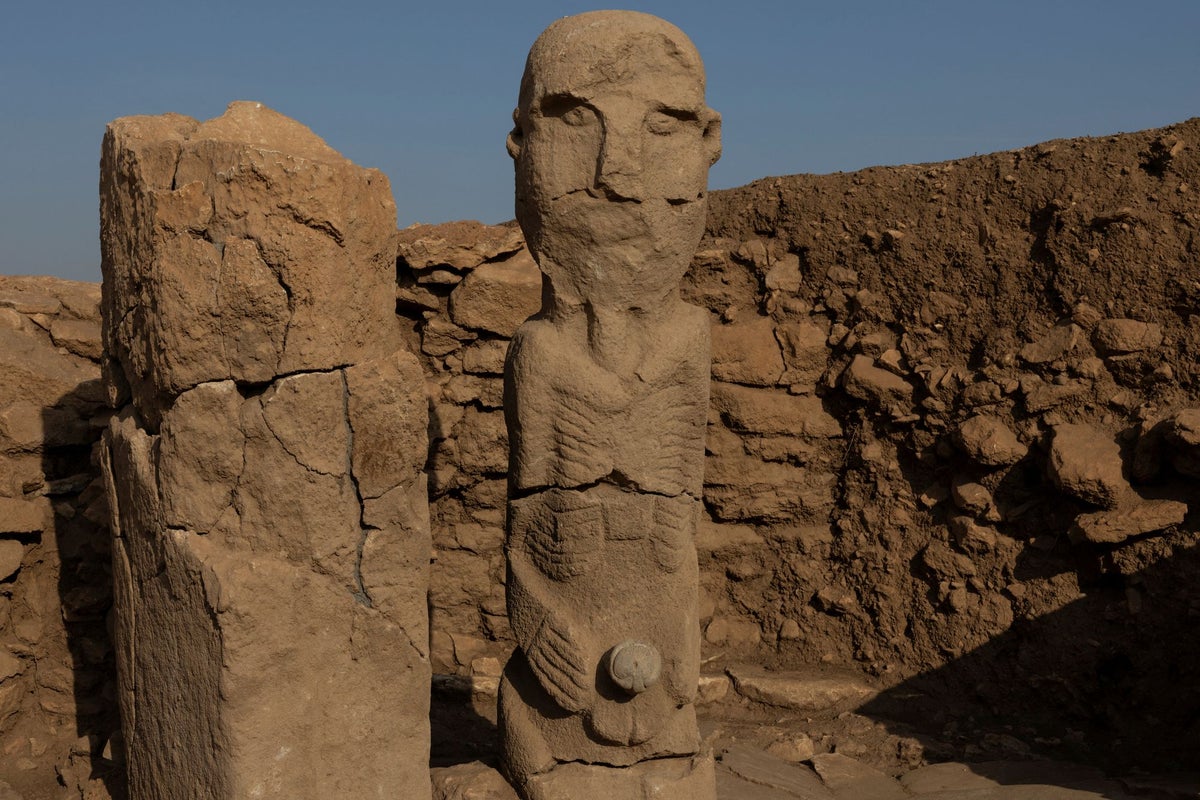
A remarkable collection of archaeological discoveries in southeast Turkey is reshaping the narrative of prehistoric human history, particularly the transition from nomadic hunter-gatherers to settled societies. These findings, which include a striking statue with a facial expression resembling that of a deceased individual, have been uncovered at the UNESCO World Heritage Sites of Gobeklitepe and Karahantepe in Sanliurfa Province.
Insights into Neolithic Life
Researchers have found approximately 30 artefacts at the sites, including human and animal statues, figurines, vessels, plates, necklaces, and beads. The discoveries are providing new insights into death rituals and symbolic expressions within Neolithic communities. Culture and Tourism Minister Mehmet Nuri Ersoy remarked, “What makes these archaeological sites unique is the way they reshape our knowledge of Neolithic history, as well as the transition to settled life.”
The ongoing project, referred to as the Stone Mounds project, encompasses 12 Neolithic sites in the region, dating back to 9,500 BC. These sites are believed to be among the world’s oldest structures used for communal gatherings and ritual performances. According to Minister Ersoy, Gobeklitepe alone is projected to attract around 800,000 visitors this year, highlighting the growing recognition of its historical significance.
Among the most notable features at Gobeklitepe and Karahantepe are the oval-shaped monumental structures, reaching up to 28 metres in diameter, surrounded by T-shaped limestone pillars. Some of these pillars are believed to represent human figures, adorned with reliefs of various animals. A recent excavation at Karahantepe revealed a T-shaped pillar featuring a human face, marking the first known depiction of such a form on a pillar.
Challenging Previous Assumptions
Excavation leader Necmi Karul noted that the evidence gathered at these sites brings researchers closer to understanding the lives of prehistoric societies. “From nutrition to architecture, from the symbolic world to the rituals, the vast diversity of evidence obtained here brings us incredibly close to prehistoric societies,” he stated. This discovery challenges the long-standing belief that settled life emerged solely as a result of advancements in agriculture and animal husbandry.
Instead, the findings suggest that these communities, while still engaged in hunter-gatherer lifestyles, developed a settled existence that allowed for intricate social structures and cultural production. The implications of these discoveries extend far beyond the immediate region, promising to alter the understanding of human development during a critical period in history.
The archaeological work at Gobeklitepe and Karahantepe continues to attract global attention, as researchers delve deeper into the remnants of these ancient societies. As new artefacts and insights emerge, the story of humanity’s past is being rewritten, offering a more nuanced view of early civilization.