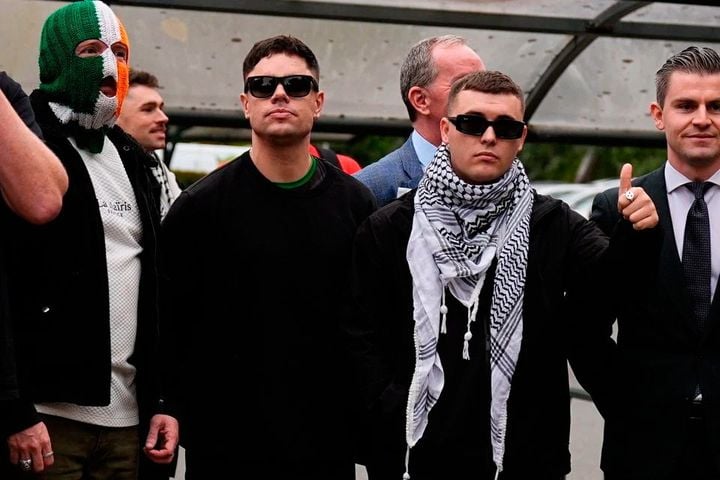
Belfast-based rap trio Kneecap has announced plans to take legal action against Canadian MP Vince Gasparro following controversial remarks regarding their entry into Canada. The group claims that Gasparro’s statements, which suggested they were banned from the country due to concerns about “amplifying political violence,” are both “untrue and malicious.” This legal pursuit comes after the Canadian government distanced itself from Gasparro’s comments, asserting that no official ban exists.
The controversy began in September 2023 when Gasparro, who serves as a parliamentary secretary, made the claims on the social media platform X. His post implied that a decision had been reached to prevent Kneecap from performing in Canada, igniting a significant backlash from the band and their supporters. Kneecap members expressed their disappointment and concern over the impact of such statements on their reputation and touring prospects.
Response from Kneecap and Supporters
Following Gasparro’s remarks, Kneecap members made a public statement asserting their commitment to protecting their rights and image. They emphasized that the Canadian MP’s allegations were unfounded and could potentially harm their career and relationships with fans in Canada. The band, known for their use of the Irish language in their lyrics and their commentary on political issues, has garnered a dedicated following, making the implications of a ban particularly sensitive.
The legal action aims to address the damage caused by Gasparro’s statements. Kneecap’s representatives have indicated that they are prepared to pursue this matter vigorously to ensure that their artistic expression is not stifled by misrepresentation.
Government’s Position and Future Implications
The Canadian government’s response has been to clarify that no formal action has been taken against Kneecap. This distancing from Gasparro’s comments suggests a recognition of the potential fallout from his statements, particularly regarding freedom of expression and cultural representation. The implications of this situation extend beyond Kneecap, as it raises questions about the responsibilities of public officials in communicating about cultural entities.
As Kneecap prepares for their next steps, the outcome of this legal action will likely have significant ramifications for how artists navigate political landscapes, particularly those engaged in discussions related to identity and cultural expression. The case underscores the delicate balance between political commentary and artistic freedom, a conversation that continues to evolve in today’s global environment.
In a world where social media can amplify messages rapidly, the significance of Gasparro’s comments and Kneecap’s response highlights the ongoing challenges faced by artists in the political sphere. Kneecap’s determination to challenge these assertions marks a notable moment in their journey and a pivotal point in the dialogue surrounding artistic freedom and political discourse.