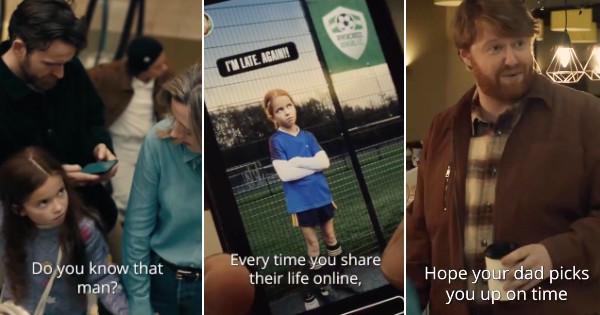
UPDATE: An alarming new advertisement released by Ireland’s Data Protection Commission is capturing widespread attention and urging parents to reconsider how much they share about their children’s lives on social media. The 40-second video, titled “Pause Before You Post,” has gone viral and is sending chills through viewers, highlighting the potential dangers of oversharing.
In the gripping ad, a young girl named Éabha is seen shopping with her parents when they encounter several strangers who seem to know unsettling details about her—like her age, hobbies, and even when she might be left unsupervised. This powerful portrayal serves as a stark reminder of the risks associated with posting personal information online.
The video, which was released on November 26, 2025, has ignited a fierce discussion on social media platforms. Many viewers are expressing their discomfort and concern, with one user tweeting, “This is a brilliant ad that perfectly demonstrates why I do not post about my children online.” Another viewer remarked, “If this ad makes you feel uncomfortable, good, because this is what it looks like.”
The urgency of this message is underscored by growing discussions surrounding child safety in the digital age. With the Online Safety Act recently enacted in the UK and similar initiatives in Australia and Ireland, the need for heightened awareness has never been more critical. As parents grapple with the balance between sharing milestones and protecting their children’s privacy, this advertisement appears to be a timely intervention.
The reactions to the ad have been overwhelmingly supportive, with many users advocating for more responsible online behavior. Comments like “Honestly, we need to do better as parents” and “Finally, a campaign against this” reflect a collective call for action. One concerned viewer shared their experience, highlighting how easy it is to inadvertently expose children to potential threats through seemingly harmless posts.
Digital safety experts stress that sharing identifiable information can lead to significant risks. As one commentator pointed out, even using emojis to obscure a child’s face does little to protect their identity. “If you can identify the parents, name, DOB, and city, you can identify the child,” they noted, reinforcing the message that privacy is paramount.
This advertisement’s viral success signifies a larger movement towards prioritizing children’s safety online. Officials and advocates hope that it will lead parents to critically assess their online sharing habits. “What a brilliant ad, I’ve never posted my son’s face online, but this ad has convinced me to STOP entirely,” tweeted another viewer, illustrating a growing resolve among parents to safeguard their children from digital exposure.
As this discussion continues to unfold, the ad serves as a vital reminder: parents need to think critically about what they share. The message is clear: in a world where social media validation often overshadows real-world safety, it’s time to pause before posting.
As the conversation around child safety and privacy intensifies, viewers are encouraged to watch and share the ad to spread awareness. The stakes are high, and it is imperative that parents unite in ensuring their children’s safety in this increasingly digital landscape.
Stay tuned for more developments on this important issue as the conversation evolves.