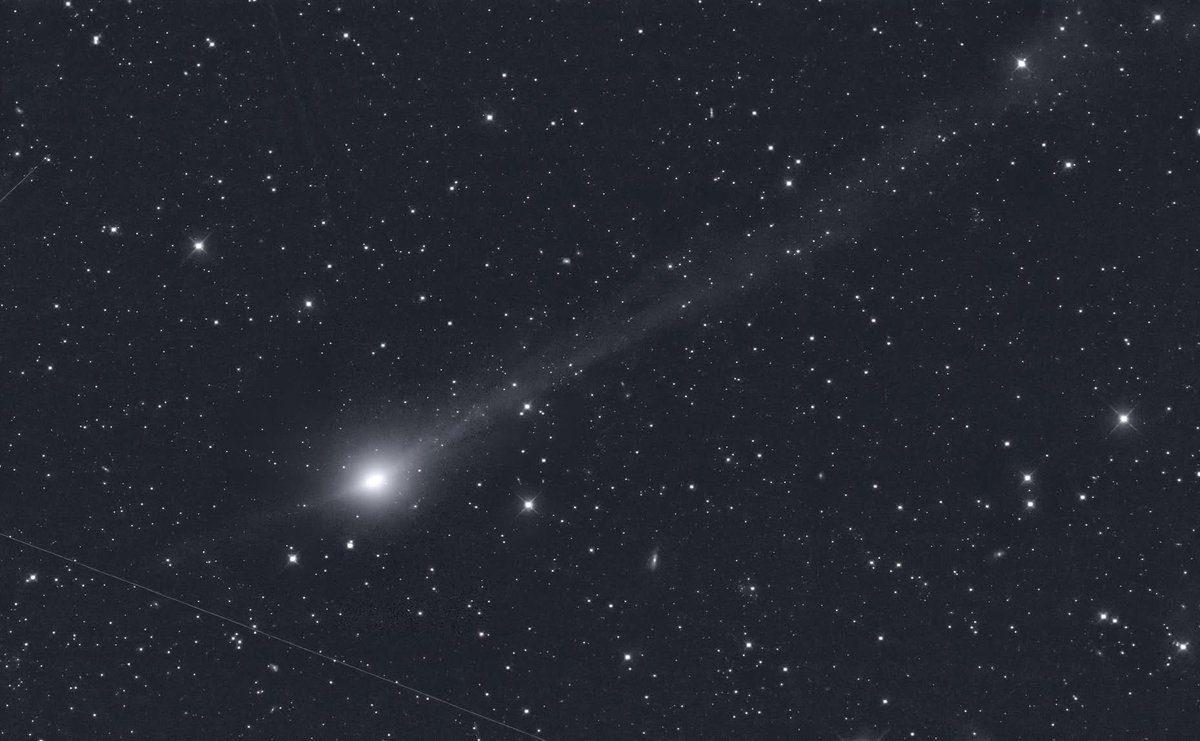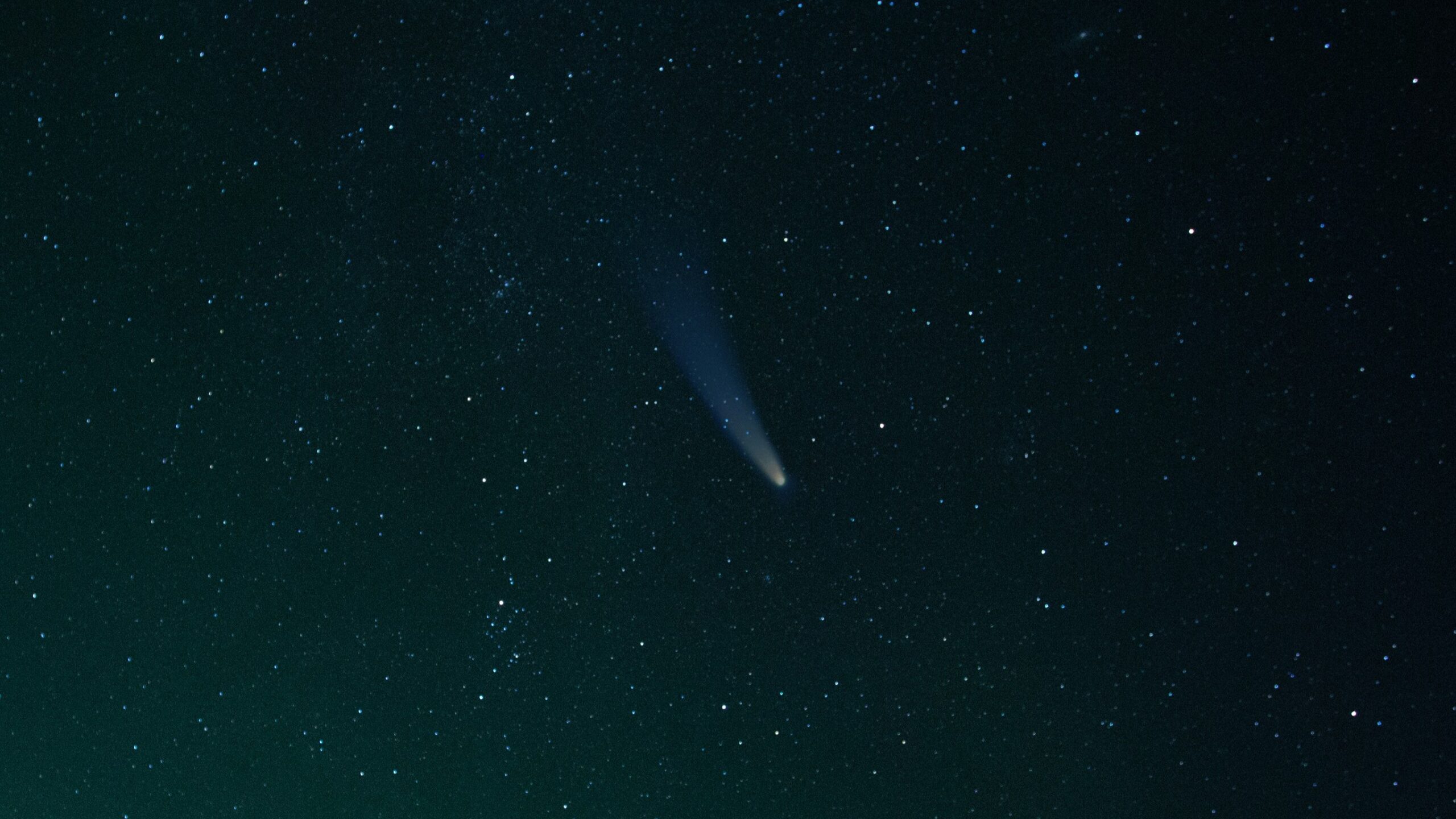
Astronomers have made significant discoveries regarding the interstellar comet, 3I/ATLAS, which is reshaping our understanding of celestial bodies beyond our solar system. This comet, the second confirmed interstellar object to enter our cosmic neighbourhood, is described as a ‘pristine’ rock that has travelled for billions of years, largely untouched by the formation of our own solar system.
Unlike typical comets, 3I/ATLAS is not merely a collection of ice and dust. Recent analyses suggest it possesses a remarkable tensile strength and a notable amount of metal. Through detailed photometric observations—measuring changes in brightness and light reflection—researchers have found strong similarities between this comet’s light signature and that of ancient carbonaceous chondrites, which are carbon-rich meteorites collected by NASA in Antarctica.
As 3I/ATLAS approaches the Sun, it is undergoing significant alterations, including aqueous changes and cryovolcanism, which refers to eruptions of icy materials. This behaviour aligns with that expected of a pristine Trans-Neptunian Object (TNO), indicating a complex interplay between its metal content and water ice. The unique characteristics of 3I/ATLAS also include a distinct coma morphology, which has drawn the attention of researchers.
The presence of metals is vital to understanding the comet’s dynamics. The corrosion of fine-grained metal particles can initiate Fischer-Tropsch reactions, a chemical process analogous to those used to create synthetic fuels on Earth. These reactions produce chemical products within the coma that are rarely observed in typical solar system comets, which usually lack such a high metal fraction.
Interstellar objects like 3I/ATLAS provide rare insights into the physical and chemical processes of distant minor bodies, potentially revealing details about TNOs and comets from the Oort Cloud. The detection of cyanide radicals (CN) surrounding 3I/ATLAS indicates that its nucleus holds typical cometary volatiles, akin to those found in comets native to our solar system. The presence of CN suggests that this comet was formed in the frigid outer regions of its home star system, where nitrogen-rich ice could condense and persist over billions of years.
Observations have also identified nickel-bearing species in the coma of 3I/ATLAS, a feature it shares with the earlier interstellar comet 2I/Borisov. The volatilisation of nickel at such low temperatures points to formation within a metal-rich protoplanetary disk. This disk is the swirling mass of gas and dust from which planets are born, suggesting that 3I/ATLAS incorporated silicate and metallic grains directly into its icy nucleus.
One surprising finding is that 3I/ATLAS appears depleted in carbon-chain molecules, particularly C2 and C3. This chemical signature mirrors that of 2I/Borisov and several carbon-depleted solar system comets. Such depletion raises intriguing questions about its origin; it could indicate formation in a region sparse in carbon-chain organics, or it might reflect prolonged exposure to interstellar radiation processing. Comets traversing interstellar space are subjected to cosmic rays for millions of years, which can break down long organic chains into simpler compounds or eliminate them entirely.
The low abundance of C2 and C3 in 3I/ATLAS supports the theory of extensive cosmic-ray processing, implying that this object has spent vast periods in the void of interstellar space, distant from any star’s protective environment. The similarities in chemical composition between 3I/ATLAS and 2I/Borisov highlight a potential commonality in their chemical processing histories or suggest that they originate from comparable regions in extrasolar systems, where icy materials accrete alongside metal-rich dust grains.
As studies of 3I/ATLAS continue, this interstellar comet offers a unique opportunity to expand our understanding of the building blocks of planetary systems and the conditions that govern their formation. The ongoing exploration of such celestial bodies not only enriches our knowledge of the universe but also challenges existing theories about the origins of comets and their roles in the evolution of planetary systems.