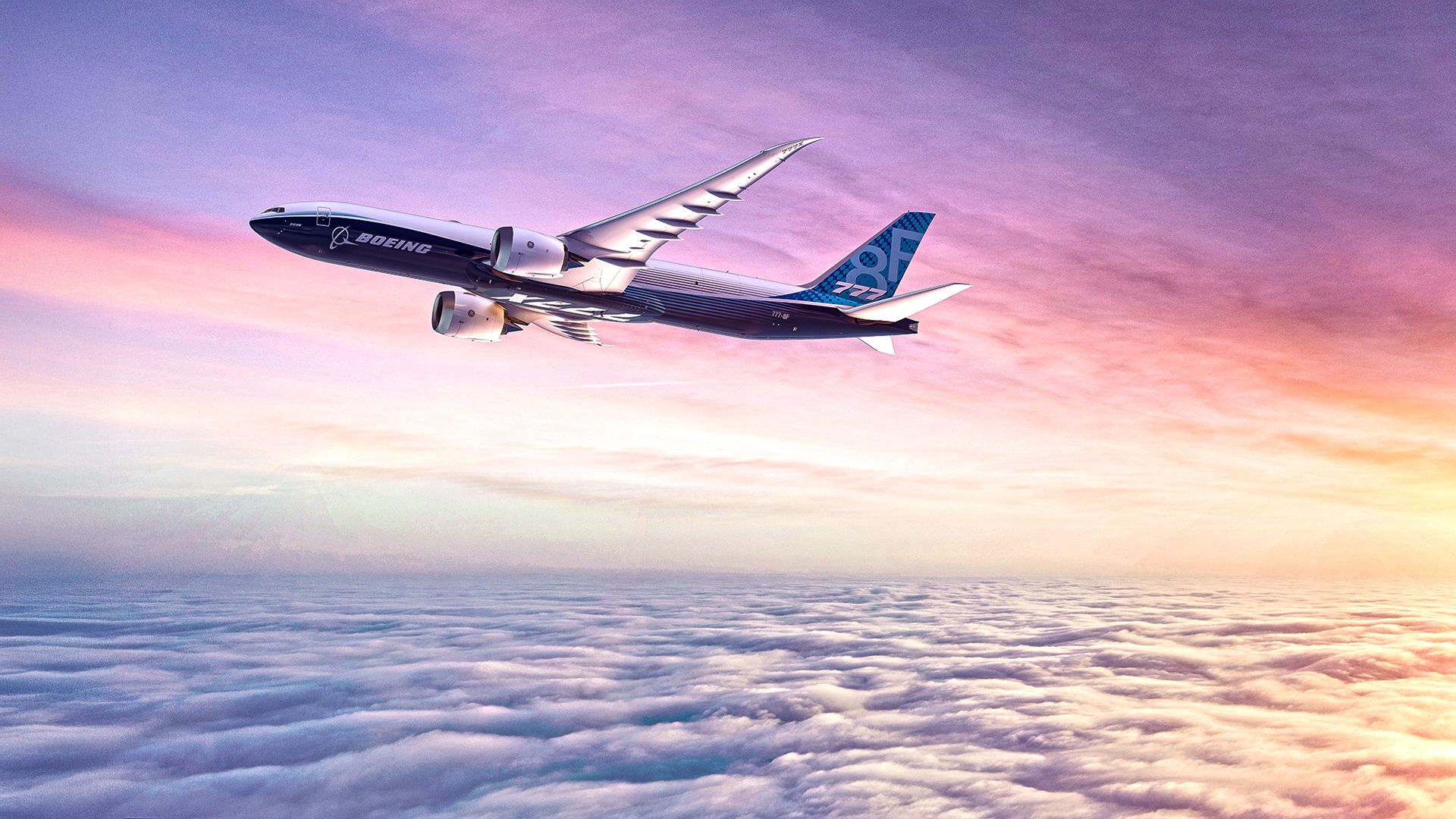
UPDATE: Boeing has officially begun production of the 777-8F freighter at its factory in Everett, Washington, raising urgent concerns for Airbus as the race for dominance in the cargo aircraft market heats up. This significant development, reported just hours ago, marks a critical moment in the ongoing duopoly battle between the two aerospace giants.
The 777-8F is designed to be the “world’s most capable and fuel-efficient freighter,” a claim that Airbus is expected to challenge vigorously. With a maximum payload of 261,000 lbs and a range of 4,550 nautical miles, the new freighter is set to offer capabilities that make it an attractive option for cargo operators, particularly as older models like the Boeing 747-8F are phased out.
Boeing’s construction milestone was celebrated with a ceremonial event where employees witnessed a robotic arm drill the first hole in a wing spar of the 777-8F. However, the aircraft won’t be entering service until 2028, with Qatar Airways confirmed as the launch customer. Certification delays have pushed back the introduction of the 777-9 to 2027, further complicating the timeline.
Airbus is not standing still. The A350F, its next-generation freighter, is in production and expected to hit the market in 2027, positioning itself as a direct competitor to the 777-8F. The A350F boasts a maximum payload of 245,000 lbs and is built with lightweight composite materials, giving it a competitive edge in operational efficiency.
Both companies are feeling the pressure as new regulations loom that could affect production timelines and compliance. The 767-300F, a staple in the freighter market, faces obsolescence due to international regulations, with Boeing planning to cease its production by 2027.
As the dynamics of the cargo aircraft market shift, geopolitical factors add another layer of complexity. With sanctions affecting various countries’ ability to purchase aircraft from both Boeing and Airbus, the landscape is rapidly changing. Notably, Air China Cargo recently ordered six A350 freighters, while Taiwan’s China Airlines placed an order for four 777-8F aircraft.
In a market where operational flexibility is key, the A350F appeals to airlines seeking a reliable freighter based on an established airliner, while the 777-8F offers a larger size for those migrating from the retiring 747 freighters.
The urgency of this competition cannot be overstated. As airlines adjust their fleets and strategies in response to new aircraft, the stakes are high. The future of cargo aviation is being shaped now, and the battle between Boeing and Airbus promises to be fierce.
Stay tuned for more updates as this story develops. The implications of these aircraft on global freight logistics will be significant, affecting supply chains worldwide.