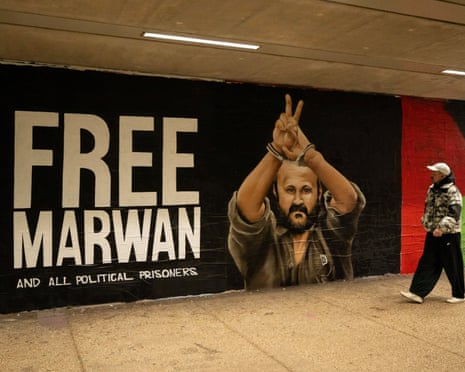
More than 200 prominent cultural figures have issued a call for the release of Marwan Barghouti, a Palestinian leader currently imprisoned in Israel. The signatories of an open letter include renowned writers such as Margaret Atwood, Philip Pullman, Zadie Smith, and Annie Ernaux, along with actors like Sir Ian McKellen, Benedict Cumberbatch, and Tilda Swinton. This diverse coalition also features musicians, directors, and public figures, all advocating for Barghouti’s freedom, whom they view as a unifying force capable of advancing the cause of a Palestinian state.
Barghouti, aged 66, has spent the last 23 years in prison following what many legal experts characterize as a flawed trial. As an elected member of the Palestinian parliament at the time of his arrest, he remains a highly popular figure among Palestinians, consistently ranked as the public’s preferred leader. His continued imprisonment has drawn criticism, particularly given that Israel’s refusal to release him is not based on any security threat he may pose, but rather on his potential to foster unity and momentum towards a two-state solution.
Concerns Over Legal and Political Ramifications
There is rising concern that the Israeli government may pursue new legislation allowing for the death penalty for Palestinian prisoners, potentially implicating Barghouti. The situation is further complicated by a recent United Nations resolution supporting the establishment of an international stabilization force in Gaza, which has not garnered widespread commitment from nations due to fears of entanglement in conflict with Hamas regarding the disarmament of its weapons.
While many major Palestinian human rights organizations have rejected the UN resolution, Barghouti’s release could facilitate a more defining leadership structure for Palestinians. The campaign for his release has drawn comparisons to the global cultural movement that played a crucial role in securing the freedom of Nelson Mandela and dismantling apartheid in South Africa. Mandela himself has stated, “What is happening to Barghouti is the same as what happened to me.”
The cultural leaders involved in the campaign emphasize the significant role that art and voice can play in political change. British musician Brian Eno remarked, “History shows us that cultural voices can shift the course of politics. Just as global solidarity helped free Nelson Mandela, we all have the power to accelerate the day that Marwan Barghouti walks free.” He added that Barghouti’s release would represent a critical turning point in the ongoing struggle for Palestinian rights.
International Appeal for Action
In their statement, the signatories expressed grave concern over Barghouti’s imprisonment, highlighting “his violent mistreatment and denial of legal rights whilst imprisoned.” They called on the international community, particularly the United Nations and world governments, to actively pursue his release.
The political landscape surrounding Barghouti’s situation remains complex. Israeli Prime Minister Benjamin Netanyahu is unlikely to consider his release without substantial pressure from international allies, notably the United States. Former President Donald Trump recently extended an invitation to Netanyahu for a meeting at the White House, which would be his fifth visit since Trump resumed office in January.
The call for Barghouti’s release resonates deeply with those advocating for Palestinian rights, as it reflects a broader struggle for justice and self-determination. The involvement of high-profile cultural figures highlights the potential for international solidarity to effect change, as seen in historical precedents.