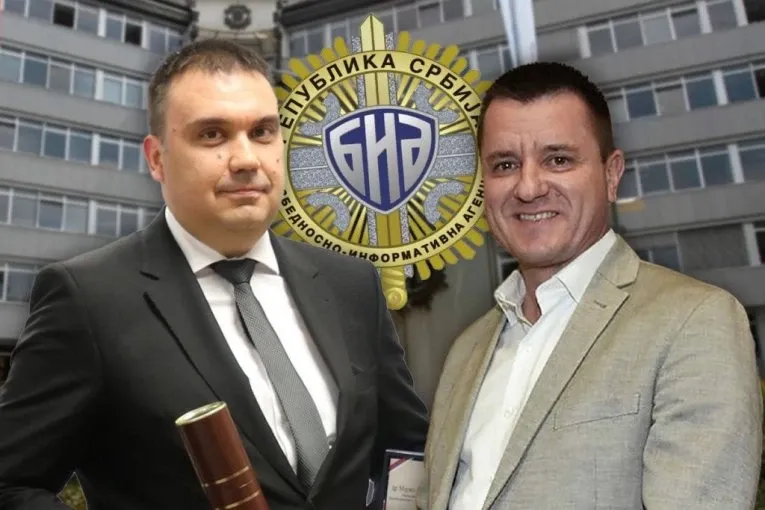
Marko Parezanovic has been removed from his position as the chief of the Security Information Agency (BIA) in Serbia, with Nikola Vasiljevic, the former head of the BIA’s Novi Sad center, appointed as his successor. This significant leadership change comes as the agency navigates several controversies linked to Parezanovic’s tenure.
In a move that reduces Parezanovic’s authority, he has been appointed as an advisor to the BIA director, a role with considerably less influence over the agency’s operations. According to Nova.rs, additional personnel changes within the BIA are anticipated before the end of the year, signaling ongoing restructuring efforts.
Parezanovic has long been associated with President Aleksandar Vucic as one of the agency’s most loyal officials. His name has surfaced in various controversies, particularly regarding alleged questionable actions during his time in office. Most notably, he was mentioned in messages exchanged among members of the crime group led by Darko Saric, relating to the issuance of a lighter sentence for Saric ahead of an appellate court session.
The messages also referenced Milimir Lukic, an appellate court judge, indicating that he was not easily swayed. An enigmatic figure named “Oskar” appeared in this communication, although the identity of “Oskar” remains unclear.
In addition to his controversial connections, Parezanovic has appeared at rallies organized by far-right groups, further complicating his public image. The investigative outlet KRIK reported that Serbian police named Parezanovic and former Minister of Interior Nebojša Stefanovic in a criminal complaint for allegedly assisting Saric’s criminal organization. The investigation revealed that Stefanovic provided two police associates to aid Saric’s group and personally relayed confidential information.
Messages exchanged among criminals indicated that Stefanovic received a watch valued at €17,000 from Saric’s organization. Parezanovic was allegedly a conduit to a powerful official referred to as “Oskar,” adding to the complexity of the case.
In a previous statement, President Vucic expressed uncertainty over whether he was the “Oskar” referenced in the communications, acknowledging the ambiguity surrounding the discussions. “We are not one hundred percent sure (if I am Oskar) although it seemed they were talking about me,” Vucic said, highlighting the convoluted nature of the allegations.
As the BIA undergoes these leadership changes, the implications for Serbia’s security landscape remain to be seen. The agency’s future actions and the outcome of ongoing investigations into past conduct will likely shape public perceptions and political dynamics in the region.