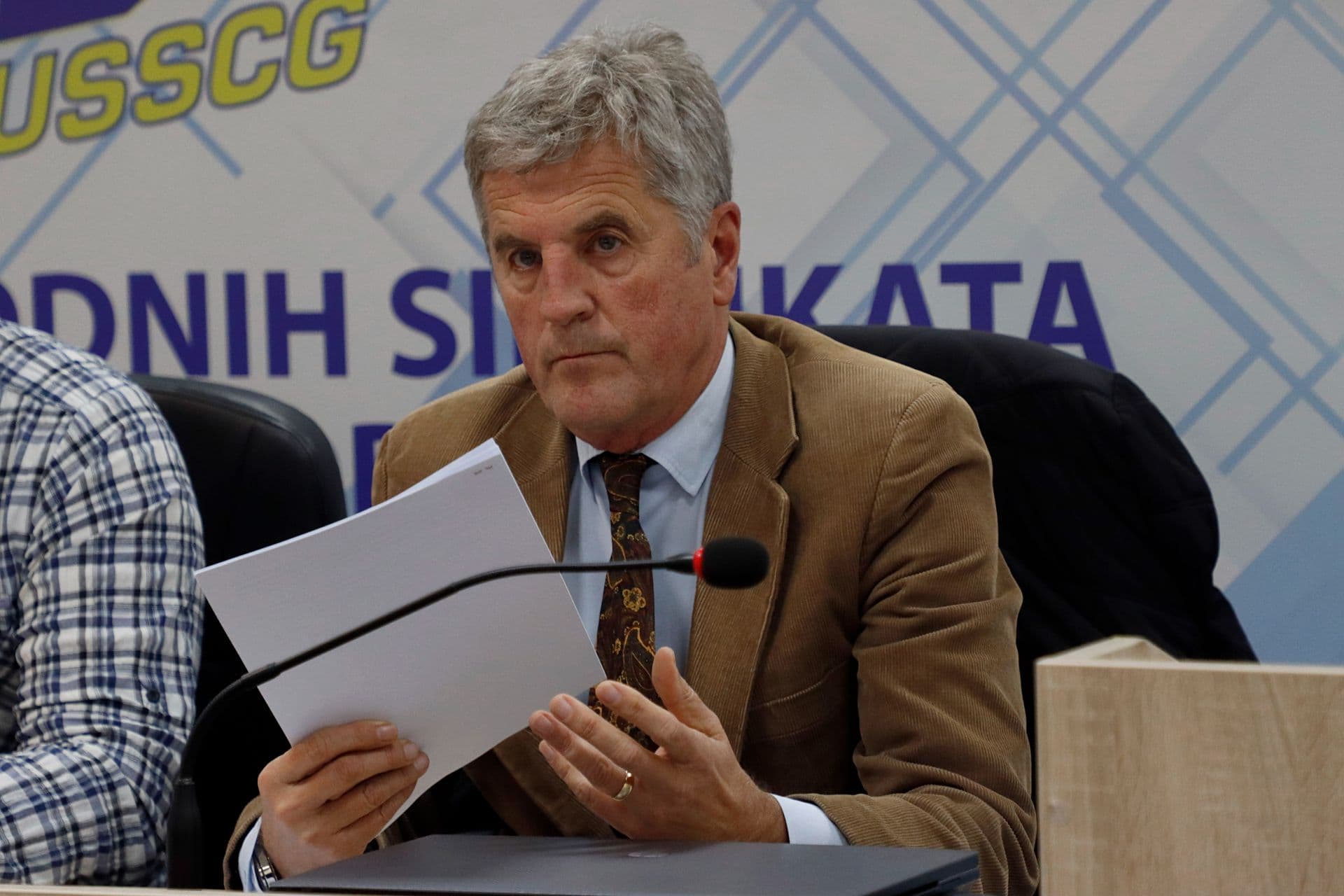
The Union of Free Trade Unions of Montenegro is advocating for significant wage increases, with the Employers’ Union expressing support for a proposed change in the calculation of wage coefficients. General Secretary Srđa Keković announced that the Employers’ Union agreed to adjust the calculation value to €100 gross, emphasizing that both the public and private sectors should be treated equally in wage increase requests.
During a meeting of a working group from the Ministry of Labour, which is focused on amending the General Collective Agreement, discussions commenced on this crucial topic. However, the session was interrupted for further consultations. Keković expressed hope that the arguments presented by the union would be acknowledged by decision-makers, stating, “We believe it is high time for this to happen.”
The Minister of Labour, Employment, and Social Dialogue, Naida Nišić, previously expressed surprise at the union’s initiative to target only the public administration for a 10% salary increase, without addressing the private sector. She indicated that initial approval for such a proposal would not be granted but remained open to discussions on the matter. Nišić highlighted the importance of collaboration, urging that analyses be conducted to reach a compromise.
Keković clarified that the union’s requests extend beyond public sector salaries to include the private sector as well. He acknowledged the Employers’ Union for recognizing the need to maintain living standards, particularly as young people leave the country in search of better opportunities.
The current discussions come against the backdrop of unresolved issues that Keković believes the government has a responsibility to address. He pointed out that the government had failed to submit the draft Budget Law to the Social Council, despite repeated requests from social partners. Keković emphasized that they had not received the law and had unsuccessfully sought a meeting with the Prime Minister to present several pressing issues. He underscored the impact of inflation and the necessity of increasing the coefficient calculation value to sustain the progress made under the “Europe Now” initiative, which aims to align wages with European averages.
“If the coefficient does not increase by January 1, we risk losing the gains made by ‘Europe Now’,” Keković warned. He noted that the World Bank has conditioned the government to halt budget growth and refrain from raising wages, although he asserted that there are funds available within the budget to accommodate salary increases.
Keković identified specific areas where savings could be redirected toward salary increases, estimating that €90 million gross is necessary for public sector salaries. He cited a notable increase in funding for political parties, which has risen from €10 million two years ago to €20 million now, and expressed concern over rising consultancy costs. He stated, “There is a way to save what we are asking for through the budget,” urging that the time has come to raise the coefficient calculation value to €100.
He further criticized the government for failing to engage in meaningful social dialogue, which has led unions to resort to communicating their demands through the media. “The lack of social dialogue, which this government professes to uphold, is evident,” Keković commented. He expressed frustration that the government had not engaged with representative trade unions and that their requests for a meeting were met with a response indicating that discussions about public sector wage increases do not fall under the Prime Minister’s purview.
The Union of Free Trade Unions of Montenegro held a press conference last week, asserting their need for a response from the government regarding their submitted initiatives. They presented an analysis indicating that public sector salaries could be increased by 10%, requiring an allocation of €90 million. They warned that if no compromise is reached, they may resort to alternative methods of communication with the Prime Minister, potentially involving public demonstrations.