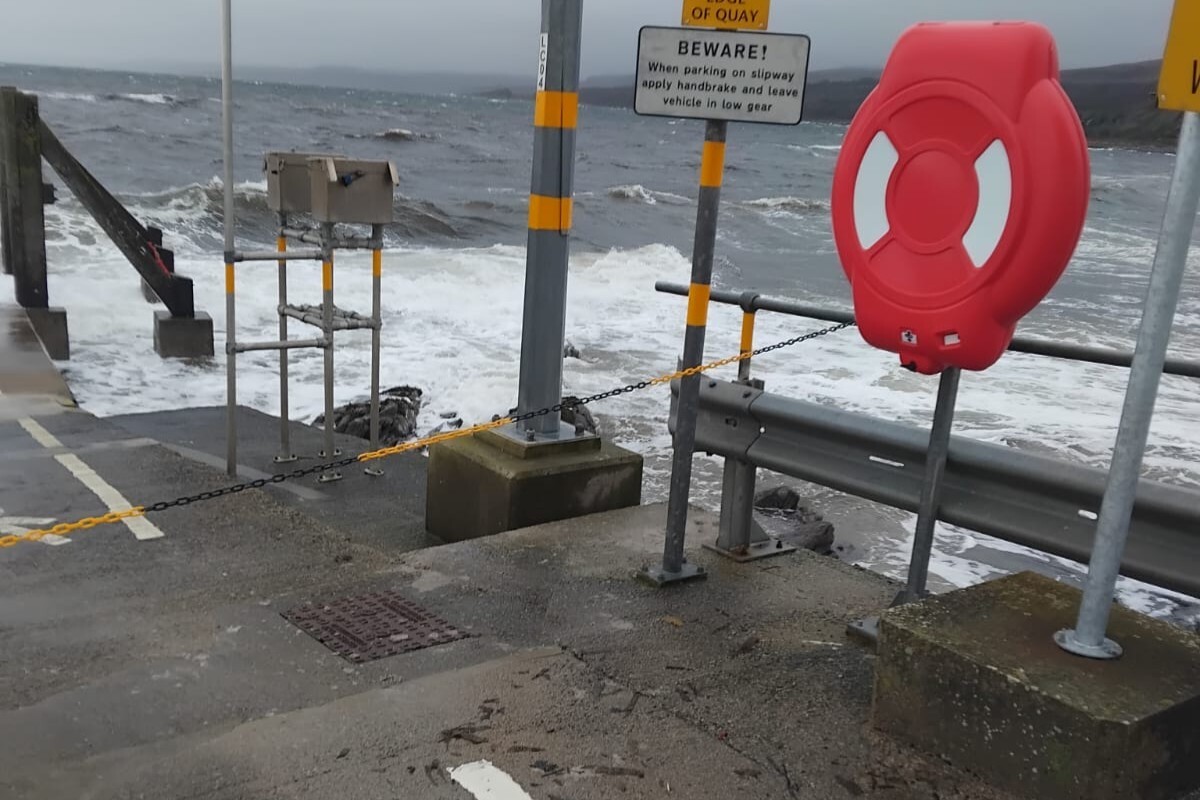
Concerns regarding the ongoing employment of a full-time port marshal at Claonaig have surfaced among members of the Tarbert and Skipness Community Council. The council members are questioning both the necessity and funding of this position, which has sparked discussions about local priorities and resource allocation.
In a recent community meeting, council members raised issues surrounding the port marshal’s role and its relevance to the needs of the local communities in north Kintyre. The position, established to enhance safety and security at the port, has drawn scrutiny, particularly regarding its financial implications for the area. Local residents have expressed mixed feelings about the effectiveness of the port marshal’s duties.
The port marshal’s role, crucial for maintaining order and safety in busy maritime areas, has always been a point of contention in smaller communities. Residents worry that the funds dedicated to this position could be better allocated to other pressing local services, such as infrastructure improvements or community development projects.
In the meeting, several council members highlighted that the current funding for the port marshal position is approximately £30,000 annually, proposing a review to determine if this investment is yielding adequate benefits for the community.
Some council members have suggested that the role could be re-evaluated to ensure it meets the community’s needs more effectively. They pointed out that while safety is a priority, the community must balance its budget with other essential services.
Residents have been vocal about their perspectives. One local fisherman noted, “While having a port marshal is important, we need to ensure we are not overspending on one position at the expense of other local initiatives.” This sentiment reflects a broader concern about how local government decisions impact everyday life in Tarbert and Skipness.
The council is expected to conduct further discussions and assess community feedback before making a final decision regarding the future of the port marshal position. As this situation develops, the outcome could significantly influence local governance and resource allocation in the region.
Moving forward, Tarbert and Skipness Community Council plans to engage more actively with residents to gauge their opinions on the port marshal’s role and overall community needs. The council aims to find a solution that balances safety with financial responsibility, ensuring that the community’s interests are at the forefront of any decision-making processes.
The implications of this discussion extend beyond just the port marshal. The outcome could set a precedent for how local councils prioritize spending in the face of competing demands, impacting various community services in the future.