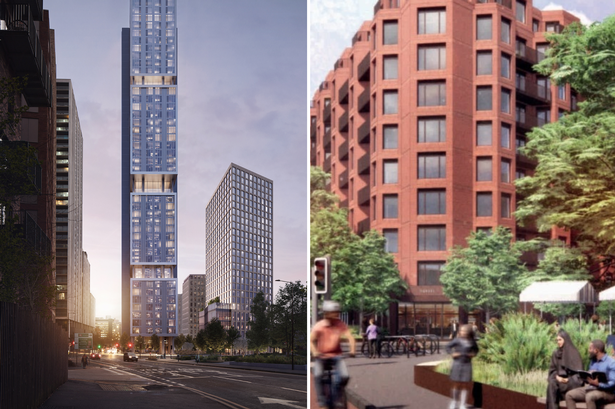
Plans for two controversial developments in Manchester are set to be debated again next week, stirring significant public and political dissent. The proposals include a high-rise project on Great Ancoats Street, featuring two towers of 25 and 50 storeys, and a redevelopment of the Chorlton Cross shopping precinct into residential and commercial spaces.
Criticism of the Great Ancoats Street project reached a peak during the planning committee meeting on November 21. Local councillor Sam Wheeler expressed strong disapproval, describing the towers as “another unimaginative cereal box.” He argued that the proposal disregards established council policies and the strategic regeneration framework. “This breaks the framework SimpsonHaugh wrote by four storeys,” he stated, highlighting his concerns that the buildings exceed the maximum height of 45 storeys set by the guidelines.
The opposition to the proposed 752-home project has been vocal, with community members and local representatives questioning the implications for local infrastructure and the overall aesthetic of the area. Wheeler noted the lack of regard for both councillors and residents in the planning of these skyscrapers, which he deemed inappropriate for the neighborhood.
The Chorlton Cross redevelopment is equally contentious. Developers PJ Livesey aim to construct 262 flats along with a new maker’s yard and retail spaces on the site of the existing 1970s shopping block. Campaigners from the ‘Save Chorlton Centre’ group have raised alarms about the density of the project, with spokesperson Jackie Lindsay asserting that it is “172% denser than the high-density limit for district centres.” She characterized the proposal as creating a “huge gated community” more suited for urban centers rather than neighborhood locales.
The heated discussions at the last meeting nearly led to its suspension due to the passionate outcry from residents concerned about the implications of such developments on their community.
Both developments, initially deferred for further examination, will be revisited on December 18, 2023. Despite the strong opposition, both proposals have been recommended for approval by planning officers, raising questions about the balance between development and community needs.
In addition to these discussions, other items on the agenda include plans for an extension in Abraham Moss and the demolition of a former garage on Seymour Road in Crumpsall to create a community, education, and commercial building. Another noteworthy proposal involves the construction of two artificial football pitches, a multi-use games area, a skate park, and a new pavilion with a café and changing rooms at Wythenshawe Park.
As Manchester continues to grapple with the twin challenges of urban development and community preservation, the outcomes of these planning meetings will have significant implications for the city’s future.