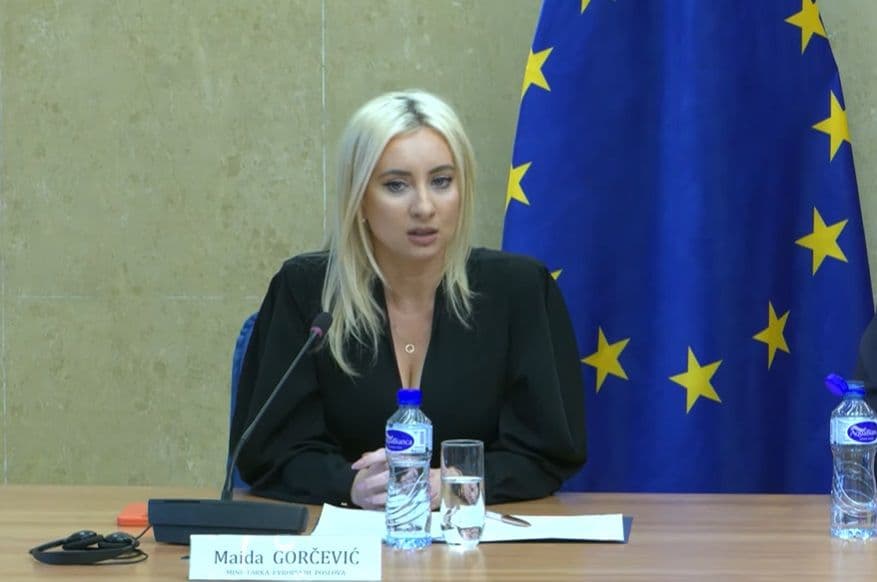
Montenegro has made significant strides in its European Union (EU) integration process, successfully meeting all final criteria for five negotiation chapters. Minister of European Affairs, Maida Gorčević, emphasized that the process involves both technical and political dimensions during a meeting of the Committee for European Integration. Despite this progress, Ivan Vuković indicated that Montenegro may only be able to close three chapters this year due to political hurdles.
According to Gorčević, the Ministry of European Affairs, in collaboration with various sectors, has fulfilled every requirement set for the five chapters under negotiation. She stated, “From our side, the fulfillment exists. The European Commission has confirmed that we have met all obligations; now, only political will from the 27 member states is needed.”
While the European Commission has recognized Montenegro’s compliance, it appears that certain EU member states have raised additional questions. Some nations may be focusing on specific areas such as agriculture, prompting inquiries related to Chapter 11, while others are concerned about the transitional period for Chapter 13, which deals with fisheries. Gorčević noted that all these chapters have been addressed both technically and politically, but ultimately, each country will make its own decision.
The situation has been complicated by France’s recent actions. During a meeting of the Council of the European Union Working Group (COELA), France officially blocked the closure of two negotiation chapters. This move means that Montenegro is likely to conclude discussions on only three out of the expected five chapters by the end of 2023. The chapters facing delays, Chapter 11 on agriculture and rural development, and Chapter 13 on fisheries, remain critical components of Montenegro’s EU accession journey.
The ongoing negotiations highlight the complex interplay between technical compliance and political dynamics within the EU framework. As Montenegro continues to navigate these challenges, the outcome of its EU integration efforts will depend heavily on the diplomatic relations it maintains with member states, particularly France, which holds significant influence in the decision-making process.
With substantial progress already made, Montenegro’s government remains optimistic. Gorčević emphasized the extensive work accomplished on these five chapters, indicating a commitment to further advance the country’s aspirations for EU membership despite the current obstacles. The journey ahead will require both resolve and strategic engagement with EU partners to overcome the political barriers that remain.