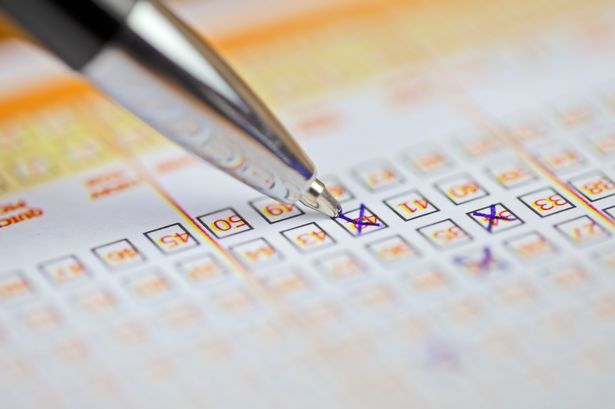
A 91-year-old mathematician from Romania, Stefan Mandel, has shared his remarkable journey of winning the lottery a staggering 14 times. His success stems from a unique method rooted in mathematical principles, allowing him to predict winning numbers more effectively than the average player. The traditional odds of winning a lottery are exceedingly low, often making it a purely random game of chance. Yet, Mandel’s approach transformed this perception into a successful venture.
Born into poverty in 1934, Mandel faced significant challenges in pursuing his passion for mathematics. He worked as an accountant, earning only $88 a month, just enough to make ends meet. Despite his financial constraints, weekends were dedicated to exploring mathematical concepts, particularly the Fibonacci sequence. His life changed dramatically when he saw a lottery drawing on television and began identifying patterns rather than viewing it as mere luck.
According to El Español, Mandel meticulously researched various combinations, ultimately developing a technique he termed “combinatorial condensation.” This method allowed him to predict at least five of the winning numbers, significantly narrowing the combinations from millions to just thousands.
In March 1965, he teamed up with a friend who provided initial capital in return for an 80/20 profit split. Their first foray into the lottery was successful, yielding a total of $20,000. Although Mandel’s share amounted to only $4,000, it validated his mathematical theories.
Years later, Mandel emigrated to Australia and established a lottery investment company, convincing investors of the viability of his method. The principle was simple: if the total cost of the tickets remained below the jackpot value, profits were inevitable. By 1982, his firm had secured 12 Australian jackpots, generating millions and attracting governmental scrutiny.
Relocating to Virginia in the United States in 1989, Mandel was drawn by the state’s lottery system, which featured several exploitable loopholes. The ability to purchase unlimited tickets and a reduced number pool—from 54 to just 44—was instrumental. This adjustment reduced the potential combinations from 25 million to 7 million, enhancing his chances of winning.
In February 1992, the Virginia jackpot soared past $27 million. At this critical juncture, Mandel gathered around 2,500 investors, raising over $9 million to print nearly every possible number combination. This strategic move resulted in winning the jackpot and an additional $6 million in smaller prizes, totaling an astounding $33 million from a $9 million investment.
Mandel stated, “Using maths correctly guarantees a fortune.” His remarkable strategy drew worldwide media attention, but it also piqued the interest of U.S. authorities, including the FBI and CIA. Despite thorough investigations, no illegal activities were found, yet his success prompted reforms in lottery regulations.
These changes included capping individual ticket purchases and restricting large investments, effectively curtailing Mandel’s winning streak. Attempts to replicate his method in other countries, such as Israel and the UK, met with tighter regulations that hindered his efforts.
After retiring to an island in Vanuatu, Mandel ventured into property development. Unfortunately, this new pursuit did not yield the expected results, as he has been embroiled in legal disputes with investors for several years.
Mandel’s six-step formula for lottery success includes several critical steps:
1. Calculate the total number of possible combinations.
2. Identify lotteries where the jackpot exceeds three times the number of combinations.
3. Raise sufficient capital to cover each combination.
4. Print millions of tickets for every combination.
5. Deliver tickets to authorized lottery dealers.
6. Collect winnings and ensure investors are compensated.
Despite the challenges he faced, Mandel’s innovative approach to the lottery remains a fascinating chapter in the intersection of mathematics and chance. His story illustrates the potential of applying mathematical principles to real-world scenarios, even when the odds seem insurmountable.