
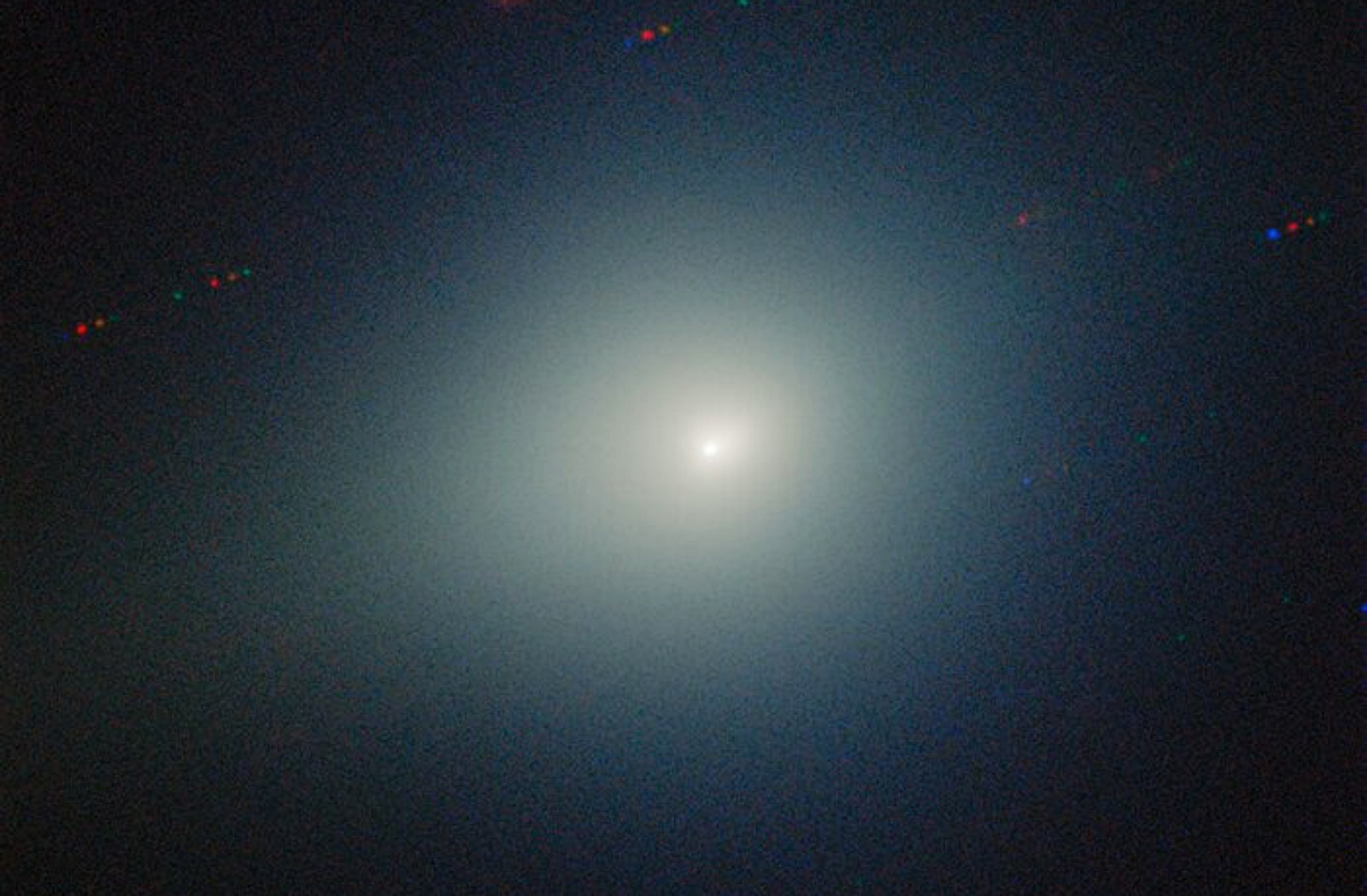
The interstellar object 3I/ATLAS has developed a striking greenish glow as it makes its rapid passage through the inner Solar System. This visual transformation has sparked renewed interest among astronomers and raised questions about its true composition and nature. While the National Aeronautics and Space Administration (NASA) attributes the colour change to typical cometary processes, some scientists argue that the object’s behaviour is unusual and warrants further investigation.
As 3I/ATLAS approaches its closest flyby of Earth, set for December 2023, its peculiar characteristics have led to speculation about whether it might be a spacecraft or something of an extraterrestrial origin. Notably, NASA has conducted an extensive observational campaign, utilizing tools such as the Hubble Space Telescope and the James Webb Space Telescope, to gain a clearer understanding of the object.
The core objective of this mission is to study 3I/ATLAS’s composition, pinpoint its exact location in our Solar System, and determine its distance. Based on current data, NASA maintains that 3I/ATLAS is a typical comet and poses no threat to Earth. Nevertheless, some experts, including Harvard astrophysicist Dr. Avi Loeb, caution against premature conclusions. Dr. Loeb has pointed out that certain anomalies observed in the object’s behaviour could potentially indicate the presence of alien technology.
In a recent post on Medium, Dr. Loeb stated, “If the hypothesis about a technological artefact ends up being correct, then there are two possible implications: first that the intentions of 3I/ATLAS are entirely benign, and second that they are malign.” He emphasized that if the object is indeed a messenger from beyond Earth, humanity should be prepared for either friendly contact or potential implications for security.
The latest observations from Hawaii, made shortly after 3I/ATLAS’s perihelion—the point at which it is closest to the Sun—reveal a significant change. The comet reemerged into the night sky near Zaniah, a well-known star system in the constellation of Virgo. These new images clearly depict the faint greenish glow, prompting further inquiries into its possible alien connections or signals as it nears Earth.
Despite the excitement surrounding these observations, scientists from the Noir Lab assert that the colour shift is not indicative of anything extraterrestrial. They explain that the phenomenon is a result of light emitted from gases evaporating in the comet’s coma as it heats up. Specifically, the glow is largely attributed to diatomic carbon (C2), a reactive molecule that emits light in green wavelengths.
As the closest approach of 3I/ATLAS occurs—approximately 170 million miles from Earth—skywatchers have several celestial events to look forward to in December. These include the peak of the Geminid meteor shower and a conjunction of Jupiter and the Moon.
This intriguing chapter in the study of 3I/ATLAS continues to unfold, blending scientific inquiry with a sense of wonder about the cosmos. The ongoing observations will likely provide more data that could clarify the nature of this enigmatic interstellar visitor.


