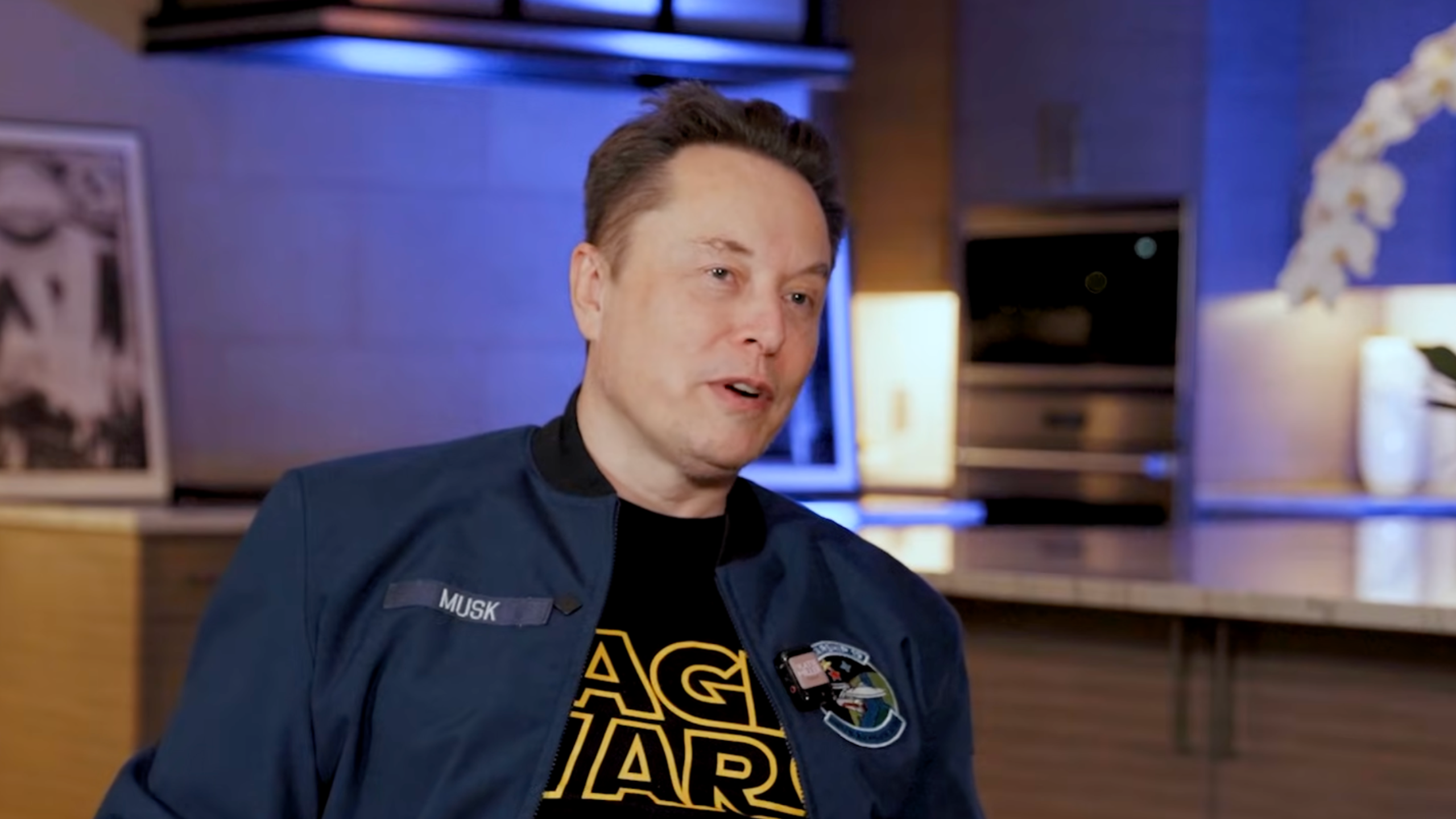
Tech entrepreneur Elon Musk has stirred conversation with his recent comments on the future of money, suggesting it may soon become irrelevant. In reaction to the proposed ‘Trump Accounts’ initiative, Musk asserted that saving money might not be necessary due to the anticipated rise of universal high income. This initiative, supported by billionaire investor Ray Dalio, aims to provide newborns and young Americans with a financial foundation that grows over time.
Musk’s remarks came in a statement on social media, where he noted, “It is certainly a nice gesture of the Dells, but there will be no poverty in the future, and so no need to save money. There will be universal high income.” This perspective diverges significantly from the experiences of many ordinary people who are currently focused on upskilling to secure their employment in an evolving job market.
The Tesla CEO believes that advancements in artificial intelligence (AI) and robotics will ultimately eliminate poverty and lessen the necessity for traditional work. He envisions a world where individuals can choose to work based on personal preference rather than financial necessity. Musk argues that as productivity continues to rise through technological enhancements, money itself could become as insignificant as oxygen, accessible to everyone.
Public reaction to Musk’s statements has been mixed, with many expressing skepticism. Critics have pointed out the apparent disconnect between Musk’s immense wealth—estimated recently at £450 billion ($600 billion)—and his assertion that saving money may soon be obsolete. Some individuals questioned the practicality of producing goods if they can be obtained for free, while others highlighted the shifting standards of what constitutes poverty and wealth in society.
A user commented on social media, stating, “Eliminating poverty is a technological issue at its core. However, the human mind becomes accustomed to things very quickly. Relative poverty may be eliminated, but as long as humans exist, I suspect the poverty mindset will exist forever.” Another user pointed out how the definition of a “poor” quality of life in places like the United States has evolved significantly over the last century.
Despite the skepticism surrounding Musk’s predictions, the discussion surrounding the ‘Trump Accounts’ initiative continues. This program aims to create a financial safety net for young Americans, promoting long-term savings and investment habits from birth. Supporters believe it will provide children with greater financial security as they reach adulthood, helping them cover significant expenses such as college tuition or home purchases.
As Musk’s wealth potentially approaches £475.8 billion ($638 billion) with the anticipated public offering of SpaceX, the debate over his views on money and wealth distribution remains highly relevant. His vision contrasts sharply with the current economic realities faced by millions, who may question the feasibility of a future where financial stability is guaranteed for all.
Ultimately, while Musk’s aspirations for a poverty-free future fueled by technological advancement are ambitious, they also prompt critical discussions about the role of money and work in society. As the world continues to grapple with these issues, the implications for both individual and collective financial practices will be significant.