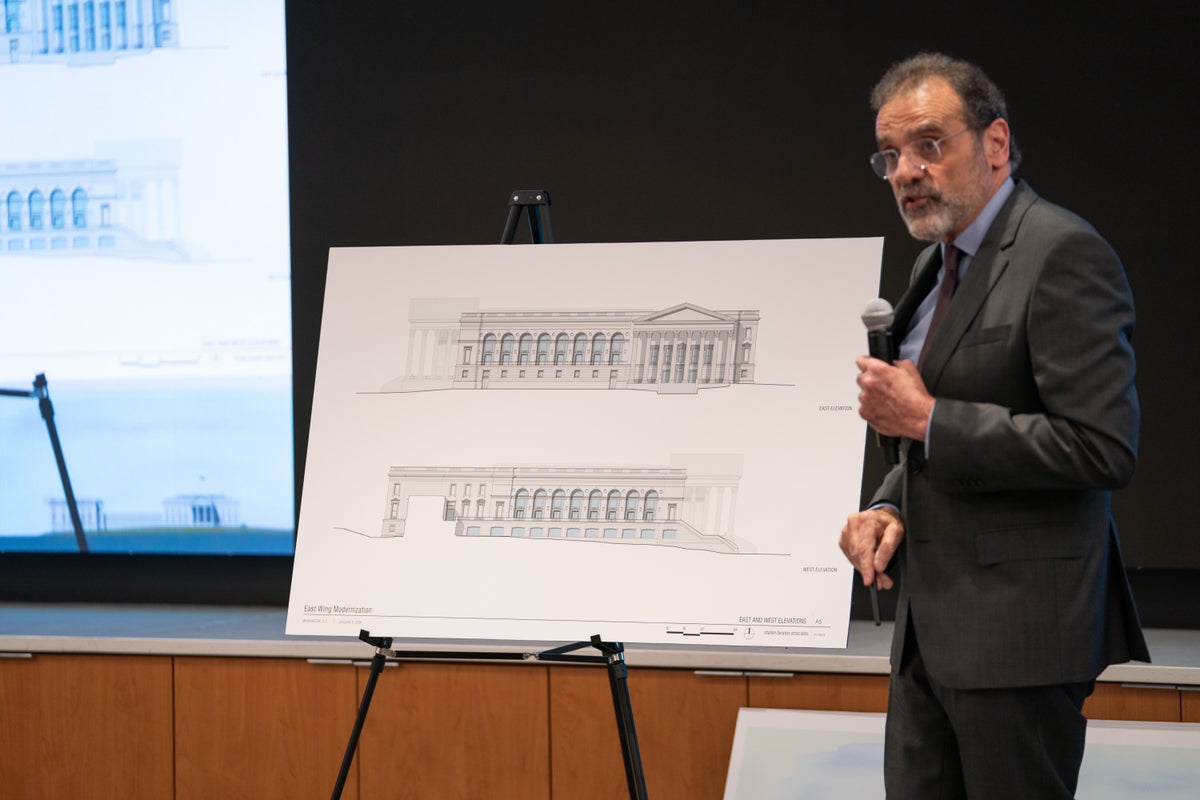
Donald Trump’s proposed ballroom addition, estimated at $400 million, is set to reach the same height as the original White House, according to architect Shalom Baranes. During a presentation to the National Capital Planning Commission on Thursday, Baranes outlined plans for a 22,000 square foot ballroom that will accommodate up to 1,000 guests. The ceilings in the new space are expected to soar to approximately 40 feet.
Concerns have been raised regarding the height of the addition. Phil Mendelson, chairman of the D.C. Council and a member of the commission, expressed apprehension that this new structure could overshadow the historic significance of the White House. He inquired whether the height could be adjusted, to which Baranes responded that reducing the height is “possible.”
This meeting marked the first detailed public presentation of the ballroom project, which is part of a broader renovation plan for the White House’s East Wing. The design also includes new offices for the First Lady, a reconstructed movie theater, a commercial kitchen, improved entrances, and a two-story colonnade that leads back to the main building. Baranes indicated that these improvements would alleviate “ongoing operational stress” on the White House grounds.
Controversy Surrounds the Project
The ballroom initiative has sparked controversy, particularly regarding its financial implications and administrative procedures. The projected cost of the project has more than doubled from earlier estimates, now set at $400 million. The National Trust for Historic Preservation filed a lawsuit late last year, alleging that the Trump administration began construction without first obtaining approval from the planning commission or Congress, which is necessary for any construction on federal park land in the capital. The organization criticized the administration for “breaking the rules first and asking for permission later.”
In December, a judge declined to halt construction while the legal proceedings unfold. The Trump administration has been engaging with commission staff and the Commission of Fine Arts to ensure compliance with planning requirements. The fine arts body is scheduled to convene on January 15, ahead of a crucial vote on the project set for February 19.
Democratic leaders have raised additional concerns, suggesting that the ballroom project could facilitate influence-peddling within the administration. Significant contributions have reportedly come from large corporations with interests in government contracts, including Amazon, Google, and Microsoft.
There are also questions about environmental safety, particularly regarding the handling of asbestos during the rapid demolition of the East Wing in October. The Trump administration has yet to provide information regarding any measures taken to address the carcinogenic material during this process.
With plans to fast-track approval, administration officials are keen to commence construction by April. The National Capital Planning Commission will vote on the project on March 5, determining the future of this contentious addition to the White House complex.