Bret C. Devereaux, an ancient military historian and Teaching Assistant Professor at North Carolina State University, sheds light on the role of technology in warfare through the lens of the renowned historian Thucydides. His analysis, part of the Cogs of War series, emphasizes how Thucydides’ insights remain relevant for modern strategists amid rapid technological advancements.
Thucydides is often regarded as a foundational figure in the study of history, focusing on causal explanations for events rather than attributing them to divine intervention. His historical narrative of the Peloponnesian War serves as a crucial reference for understanding how technology influences military strategy and statecraft. Devereaux explores whether Thucydides viewed technological change as a driving force in historical events or merely a backdrop to the political and moral complexities he documented.
Traditionally, the Peloponnesian War is seen as the culmination of a long-standing Greek military system, primarily characterized by heavy infantry hoplites. This perspective suggests that the war revealed the limitations of a static military approach, leading to a shift towards more complex forms of warfare, such as the use of siege tactics and naval power. However, recent scholarship challenges this view, arguing that the hoplite warfare model was not as established as previously thought.
Scholars like Peter Krentz and Fernando Echeverría contend that the development of hoplite warfare evolved over centuries, starting in the eighth century BCE and continuing through the Persian Wars (492 to 479 BCE). If accepted, this perspective implies that the tactical innovations identified by Thucydides were not entirely new but rather adaptations of a longstanding tradition. This ongoing evolution suggests that Thucydides documented the early signs of change rather than a revolutionary shift in military tactics.
As Thucydides recounts the war, he reflects on the scale and brutality of the conflict. He describes the war as “the greatest shift for the Greeks and some part of the barbarians,” highlighting the profound transformations in warfare’s nature. His accounts of military disasters, such as the Athenian defeat in Sicily and the surrender of Spartans at Pylos, suggest a recognition of the war’s unprecedented scope and conduct.
In examining the technological aspects of warfare, Devereaux notes that while Thucydides discusses the emergence of technologies like naval power, he does not attribute significant changes in weaponry or tactics to the war itself. Instead, he documents a consistent military landscape where siege tactics and the scale of armies evolve under human agency rather than technological advancements.
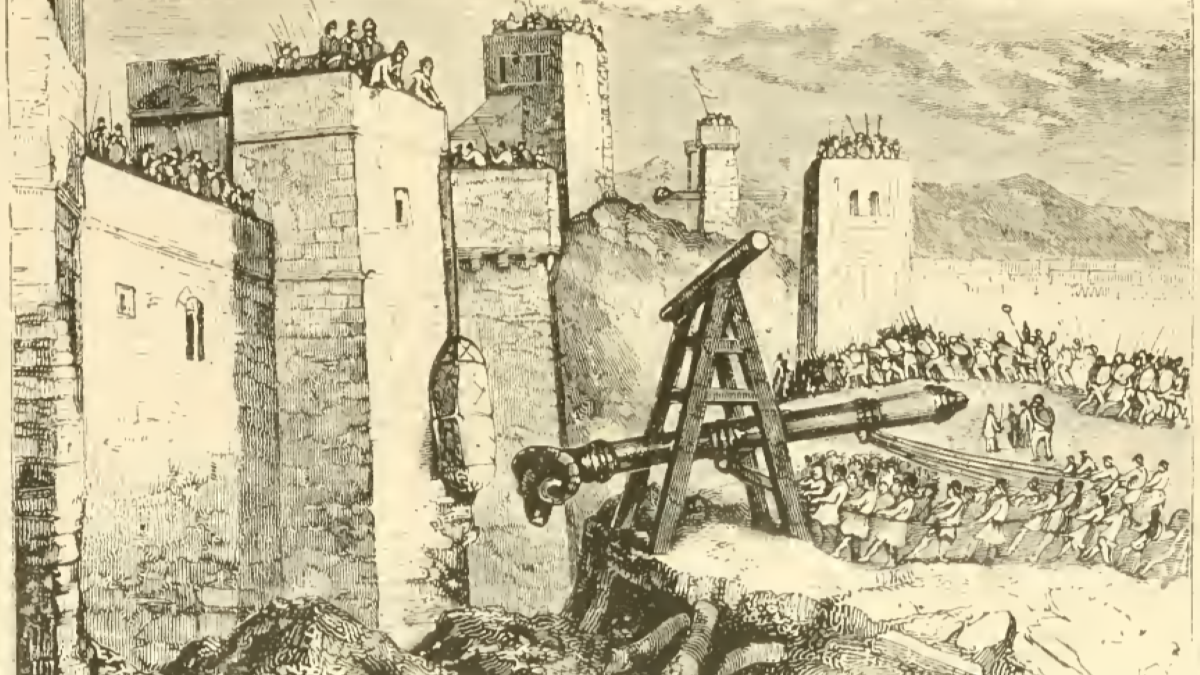
Thucydides’ treatment of siege warfare is particularly noteworthy. He details the methods used during sieges, primarily characterized by the construction of walls to isolate cities. While Greek siege technology was relatively rudimentary compared to that of the Assyrians, who employed advanced techniques centuries earlier, the political and strategic context of these sieges changed significantly throughout the conflict. The increasing willingness of Greek states to invest time and resources in prolonged sieges marked a departure from earlier military practices, reflecting the war’s escalating violence.
Devereaux emphasizes that Thucydides’ insights into the human element of warfare are as critical as the technological aspects. He illustrates how the morale and determination of troops influenced military outcomes. For example, during the long siege of Plataea, the stubbornness of defenders and the failure of aggressive tactics highlight the psychological dimensions of warfare.
The historian’s perspective on the relationship between war and economics also stands out. Thucydides viewed war not merely as a series of battles but as an enterprise driven by financial considerations. He meticulously documented Athens’ revenues and expenditures, illustrating how economic power underpinned military capabilities. The reliance on tribute from subjugated cities indicates a model where warfare operated similarly to a business, with financial resources fueling military endeavors.
Comparing Thucydides to later historians such as Polybius, Devereaux points out a significant shift in focus. While Thucydides describes a relatively stable military environment dominated by hoplites and triremes, Polybius chronicles a period marked by technological innovation and asymmetrical warfare. Polybius’ attention to the specifics of weaponry and military organization reflects a more advanced understanding of the complexities of war, contrasting with Thucydides’ more generalized approach.
In conclusion, Devereaux’s exploration of Thucydides offers valuable insights into the interplay between technology, human agency, and warfare. As historians and strategists continue to grapple with the implications of technological advancements, Thucydides’ work serves as a reminder of the enduring significance of the human element in shaping the course of history. His accounts, while documenting a specific historical moment, resonate with contemporary discussions on the evolution of military strategy and the factors that drive change.