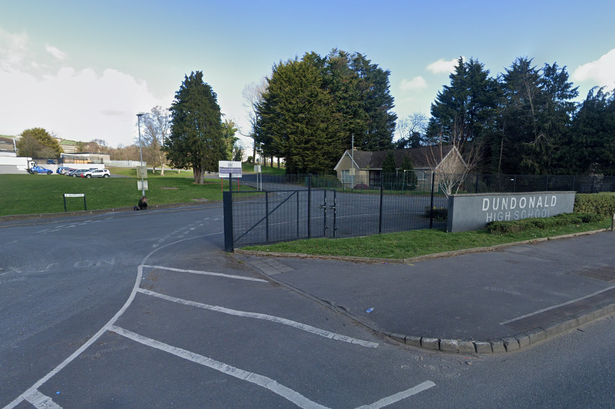
A significant heating crisis is ongoing at **Dundonald High School** in **Co Down**, where students are being sent home to learn remotely due to persistent heating issues. This situation arises one year after a damning report highlighted serious health and safety concerns within the school’s infrastructure.
In **December 2024**, an inspection revealed multiple problems, including leaking roofs and inadequate heating in various areas of the school. A concerned mother, who spoke to **Belfast Live**, accused the **Education Authority** of “plastering over” these issues instead of addressing the underlying problems. “The heating systems in the school are that old there are going to be issues,” she stated, adding that the recent disruptions have forced younger students to work from home.
The mother expressed frustration with the lack of effective solutions. She noted that new boiler houses installed last year, while appearing modern, were not functioning adequately. “It’s actually the Education Authority that needs to take responsibility,” she said, emphasizing that resource limitations are impacting the school’s ability to provide basic amenities such as warm water.
In response to the heating failure, the **Education Authority** acknowledged that the necessary repairs are extensive. They expressed deep concern about the backlog of repairs affecting schools across **Northern Ireland**, attributing this to budget constraints that limit their capacity to conduct repairs beyond emergency work.
On **December 9, 2024**, the school informed parents via email about the ongoing issues, stating that leaks had caused significant heating disruptions. The authority provided electric heaters, which unfortunately led to additional problems with the electricity supply. Consequently, the school made the decision to shift **Year 8, 9**, and **10** students to remote learning while older students in **Year 11** and **12** continued attending classes in heated areas.
The school’s communication to parents indicated that the repair work required is more significant than initially anticipated, particularly affecting blocks B and C where heating is unavailable. They noted that the aim was to prioritize students preparing for exams, emphasizing the importance of maintaining face-to-face lessons for these critical year groups.
The concerned mother pointed out the paradox of the situation. “If the school board thought families weren’t providing heat for their children, they would be onto social services,” she remarked, questioning why the **Education Authority** appears not to share the same concern for the staff and students struggling to learn in such conditions.
The inspection report by the **Education and Training Inspectorate**, released in **January 2025**, confirmed the severity of the situation. It noted that only one of the five boilers was functioning, and in parts of the school, there was a complete lack of heating. Furthermore, issues such as leaking roofs and blocked toilets were significantly disrupting students’ ability to attend classes promptly.
In a statement, a spokesperson for the **Education Authority** reiterated the extensive nature of the repair work needed at Dundonald High School. They acknowledged the unfortunate reality of children’s education being compromised due to the deterioration of school facilities.
“This is an increasingly unsustainable position,” the spokesperson stated, highlighting the urgent need for increased funding to prevent further decline in school infrastructure and the subsequent disruption to education. Without significant financial support, the **Education Authority** warns that schools will continue to face challenges that could further impact students’ learning experiences.
As the situation develops, both parents and school officials await a resolution that ensures a safe and conducive learning environment for all students at Dundonald High School.