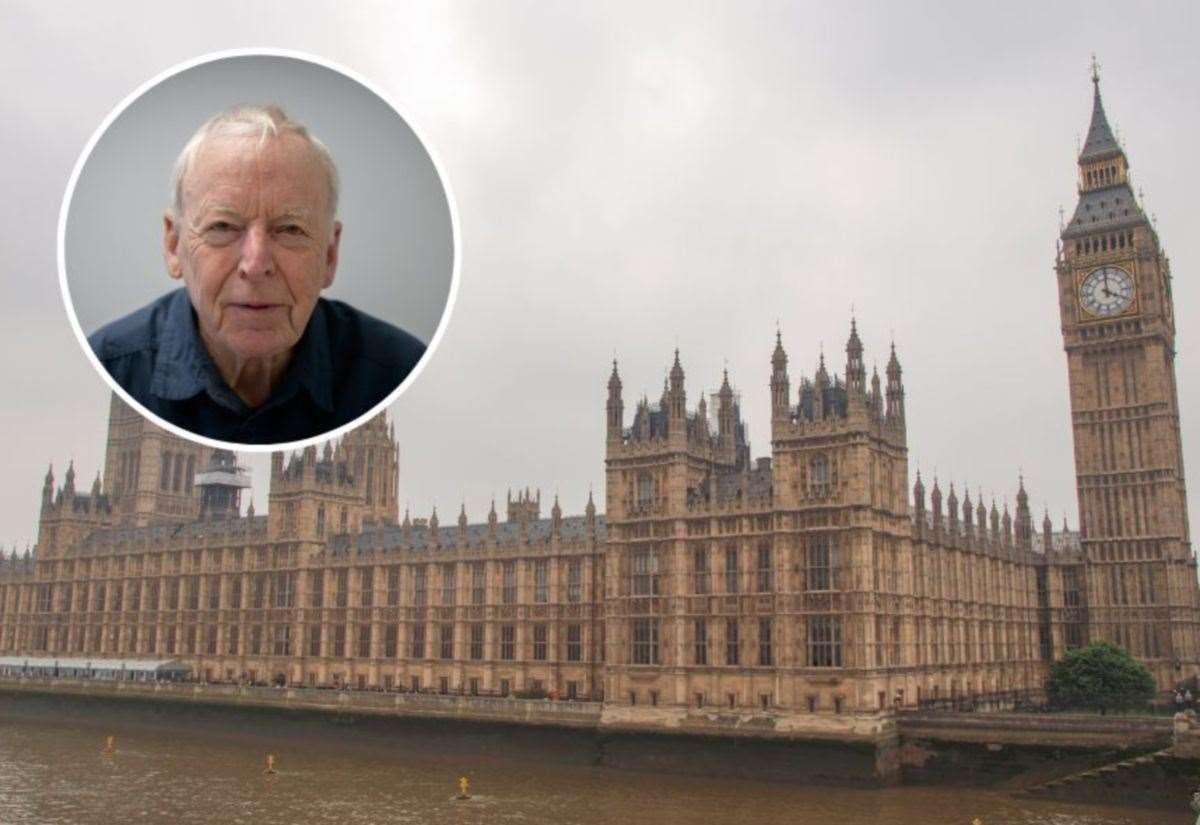
At 14 years old, Clive Soley’s school report was less than encouraging. It noted that “Clive’s limited abilities could produce far better results” if he made a greater effort. Despite being near the bottom of his class, Soley defied expectations, embarking on a remarkable 44-year career in politics that spanned both the House of Commons and the House of Lords, where he became known as Baron Soley of Hammersmith.
Having transitioned from Hammersmith to the Highlands of Scotland, Soley, now 86, resides near Inverness. Though he remains in contact with his estranged wife, he enjoys spending time with their son, daughter, and five grandchildren. Reflecting on his journey, Soley shares anecdotes from his political career, including pivotal discussions with Sinn Féin leaders like Gerry Adams during the Northern Ireland peace process and his experience as an international observer during a general election in Mongolia.
While his active political days ended three years ago with his retirement from the Lords, Soley remains committed to encouraging young people to engage in current affairs. He participates in a non-partisan schools programme, advocating for the importance of democracy and the rule of law. Plans for a podcast aimed at reaching more students are under consideration.
Soley’s childhood in London, where he was born in May 1939, was marked by the upheaval of World War II. He was evacuated three times, first to Bedford, then to the east coast of Essex, and finally to an aunt in Liverpool to escape the dangers of bombing. His early experiences shaped his political consciousness. He recalls witnessing a bonfire with an effigy of Adolf Hitler in 1945, igniting his interest in politics and instilling a strong aversion to dictatorship.
Attending Downshall Secondary Modern in Seven Kings, Soley faced numerous challenges in his education. Reflecting on his struggles, he considers the possibility of being dyslexic but ultimately dismisses the idea as irrelevant at this stage of his life. Despite feeling he was failing, he never felt entirely written off. “It was about coping really,” he explains, noting that he often kept quiet in class to avoid drawing attention to himself.
Soley left school at 15 and, lacking formal qualifications, found himself in various unskilled jobs. His experiences highlighted the class distinctions in society. After serving in the Royal Air Force from 1961 to 1963, his ambition to further his education led him to apply to Ruskin College in Oxford, which specializes in adult education. Although rejected, he found a path to success by attending Newbattle Abbey Adult Residential College, where he completed A-levels.
Eventually, he gained admission to Strathclyde University, earning a BA Honours in Politics and Psychology. His career then took him to the British Council and later to a role as a probation officer in inner London. Soley reflects on his time in King’s Cross, a challenging area where he worked with individuals with histories of violence, including the award-winning writer John Healy.
“Being a probation officer and an MP makes you very good at understanding people’s problems,” he says, emphasizing the importance of empathy in his work. His optimism shines through when he discusses his resilience in the face of setbacks. “When I get knocked back, I always get back up,” he states, highlighting his determination to navigate the complexities of life.
Soley’s political career began when he served as a councillor on Hammersmith Council from 1974 to 1978. He was elected as a Labour MP in the 1979 General Election, the same year Margaret Thatcher took office, and he continued to serve for 18 years, first representing Hammersmith North and later Hammersmith and Ealing, Acton, and Shepherd’s Bush until 2005.
As Soley reflects on his journey, he prepares for the next chapter, with the potential for further engagement in political discourse and education. Tomorrow, he will share insights about his career in politics, including key meetings during the Troubles and his views on the current leadership of the Labour Party under Sir Keir Starmer.