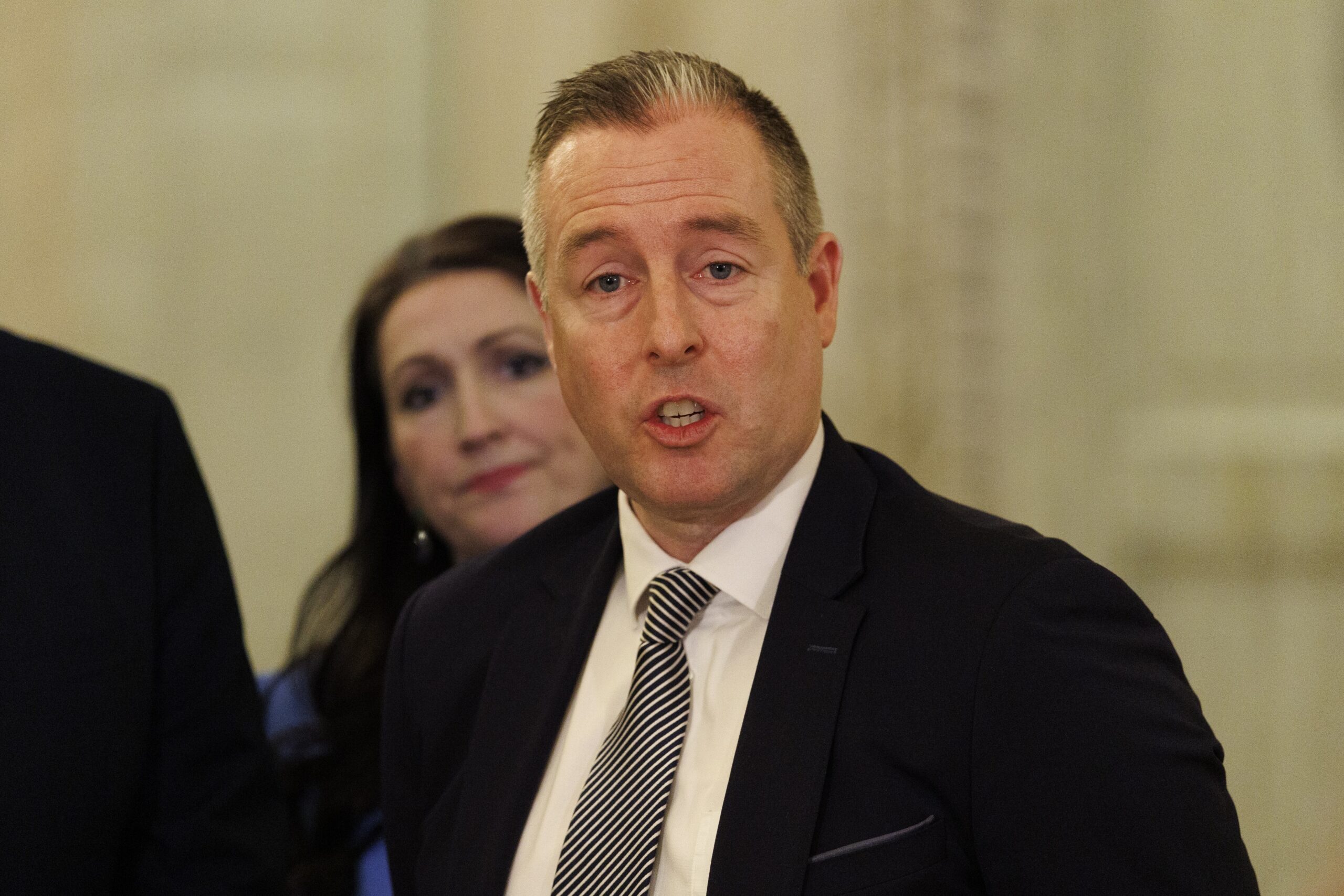
Paul Givan, the Education Minister of Northern Ireland, has called for a fundamental change in how departmental budgets are allocated within the Stormont government. He made this statement amid rising financial pressures faced by the Northern Ireland Executive, particularly in delivering essential public services. Givan emphasized the need to reconsider budget distribution to meet the commitments related to public sector pay.
During an interview on the BBC’s Sunday Politics programme, Givan highlighted that his department allocates approximately 82% of its budget to staff salaries, while other departments typically spend around 30% on staff pay. He described the current budgeting process as flawed and advocated for a new methodology that focuses on the unavoidable financial commitments, such as pay, when determining how funds are distributed across departments.
“Last year department x spent the following, this year we’ll top it up by another 5%,” Givan noted, suggesting that such an approach is inadequate. He proposed that funding allocation should be based on contractual requirements and pressing financial obligations, highlighting that pay is a significant component of these considerations.
Engagement with Treasury and Funding Pressures
The Education Minister also underscored the importance of closer cooperation with the Treasury. He referred to an additional £400 million that was made available to Stormont, which is intended to support public services but needs to be repaid over three years. Givan acknowledged the collective difficulties faced by all departments and stressed the necessity of transparent financial practices with the Treasury.
“I fully accept that collectively as an Executive, we’re all facing difficulties within our departments,” he stated. “We need to open our books to the Treasury, allowing that detailed examination, and we need to secure a longer-term arrangement with them to facilitate transformation.”
Furthermore, Givan has presented a sustainability budget plan that includes strategic proposals aimed at improving the education system. He expressed concern that the current educational framework is not sustainable, either financially or in terms of student outcomes.
Future of Education and Budget Strategies
In March 2024, Givan released a five-year budget strategy outlining measures like reducing the number of schools in the region and reshaping support for special educational needs (SEN) within mainstream schools. He acknowledged the tough decisions facing the Executive, emphasizing the need for effective spending of every pound allocated to education.
“There are difficult decisions for this Executive to take,” Givan remarked. “I couldn’t say honestly that every single pound is being effectively spent in education, but there are wider pressures, and we do need more funding. It is my job to ensure that what we do have is spent effectively.”
The Education Minister pointed to a declining birth rate as a contributing factor to the challenges within the education system, noting that enrolments are projected to decrease by 13% over the next decade. This decline raises concerns about the sustainability of schools with already small student populations, prompting discussions about the necessity of their continued operation.
Givan’s statements reflect a growing urgency within the Northern Ireland Executive to rethink budget allocation processes, focusing on sustainability and the effective use of resources in the face of financial constraints.