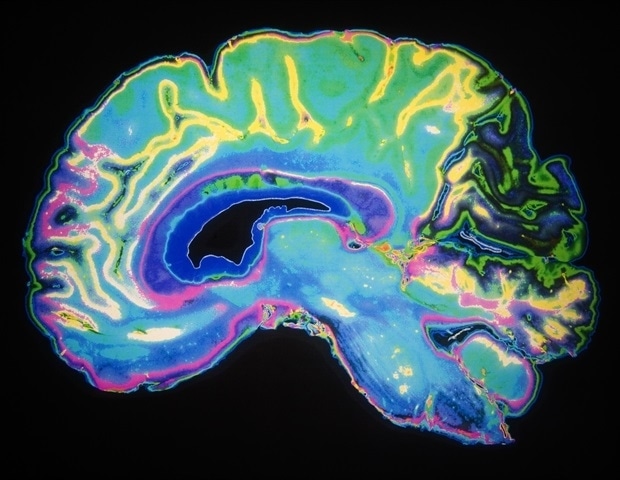
A new study from the Massachusetts Institute of Technology (MIT) has uncovered how the prefrontal cortex (PFC) modulates visual and motor processing based on an individual’s internal states. Published on November 25, 2023, in the journal Neuron, the research highlights the brain’s executive control center’s role in shaping behavior through targeted communication with regions responsible for vision and motion.
The study, conducted by a team led by Mriganka Sur, a professor at MIT’s Picower Institute for Learning and Memory, demonstrates that the PFC sends customized signals to specific areas of the brain depending on factors such as a mouse’s arousal level and movement. “That’s the major conclusion of this paper: There are targeted projections for targeted impact,” Sur stated, emphasizing the nuanced control exercised by the PFC over sensory processing.
Exploring Targeted Communication
The research aimed to determine whether the PFC transmits generic signals or tailors its communications for different downstream areas. Lead author and postdoctoral researcher Sofie Ährlund-Richter focused on two subregions of the PFC, the orbitofrontal cortex (ORB) and the anterior cingulate area (ACA). The findings revealed that these regions selectively convey information that influences visual and motor functions in the primary visual cortex (VISp) and primary motor cortex (MOp).
For instance, the study found that increased arousal led to heightened activity in the ACA, which prompted the VISp to sharpen visual focus. Conversely, the ORB contributed significant input only at very high arousal levels, often reducing the clarity of visual encoding. Ährlund-Richter speculated that the ACA enhances important visual stimuli while the ORB suppresses distractions. “These two PFC subregions are kind of balancing each other,” she noted.
Mapping Neural Connections
To investigate the connections between these brain regions, Ährlund-Richter and her team performed detailed anatomical tracings of the circuits linking the ACA and ORB with VISp and MOp. During experiments, mice were allowed to run on a wheel while watching structured images or naturalistic movies, with varying levels of contrast. The team also introduced air puffs to stimulate arousal and tracked neuronal activity across the regions.
The anatomical analysis indicated that both the ACA and ORB connect to multiple cell types within the target regions, but with distinct patterns. The ACA primarily connected to layer 6 of VISp, while the ORB targeted layer 5. This specificity highlights the complexity of the communication pathways and their implications for visual processing.
The study also revealed that the ACA neurons conveyed more visual information and were more responsive to changes in contrast compared to ORB neurons. The ACA’s activity scaled with the mice’s arousal levels, while the ORB only showed significant activity when arousal surpassed a certain threshold. Both regions communicated information about running speed to MOp, but only indicated whether the mouse was moving or stationary when interacting with VISp.
By blocking the circuits between the ACA and ORB and the VISp, the researchers observed changes in visual encoding, supporting the notion that these PFC subregions play distinct roles in modulating visual processing. “Our data support a model of PFC feedback that is specialized at both the level of PFC subregions and their targets,” the authors concluded in their publication.
The research was supported by a Wenner-Gren Foundations Postdoctoral Fellowship, the National Institutes of Health, and the Freedom Together Foundation. The findings contribute to the understanding of how the brain integrates internal states with sensory information, enhancing our knowledge of neural interactions in complex behaviors.