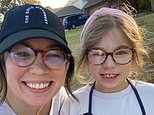
A mother from Illinois has shared her experience with the early warning signs of a rare form of childhood dementia that led to her two children being diagnosed with Sanfilippo syndrome type B. Megan Kempf, 37, began noticing significant changes in her daughter Poppy’s behaviour when she was just three years old. Initially, Poppy showcased typical developmental milestones, but then her drawing skills regressed, shifting from depicting people to only drawing circles.
As Poppy entered school, her differences became more pronounced. She was diagnosed with a mild intellectual disability, which is characterized by slower development in cognitive, social, and processing skills. Concerned about Poppy’s increasing anxiety and sleep disturbances, Megan sought further evaluations. “We started to investigate more things, and found that Poppy had sleep apnoea,” Megan explained. This condition, which causes intermittent breathing during sleep, can lead to difficulties in concentration and various mood-related issues.
After a series of consultations, Poppy was referred to a geneticist who performed comprehensive DNA genome sequencing. The results revealed that Poppy tested positive for Sanfilippo syndrome type B, a rare genetic disorder that progressively deteriorates cognitive function and can lead to fatal outcomes. This condition is part of a group of over 145 genetic disorders that collectively cause childhood dementia.
Megan described the moment of diagnosis as life-altering. “To have a diagnosis provided a sense of relief, but never in a million years did we expect to get a life expectancy for our children.” Most children with Sanfilippo syndrome type B do not survive past the age of 19. Poppy, now nine, is halfway to that mark, prompting the family to take action.
The diagnosis also raised concerns about Poppy’s younger brother, Oliver. Following Poppy’s diagnosis, Megan and her husband Kyle decided to have Oliver tested as well. Three weeks later, they received the heartbreaking news that two-year-old Oliver also tested positive for the syndrome.
Despite the grim prognosis, the Kempf family has not lost hope. They have raised over $5.5 million alongside other families to fund enzyme replacement therapy, a potential treatment for Sanfilippo syndrome. Megan expressed optimism about the future, stating, “We are hopeful that the drugs will be on the market next year, but it will take a lot of attention and effort to get there.”
The Cure Sanfilippo Foundation believes that enzyme replacement therapy could be a promising option for affected children, although it has yet to receive approval from the Food and Drug Administration (FDA). The complexities involved in bringing treatments for rare pediatric diseases to market pose significant challenges.
According to the Society for Mucopolysaccharide Diseases (MPS Society), approximately 140 children in the UK are living with Sanfilippo syndrome, a condition that affects children in various ways. Symptoms typically appear after the first year of life and can include a decline in learning abilities, mobility issues, and behavioral problems. As the disease progresses, affected children may experience a total loss of speech, cognitive function, and mobility, ultimately requiring tube feeding and increasing susceptibility to infections.
Megan and Kyle’s journey reflects the urgent need for awareness and support for families affected by rare diseases, as they work tirelessly to secure a future for their children.