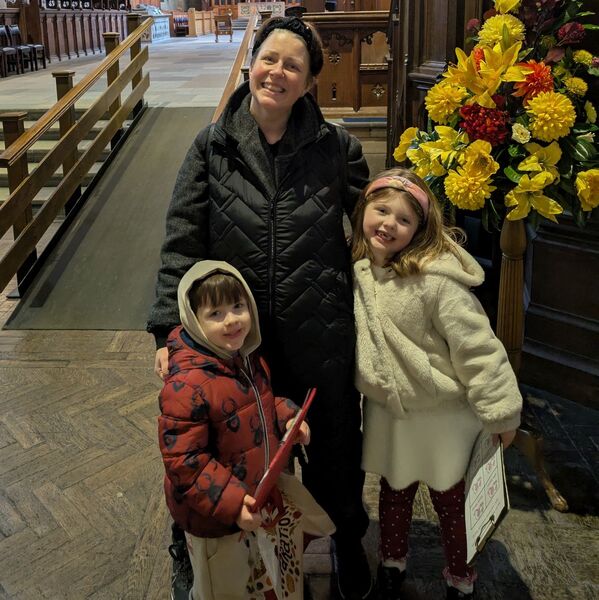
A mother in North Somerset has shared her remarkable experience of how her unborn son was saved by receiving blood transfusions while still in the womb. Laura Fricker, pregnant with her son, Sebastian, now aged eight, was shocked to learn that such a procedure was even possible.
At just 14 weeks into her pregnancy, Fricker contracted parvovirus B19 from her five-year-old daughter, who had slapped cheek syndrome. This virus can lead to severe anaemia in a small number of unborn babies, a condition where the level of red blood cells falls dangerously low. Fricker recalled her initial disbelief: “I didn’t think for a million years that anything would be an issue; I thought I’d be immune.”
The procedure, known as intrauterine transfusion, is rare and typically reserved for specific cases. According to the NHS Blood and Transplant (NHSBT), it is a highly specialized process conducted by experienced fetal medicine professionals. While complications are rare, the potential risks of not performing the transfusions can be severe.
Fricker underwent two transfusions at 17 and 19 weeks of pregnancy. During these procedures, a needle was inserted through her abdomen into Sebastian’s bladder. “You could see on the screen the baby wriggling around and the needle going in and then the bubbles of blood going in,” she recounted. The emotional weight of the experience remains with her, as she expresses how others are often astonished when she shares her story.
The NHSBT emphasizes the critical need for blood donations, stating that more than 5,000 donations are needed each day to meet national demand, totaling around 1.8 million donations annually. Currently, the service faces a shortfall of over 200,000 donors each year. Vicki Hines, a senior sister with NHSBT, highlights the urgent need for younger donors, who can contribute for a longer duration.
Hines, who has Von Willebrand disease, an inherited blood disorder, understands the importance of blood donations firsthand. She has required numerous transfusions during surgeries, particularly when undergoing caesarean sections, to prevent post-operative hemorrhaging. Her personal experiences underline the life-changing impact that blood donations can have.
Fricker’s story and the ongoing need for blood donations serve as a potent reminder of the critical role that donor contributions play in medical care. Those interested in becoming blood donors can sign up through the NHSBT website, helping ensure that others receive the vital care they need.
For updates on this story and more, follow local news channels or reach out with story ideas via email or WhatsApp.