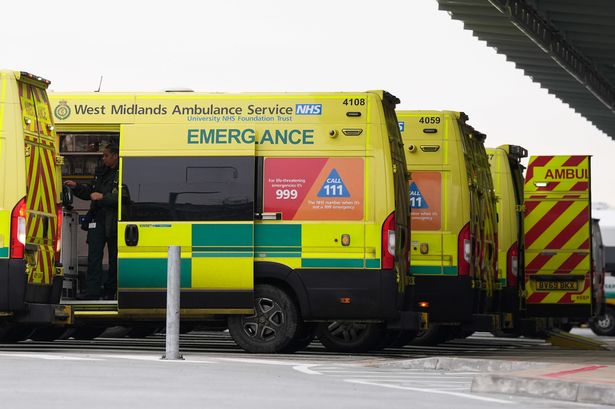
Hospitals in the West Midlands are facing significant challenges as winter pressures escalate, prompting urgent action from NHS leaders. Concerns have been raised regarding the lengthy delays ambulances are experiencing outside Accident and Emergency (A&E) departments in Birmingham and the Black Country. As demand surges, NHS executives are implementing measures aimed at easing the strain on emergency services.
On December 8, 2023, the University Hospitals Birmingham NHS Foundation Trust declared a critical incident following the presentation of 269 inpatients, including nine critical cases, to already busy A&E departments. This situation reflects a growing trend, as the previous Monday, December 1, saw a third of all West Midlands ambulances waiting outside hospitals at some point, severely limiting their capacity to respond to emergencies.
As winter progresses, the situation is expected to worsen. Additionally, resident doctors are set to engage in further industrial action starting December 17, adding to the operational challenges facing the healthcare system. During a recent meeting, members of the NHS Birmingham and Solihull and NHS Black Country Integrated Care Board (ICB) discussed several strategies to mitigate these issues.
David Melbourne, Chief Executive of the ICB, outlined potential solutions to alleviate pressure on emergency departments. One proposal includes commissioning services to implement winter plans earlier than usual, which may involve utilizing available capacities at the Midland Metropolitan Hospital in Smethwick. Another option could see General Practitioners (GPs) stationed at hospital entrances to assist with patient flow and demand management.
Melbourne noted the distinct challenges faced by the West Midlands compared to other regions. “If you look at the East Midlands Ambulance Service and West Midlands Ambulance Service, they have two different challenges,” he explained. “East Midlands has fewer ambulances, which results in longer wait times for patients needing transport. In contrast, the West Midlands has more ambulances, leading to fewer people waiting in the community but resulting in many ambulances stationed outside A&E departments.”
The situation is particularly concerning for patients requiring immediate care. On December 1, the average wait time for ‘category two’ ambulance responses, which include patients experiencing chest pain or strokes, exceeded 31 minutes—a significant statistic that underscores the urgency for effective interventions.
As the region braces for an increase in flu cases and the impending industrial action by healthcare professionals, the ICB is exploring all available options to enhance patient care and reduce waiting times. Melbourne emphasized the necessity of proactive measures as the healthcare system faces mounting pressure during the winter months.
The actions taken by NHS leadership in the West Midlands are critical as hospitals strive to maintain service levels amidst escalating demand and operational challenges. With the implementation of these strategies, authorities hope to improve patient outcomes and ensure that emergency services remain responsive to community needs.