The year 2025 has been marked by significant global events, including the return of Donald Trump to the United States presidency, ongoing conflicts in Ukraine and the Middle East, and severe political crises within the European Union. A fragile ceasefire in Gaza, the extended Russia-Ukraine conflict, the rise of far-right politics in Germany, political paralysis in France, and the resurgence of Andrej Babiš in the Czech Republic highlight a period of instability across Europe. Additionally, high-profile corruption scandals within the EU, political violence in the U.S., a historic leadership change in the Vatican, and a spectacular heist at the Louvre Museum have tested global security, democracy, and institutional integrity.
Trump’s Dominance Reshapes Global Politics
Donald Trump’s re-election has significantly reshaped global politics in 2025, with profound implications both domestically and internationally. His administration has stirred the global economy by raising tariffs on imports from nearly all countries, according to reports. Brussels’ Politico named him the most influential person in Europe, despite the list traditionally being reserved for European leaders. Trump has reignited tensions with EU nations, leveraging a position of strength to impose unfavorable trade agreements and demanding NATO members increase defense spending to 5% of GDP.
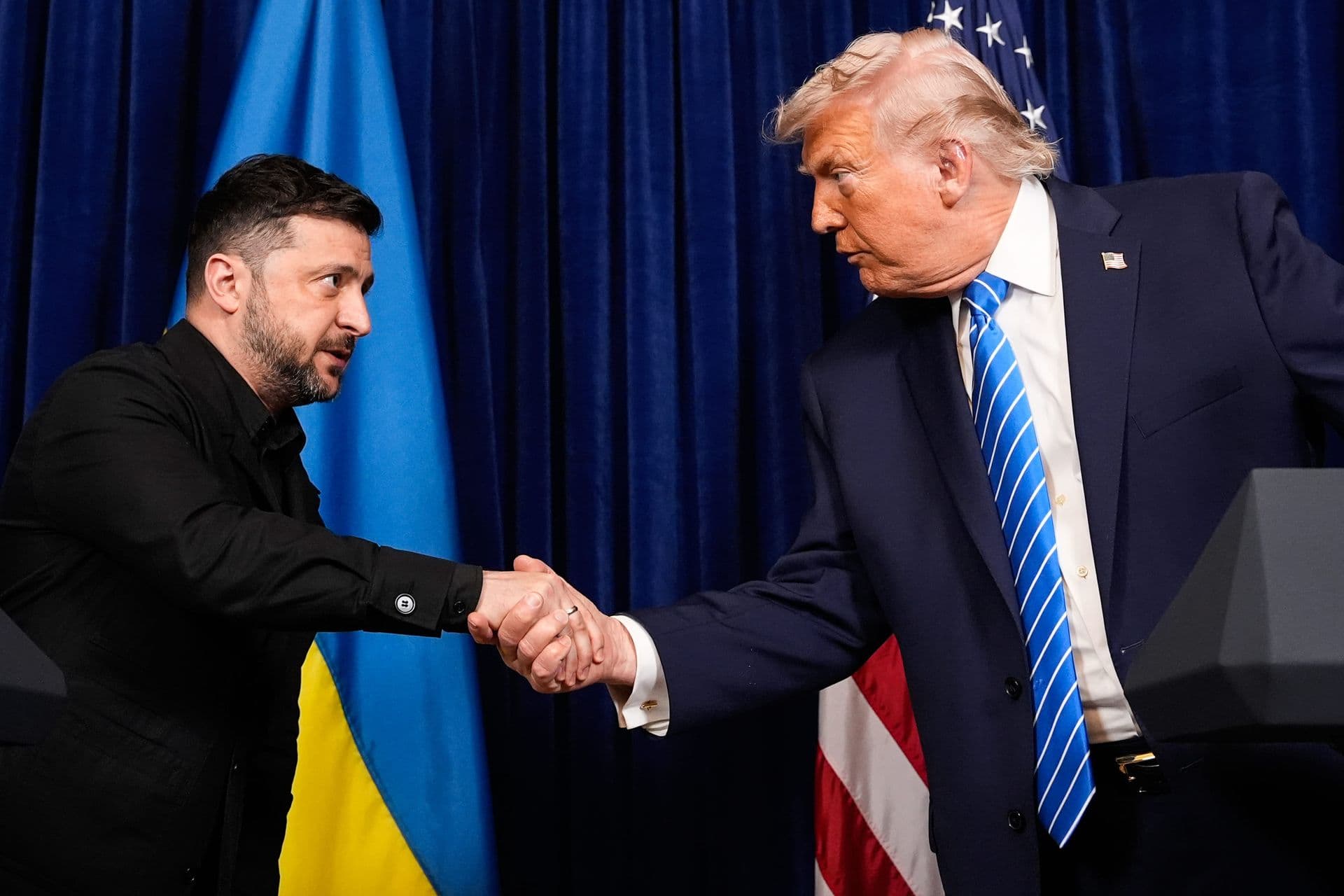
Trump has sought to renew diplomatic relations with Russia while adopting a confrontational stance towards Ukrainian President Volodymyr Zelensky, at one point reportedly admonishing him in the White House. He has also secured access to Ukraine’s strategic mineral resources in exchange for continued support against Russia’s aggression. Despite ongoing efforts to end the war in Ukraine, success has been elusive, although his pressure has led to a cessation of hostilities in Gaza.
Conflict and Fragile Ceasefire in Gaza
Following over two years of intense conflict, a fragile ceasefire took effect in Gaza on October 10, 2025, between Hamas and Israel, brokered under U.S. pressure. This agreement included a ceasefire and the withdrawal of Israeli forces in exchange for the release of hostages held by Hamas and Palestinian prisoners in Israeli jails. However, instability remains, with both sides occasionally accusing each other of violating the ceasefire.
Since the ceasefire commenced, Israeli airstrikes have resulted in thousands of Palestinian casualties, while the overall war has claimed over 69,000 lives since October 2023. Hundreds of thousands of Palestinians continue to suffer in Gaza, which remains devastated despite increased humanitarian aid due to the ceasefire. The war’s prelude involved a June Israeli attack on Iran, escalating into a 12-day conflict that ended with U.S. strikes on Iranian nuclear facilities.
In September, Israel executed an unprecedented attack on Qatar’s capital, targeting Hamas leadership engaged in ceasefire negotiations. The brutal Israeli offensive in Gaza, characterized as genocide by UN representatives, has led to a growing number of countries recognizing Palestine, including major Western nations such as the United Kingdom, France, Canada, and Australia.
The ongoing Russia-Ukraine war has also persisted, now entering its fifth year. Despite diplomatic efforts by Trump’s administration, the conflict remains unresolved. A revised American peace plan was deemed unacceptable by Ukraine and its European allies due to its alignment with Russian objectives. Ukraine’s announcement to abandon NATO ambitions in exchange for security guarantees has not resolved critical issues regarding control over Donetsk and Luhansk.
Intense fighting continued throughout 2025, with Ukraine holding its ground against the Russian invasion, thanks to significant financial and military support from Western nations. Ukraine achieved some success, including targeting Russian oil facilities well beyond the front lines. As winter approached, Russia intensified attacks on Ukraine’s energy infrastructure, exacerbating the humanitarian crisis.
Political Shifts and Crises Across Europe
The political landscape in Europe has been tumultuous in 2025. In Germany, the Christian Democratic Union (CDU) emerged as the leading party in parliamentary elections held on February 23, following the ousting of Chancellor Olaf Scholz due to a vote of no confidence. The CDU secured 28.4% of the votes, leading to the formation of a grand coalition with the Social Democratic Party (SPD), which recorded its worst result since 1945 at 16.3%.
The far-right Alternative for Germany (AfD) was the biggest winner, more than doubling its vote share to 20.7%, resulting in a record 152 seats in the Bundestag. Voter turnout reached 82.5%, the highest since the fall of the Berlin Wall.
In France, the political crisis deepened in 2025, marking the most significant instability since the establishment of the Fifth Republic in 1958. A divided parliament, with no majority among the three opposing blocs, led President Emmanuel Macron to appoint four minority governments since September 2024. His second government, led by François Bayrou, lasted only nine months before losing a confidence vote over budget disputes.
The appointment of Sébastien Lecornu as Prime Minister was short-lived, lasting just 27 days amid threats of a no-confidence vote from both the far-left and far-right factions. Economic challenges prompted strikes and protests across major French cities, as discontent grew over austerity measures.
In the Czech Republic, Babiš’s return to power in October 2025 marked a significant shift. His populist party, ANO, formed a government with radical nationalists and Eurosceptics. Initial moves raised concerns about his commitment to EU decisions regarding assistance to Ukraine, as he quickly dialed back on several promises, including limiting aid to Czechs only.
Corruption Scandals and Political Violence
The EU faced another corruption scandal late in 2025, with the arrest of former EU foreign affairs chief Federica Mogherini. This incident threatens to undermine the credibility and trust in EU institutions. Following police raids in Brussels and at an elite university in Bruges, Mogherini was accused of corruption related to a training program for young diplomats.
The investigation, led by the European Public Prosecutor’s Office, focuses on potential breaches of tender rules, including sharing confidential information prior to the launch of a million-euro project. Alongside Mogherini, Stefano Sanino, head of the European Commission’s department for the Middle East, North Africa, and the Persian Gulf, has also been implicated.
The assassination of American far-right activist Charlie Kirk on September 10 added to the political polarization in the U.S. Kirk, a prominent ally of Trump, was shot while addressing students at the University of Utah, prompting widespread condemnation of political violence.
Kirk’s death drew a large crowd for memorial services, illustrating the intense emotions surrounding his controversial views. The 22-year-old suspect, Tyler James Robinson, has been described as an advocate for progressive causes, highlighting the deepening divisions in American society.
The year 2025 concluded with a significant change in the Vatican. On May 8, Pope Leo XIV, born Robert Francis Prevost, became the first pope from the United States. He succeeded Pope Francis, who passed away on Easter Monday at the age of 89. Leo XIV is expected to continue his predecessor’s focus on social issues, emphasizing support for the poor, migrants, and environmental protection.
A spectacular heist at the Louvre Museum on October 19 further captured global attention. Thieves, disguised as construction workers, executed the robbery in under eight minutes, stealing jewelry valued at €88 million. Although several individuals were arrested, the stolen items remain missing, raising concerns about security in French cultural institutions.
As 2025 unfolds, the combination of these events highlights the challenges faced by global leaders in maintaining stability and addressing the pressing issues of our time.