On a seemingly routine bike ride, Mark Moran, a 63-year-old from Bristol, experienced a life-threatening cardiac arrest that left him clinically dead for 15 minutes. This incident, which occurred in November 2024, serves as a powerful reminder of the importance of immediate medical response and community preparedness.
Mark, an avid athlete who regularly participated in triathlons and marathons, set out with friends Steve Makin and Dave Lane on a ride from Cirencester to Frampton Cotterell, South Gloucestershire. Just minutes away from their destination, Mark suddenly collapsed, leaving his friends in shock. “It happened over a period of a few seconds,” Mark recalled. “I started to feel dizzy, and then there was just nothing.”
As he lay on the ground, Mark was unresponsive, his eyes wide open but not breathing. Fortunately, Steve was quick to act, initiating CPR almost immediately. Drawing from the British Heart Foundation’s 2012 “Stayin’ Alive” campaign, which featured footballer Vinnie Jones to teach CPR techniques, Steve performed chest compressions for nearly ten minutes. His determination was so intense that he ended up breaking three ribs in the process.
While Steve worked to keep Mark alive, Dave cycled to find help and contacted emergency services. The timely response was crucial; Pete Bishop, a volunteer first responder with the South Western Ambulance Service Foundation Trust, arrived on the scene within nine minutes, thanks in part to the what3words location app. This app provided a precise address, allowing Pete to reach Mark swiftly.
Upon arrival, Pete found Mark unresponsive and his lips blue. He administered two lifesaving defibrillator shocks that ultimately revived Mark. Shortly after, both an ambulance and air ambulance arrived, and Mark regained consciousness briefly, calling out to his friends before losing consciousness again. He was then airlifted to the Bristol Heart Institute, a top facility for cardiac issues.
In the hospital, doctors fitted Mark with an internal defibrillator, despite him having no prior heart conditions. After three weeks of recovery, he was discharged with a renewed appreciation for life. Mark’s journey to recovery began after he overcame a previous health setback in 2005, which motivated him to create a unique hands-free water bottle designed to assist individuals with hydration issues.
Mark acknowledges the series of fortunate events that saved his life, particularly the rapid response from his friends and the first responders. “I had no idea just how important first responders are. They are trained volunteers whose job is to help quickly,” he stated.
Reflecting on his experience, Mark noted the alarming statistic that fewer than ten percent of individuals survive a cardiac arrest outside of a hospital setting. He believes he is exceptionally fortunate and is now advocating for others to learn CPR. With three-quarters of cardiac arrests occurring at home, early intervention is critical. Yet data from NHS Charities Together indicates that fewer than three in ten people feel confident enough to act in such emergencies.
To address this gap, NHS Charities Together has allocated £1.85 million in grants to support all 14 UK NHS ambulance charities, aiming to enhance community training and resources. This initiative is designed to reduce health inequalities and improve the overall preparedness of communities for emergencies.
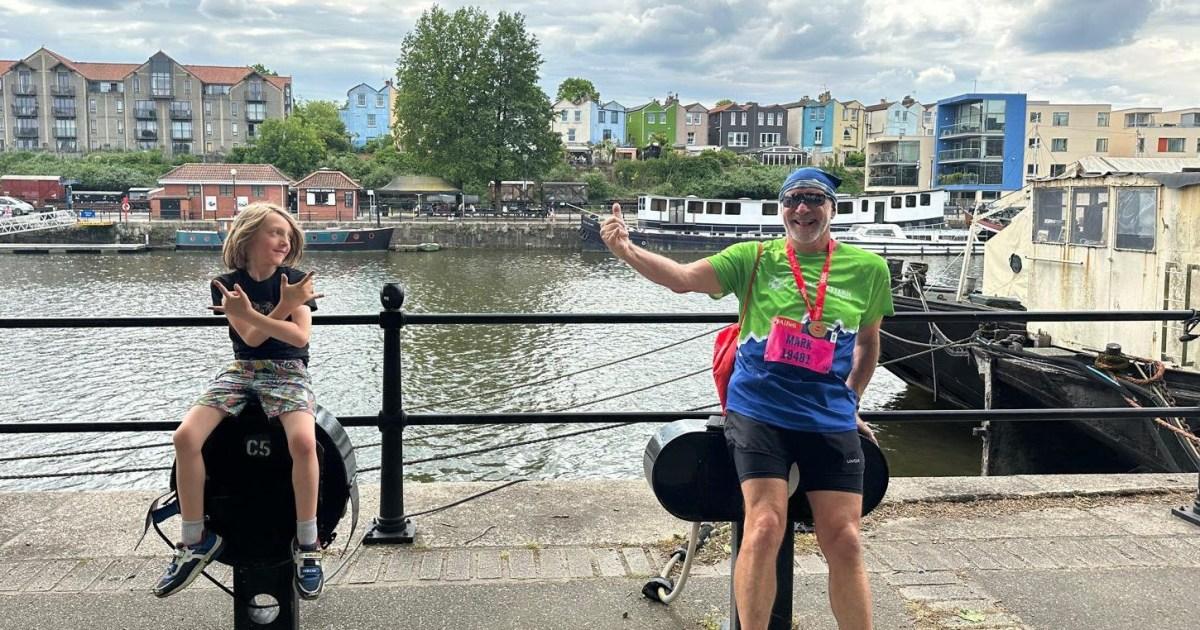
Six months after his ordeal, Mark participated in the Bristol Half Marathon to raise funds for the air ambulance team that saved his life. In July, he and his friends revisited the pub in Frampton Cotterell to finally enjoy the meal they had originally set out for, pausing to reflect on the life-altering experience at the spot where Mark had collapsed.
“My heart was basically stopped for 15 minutes. It’s pretty terminal. I feel like the luckiest guy on the planet,” Mark said, emphasizing the miraculous nature of his survival and the critical role played by those around him.