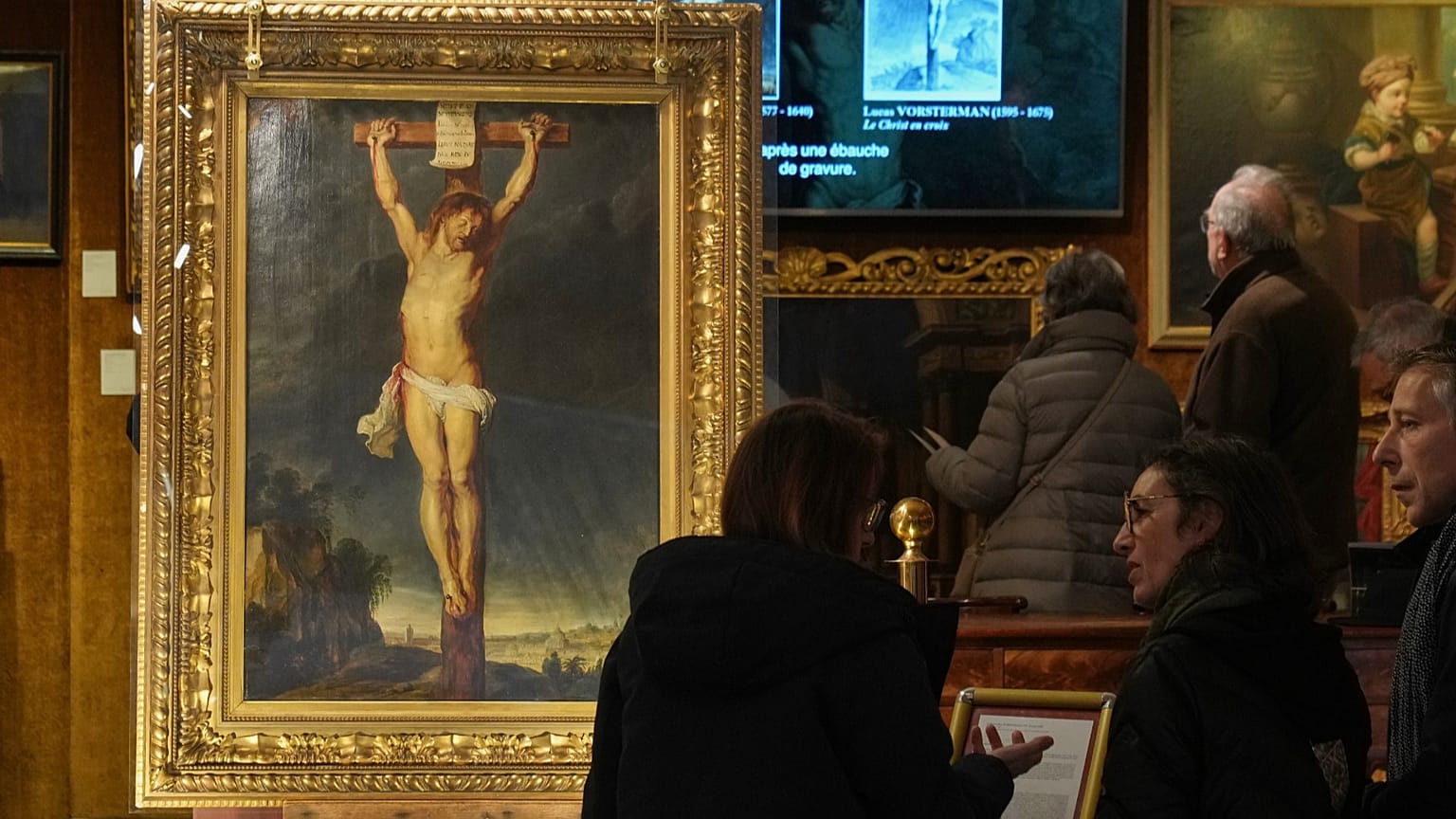
A significant art auction took place this weekend in Versailles, where a long-lost painting by the Baroque master Peter Paul Rubens sold for €2.3 million. The work, titled “Crucifixion of Jesus Christ,” had been hidden for over four centuries and was recently discovered in a private townhouse in Paris.
The auction was organized by the Osenat Auction House, which played a crucial role in the authentication process. Auctioneer Jean-Pierre Osenat expressed his excitement about the painting’s potential as soon as he laid eyes on it. “I immediately had a hunch about this painting, and I did everything I could to try to have it authenticated,” he stated. The painting’s authenticity was confirmed by the Rubenianum, the Rubens committee based in Antwerp, following a thorough examination.
Art expert Nils Büttner, renowned for his research on Rubens, commented on the painting’s significance before the auction. He noted that while Rubens frequently painted crucifixions, this particular work is unique. “Rubens rarely depicted the crucified Christ as a dead body on the cross,” he explained. “This is the one and only painting showing blood and water coming out of the side wound of Christ, and this is something that Rubens only painted once.”
The Osenat auction house provided additional details on the scientific analysis that confirmed the painting’s authenticity. They reported that microscopic examination of the paint layers revealed a combination of pigments, including white, black, and red, as well as blue and green hues. These colors are characteristic of Rubens’ technique, particularly in his depictions of human skin.
As the art market continues to thrive, this remarkable sale underscores the enduring appeal of Rubens and the value of historical artworks that resurface after centuries. The auction attracted significant attention, reflecting both the art world’s fascination with the Baroque period and the importance of preserving cultural heritage.
This event marks a pivotal moment for collectors and art historians alike, highlighting the ongoing journey of art recovery and the stories behind hidden masterpieces. As the painting enters a new chapter, it serves as a reminder of the rich history encapsulated within the world of fine art.