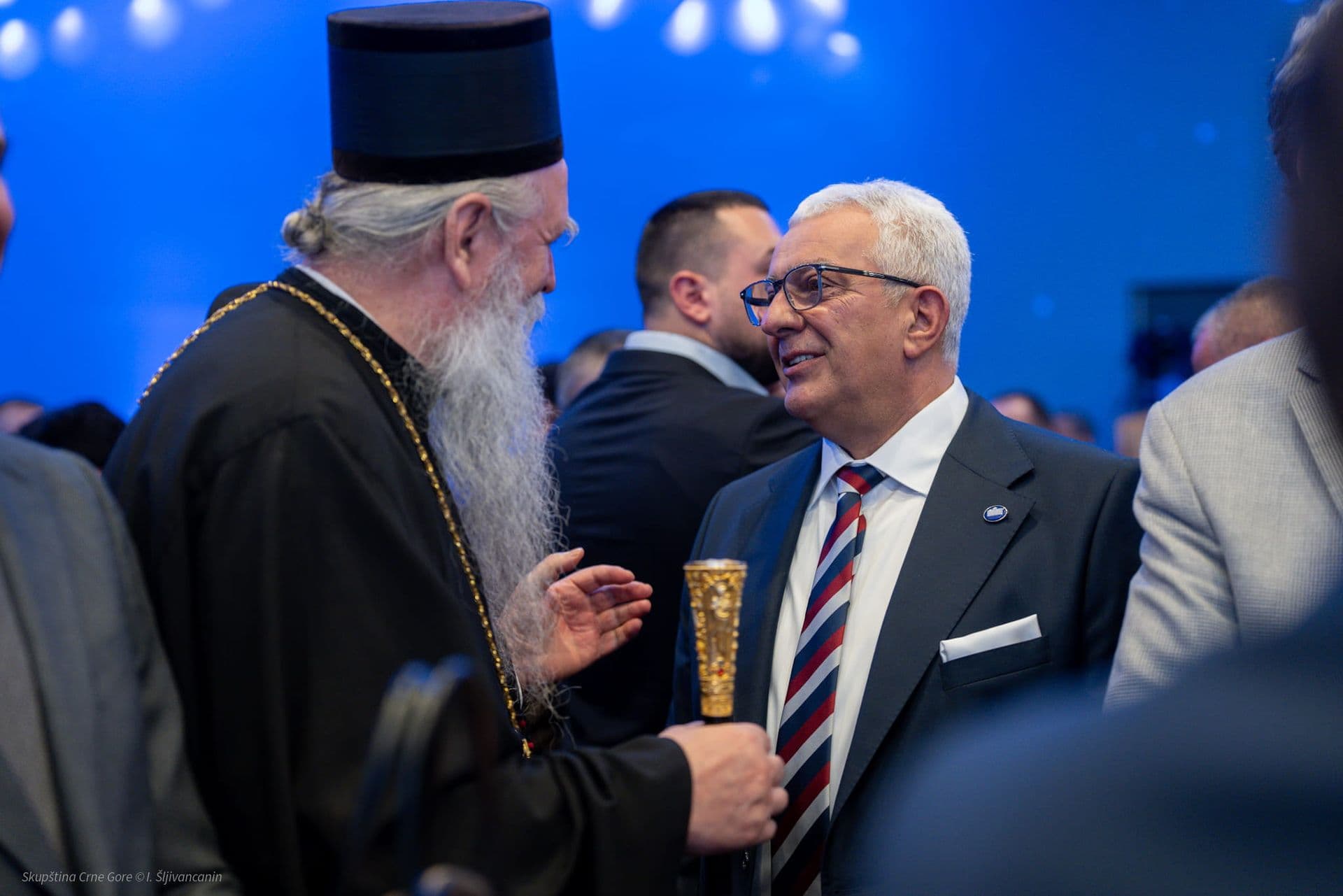
The President of the Assembly of Montenegro, Andrija Mandic, hosted a ceremonial reception on March 15, 2024, to commemorate the 120th anniversary of the Nikoljanski Constitution, a significant milestone in Montenegro’s legal history. During the event, Mandic emphasized the need to align the current constitution with the realities of modern Montenegro, particularly regarding the status of the Serbian language.
Historical Context and Modern Relevance
In his opening remarks, Mandic reflected on the historical significance of the Nikoljanski Constitution, which marked Montenegro’s entry into the realm of modern European states. He noted that this constitution established a division of powers, defined citizens’ rights and duties, and played a crucial role in enhancing the Assembly’s function as an expression of the people’s will. This marked a shift from a patriarchal system to a modern constitutional monarchy, while preserving the nation’s identity, traditions, and historical heritage.
Mandic pointed out that the current constitution, adopted nearly two decades ago, does not fully represent the societal dynamics of Montenegro today. He stated, “Many provisions of the current constitution are ripe for alignment with contemporary Montenegro,” highlighting particularly the issue of the Serbian language’s status. He asserted the Assembly must remain a central space for dialogue and the exchange of ideas, a legacy inherited from the time of the Nikoljanski Constitution.
Calls for Change and Unity
Mandic’s message resonated with a vision for a more inclusive Montenegro. He stated, “The citizens of Montenegro do not ask for miracles; they simply want the highest legal act to reflect the reality of this country.” He acknowledged that no one desires to change the status of other languages in the constitution, but he underscored the need to rectify historical injustices created by those who have been dividing Montenegro for the past 30 years.
Today’s Montenegro is a multiethnic, multireligious, and democratic nation, according to Mandic, whose stability hinges on respecting all its citizens and acknowledging their historical roots. He concluded that the path toward European integration does not imply renouncing one’s identity but rather an opportunity to bring values that have long characterized Montenegro—freedom, honor, and heroism—into the European family.
Mandic referenced a historical address by Prince Nikola on December 6, 1905, which articulated that Montenegro’s prosperity was once measured by the breadth of its borders. “Borders once concealed only six small tribes, and within that modest space flickered the last rays of Pan-Serbian independence,” he remarked. He contrasted this with the current vision, where the nation’s boundaries are defined by the standard of living and the happiness of its people.
Following the reception, the celebration of this significant anniversary continued with a program dedicated to the occasion. Additionally, the Assembly of Montenegro will host a roundtable discussion tomorrow at the Gorica Villa, starting at 09:00, to further engage in dialogue about the constitutional developments and their implications for Montenegrin society.