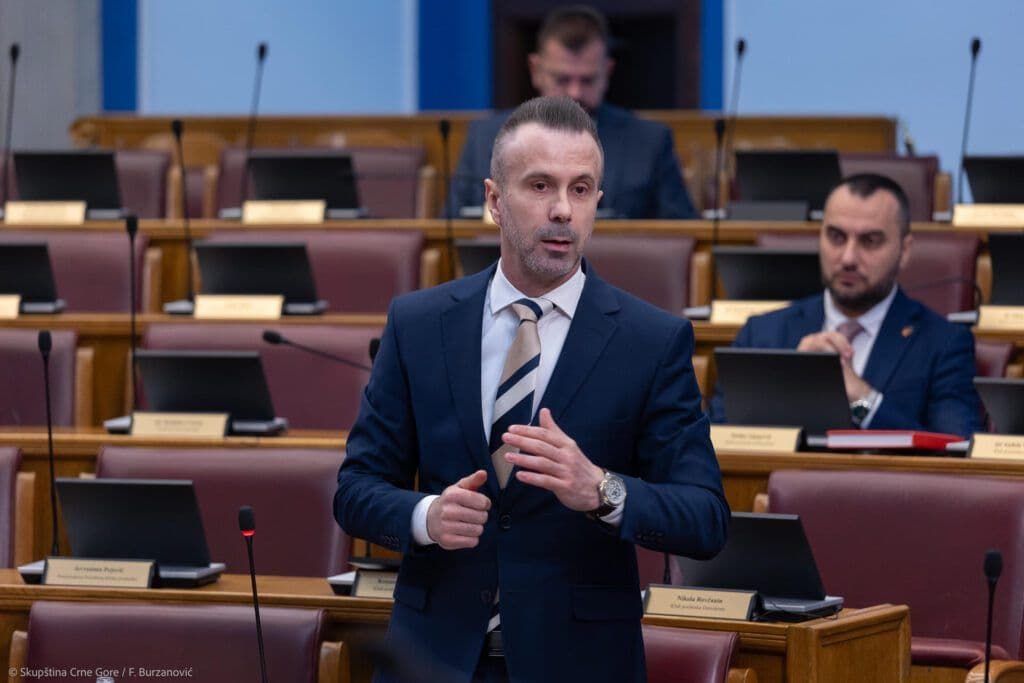
The political landscape in Montenegro has grown increasingly tense following a series of threatening incidents directed at opposition leaders. On March 15, 2024, Boris Bogdanovic, the president of the Democratic Party’s parliamentary club, reported receiving a death threat from a member of the ruling Democratic Party of Socialists (DPS). This follows similar threats against his colleagues, Anđela Vojinović and Zdenka Popović, signaling a troubling trend of violence against political opponents.
Bogdanovic emphasized that these threats are not merely political rhetoric but rather manifestations of deep-seated hatred and fear. He described the situation as a clear indication of a “fascist consciousness” that attempts to silence dissent through intimidation. He stated, “When someone tells you that you will be killed, when they invoke bloodshed and the extermination of political opponents, you have long left the realm of politics and stepped into the most dangerous extremism.”
In his comments, Bogdanovic expressed concern that these actions reflect a broader, organized effort to undermine opposition voices in Montenegro. He speculated that there is a coordinated network behind these threats, aiming to poison the public discourse and spread hatred. “The public has the right to know who finances this digital poisoning, who manages these cowardly profiles, and who is orchestrating these campaigns of terror,” he asserted.
Bogdanovic further implicated individuals close to the DPS leadership, specifically naming Aca Đukanovic and Aca Mijajlović. He warned that if connections to these figures are confirmed, it would reveal the true nature of the DPS’s governance—one that hides behind a façade of European values while perpetuating a culture of fear and oppression.
The Democratic Party leader made it clear that his group would not be cowed by threats. “They will not break us with death threats, nor will they silence us with hate speech,” he stated. He underscored that the increasing severity of these threats highlights the regime’s anxiety over the truth and its fear of the opposition’s resilience.
Bogdanovic called on relevant authorities to swiftly identify and prosecute those behind these threats. He warned that any delay in action would send the message that political terror is permissible, which he firmly opposes. “In a democratic and free Montenegro, no one should have the right to threaten others due to their name, stance, or political struggle,” he emphasized.
This situation not only raises serious concerns about the safety of political figures but also about the fundamental rights of all citizens to express their opinions freely. Bogdanovic characterized this struggle as not only a political battle but also a fight for basic civilization. He concluded, “We will not yield an inch in this fight.”