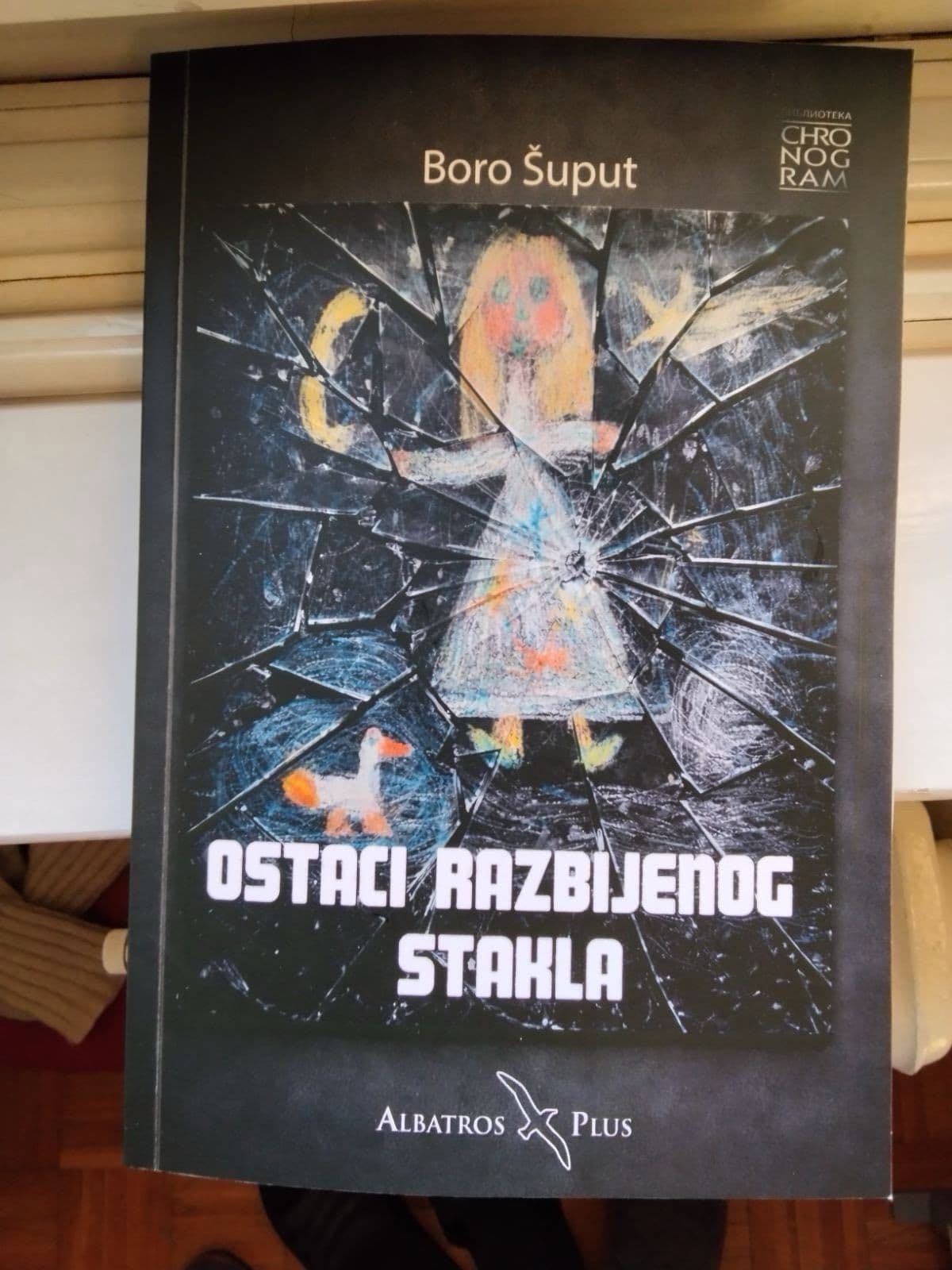
A new collection of essays titled “Ostaci razbijenog stakla” (“Remnants of Broken Glass”) by retired diplomat Bora Šuput has been released, featuring a compilation of 100 short texts, including 13 columns previously published in the Montenegrin newspaper Pobjeda. Šuput describes his motivation for writing as a quest to “understand the world around me.”
In his reflections, Šuput draws parallels between the fragments of broken glass and the inevitable challenges faced by individuals in their later years. He compares these remnants to scattered pieces of a protective shell, suggesting that everyone ultimately confronts the disarray of beauty, truth, and permanence. He notes, “These remnants are what once was a ‘view of the world,’ which now seems like an unnecessary burden discarded by modernity.”
Exploring the Essence of Life
According to Šuput, the essays were inspired by personal experiences and observations from a world that began to change dramatically as he aged. He emphasizes that the prehistory of each essay “germinated in some crack of the world,” a world that started to crumble during his own maturation. The author states that the collection serves as an attempt to answer fundamental questions about the nature, state, and future of society.
He expresses hope that readers will find these reflective essays as compelling as he did while writing them. “At my stage in life, it should be a justified assumption that my thoughts are sufficiently mature to share with others,” he remarks. Šuput believes that these insights may resonate with those navigating similar existential themes.
A Personal Journey Through Written Reflection
The author’s journey culminates in a series of “short philosophical essays,” crafted in 2025. He hopes that his reflections will shed light on the complexities of human existence, drawing from both historical and contemporary contexts. The book also references the tale of Alexander the Great, highlighting moments of youthful melancholy and the recognition of inevitable decline.
As he concludes his introduction, Šuput entrusts the collection to the goodwill of its readers, stating, “I leave this collection to its fate and the benevolence of its audience.” His work invites readers to engage with profound questions about life, identity, and the passage of time, encouraging a shared exploration of personal and collective narratives.