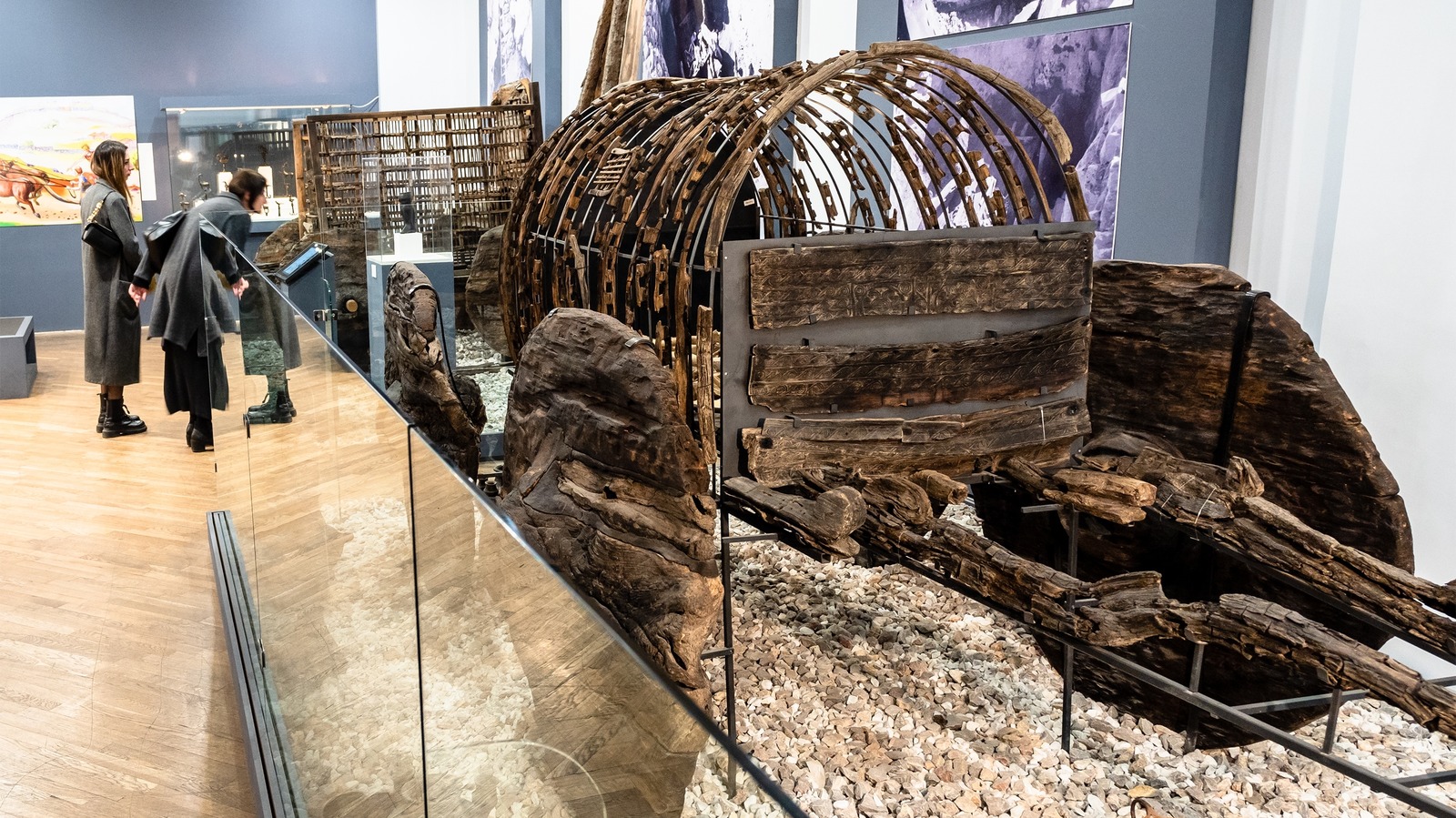
A covered wagon discovered near Lake Sevan in Armenia may be the oldest of its kind, dating back approximately 3,500 years to the Late Bronze Age. This ancient wagon, known as the Lchashen wagon, was uncovered in the 1950s during the drainage of the lake for irrigation purposes, alongside five other wagons from the same era.
Significant Historical Context
The wagons were found in the vicinity of Lchashen, an area rich in historical artifacts and burial sites. The Late Bronze Age, which spans from the 15th to 14th centuries B.C., is notable for the rise of powerful civilizations such as the Egyptian, Mycenaean, and Hittite empires. This was a time characterized by significant advancements in trade, art, and literature. The period also produced enduring works, including the Epic of Gilgamesh, which remains a subject of academic study today.
Among the six wagons discovered, only four feature the frame structure typical of covered wagons. The Lchashen wagon stands out as the best-preserved example, believed to have served as a burial vehicle for a leader or chieftain. Constructed from solid oak, it showcases an impressive assembly of at least 70 parts, meticulously joined using the ancient woodworking technique known as mortise and tenon. This method is similar to techniques seen in traditional Japanese furniture-making.
Remarkable Craftsmanship and Artifacts
The Lchashen wagon measures approximately 6.5 feet in length, with wooden wheels constructed from slabs of timber that reach a height of 63 inches. The craftsmanship is evident, particularly in the wagon’s frame, which contains over 600 mortise holes.
The display at the History Museum of Armenia includes not only the wagons but also a variety of artifacts from the Late Bronze Age. Visitors can explore bronze figurines, weapons, and armor, along with examples of goldsmithing and silversmithing techniques that were prevalent during this era. The wagons were unearthed from a cemetery site containing more than 500 burials, and the Lchashen wagon is displayed as part of a reconstruction of a chieftain’s burial, highlighting the rich cultural heritage of ancient Armenia.
This discovery not only sheds light on the transportation methods of the time but also emphasizes the intricate craftsmanship and cultural practices of the Late Bronze Age societies in the region. The Lchashen wagon and its accompanying artifacts provide invaluable insights into the lives of those who lived thousands of years ago and their contributions to human history.