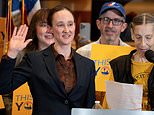
A vigil in New Hampshire has drawn national attention after Bishop Rob Hirschfield of the Episcopal Church urged his clergy to prepare their wills and get their affairs in order. His comments followed a memorial for Renee Good, who was fatally shot by an Immigration and Customs Enforcement (ICE) officer on January 7, 2026, in Minneapolis, Minnesota. This call to action came against the backdrop of what the bishop described as a “horrible battle” between compassion and systemic injustice.
During the vigil on January 9, Hirschfield referred to Good as a “martyr” and emphasized the historical context of martyrdom within the Christian faith. He likened Good’s death to that of past clergy members who risked their lives to defend the vulnerable. In his speech, he noted the case of Jonathan Daniels, a seminary student who was killed in Alabama in 1965 while protecting a young black civil rights activist.
Hirschfield’s remarks about preparing wills were grounded in a somber reflection on the state of societal conditions in the United States. “I have told the clergy of the Episcopal diocese of New Hampshire that we may be entering into that same witness,” he stated. He urged his colleagues to ensure their affairs are in order, suggesting that the current climate may require them to take a stand for the vulnerable.
He asserted that God calls upon Christians to advocate for those facing injustice. “The life that God wants for us is stronger than what we see, the cruelty, the injustice,” Hirschfield articulated, drawing parallels to the death of George Floyd in 2020. He emphasized that Christians must be prepared to confront challenges, stating, “If I want to live and live with the fullness that God intends, I have to trust that God will always protect me.”
The circumstances surrounding Good’s death have ignited significant controversy. Surveillance footage from the incident showed her vehicle allegedly blocking the road for several minutes before the shooting occurred. ICE officer Jonathan Ross claimed he acted in self-defense as Good’s SUV moved towards him. This explanation has been met with skepticism from local officials, including Minneapolis Mayor Jacob Frey and Minnesota Governor Tim Walz, who questioned the necessity of lethal force.
The response from the White House was swift. Press Secretary Abigail Jackson stated that “no one should follow advice encouraging them to commit crimes,” asserting that interference with federal law enforcement operations would not be tolerated. Hirschfield, however, denied endorsing any form of violence, insisting that his message focused on peaceful, nonviolent resistance to unjust actions.
In an interview with NHPR, Hirschfield expressed surprise at the widespread attention his remarks received, reiterating that his message was a continuation of his long-standing advocacy for preparedness and resilience in the face of adversity. “It’s a message that I’ve been delivering ever since I became a priest, which is almost 35 years ago,” he said.
Witnesses to the shooting have reported that Good and her wife, Rebecca, were serving as legal observers during ICE raids when the incident occurred. Footage captured moments before the shooting shows Rebecca exiting the vehicle to document the interaction with federal agents. The precise details of the confrontation remain under investigation.
In the aftermath, other religious leaders have echoed Hirschfield’s call for action. Most Rev. Sean W. Rowe, presiding bishop of the Episcopal Church, encouraged parishioners to continue advocating for immigrants and refugees, emphasizing their value within the church community. Rt. Rev. Craig Loya, also from Minnesota, urged individuals to respond to hatred with love, promoting a message of hope and solidarity.
As the conversation around Good’s death and the implications of Hirschfield’s statements continues, it raises critical questions about the role of faith leaders in social justice movements and the responsibilities they bear in times of crisis.