Plans for a multibillion-dollar “smart city” on the site of a former United States military base are advancing in the Philippines, posing a significant threat to the Indigenous Aeta community of Sapang Kawayan. Located two hours north of Manila, the New Clark City project is central to President Ferdinand Marcos Jr’s vision of transforming the area into a “mecca for tourists” and an “investment magnet.”
The New Clark City, being developed on the former Clark Air Base, aims to alleviate congestion in Metro Manila, home to nearly 15 million residents. Accompanying projects include new train lines, expanded airport runways, and a $515 million stadium, which officials hope will attract global pop star Taylor Swift for a concert. However, the construction threatens the livelihood and land rights of approximately 500 Aeta families living in Sapang Kawayan.
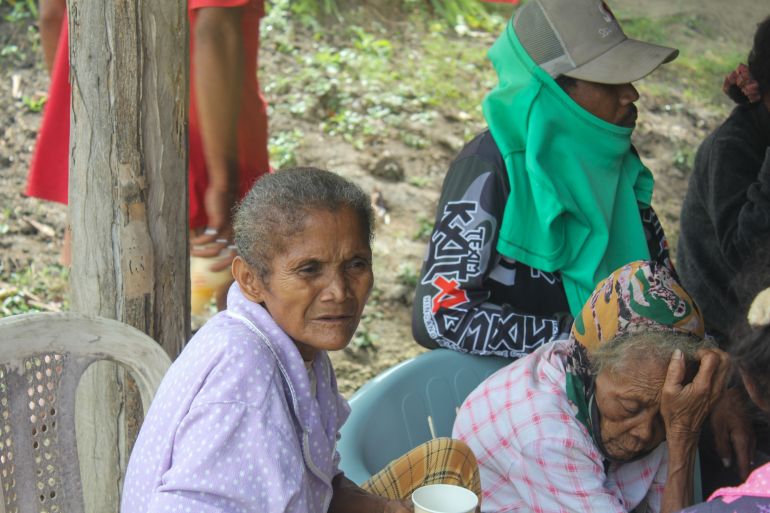
Petronila Capiz, the 60-year-old chieftain of the Aeta Hungey tribe, expressed deep concern over the developments. “We were here before the Americans, even before the Spanish,” she stated, lamenting the continuous loss of their ancestral land. Historical accounts indicate that the Aetas were dispossessed of their land when American colonisers established the Clark Air Base in the 1920s. Although the US returned ownership to the Philippine government in 1991, the Bases Conversion and Development Authority (BCDA) has since managed the area, leaving many Aetas without recognized land claims.
Today, around 20,000 Aetas are believed to inhabit the broader Clark area, scattered across 32 villages. Many fear that ongoing urban development will further displace them before they can secure legal recognition of their ancestral domain. The Aeta community is collaborating with researchers from the University of the Philippines to expedite their application for a Certificate of Ancestral Domain Title (CADT), the only legal means for asserting their rights to the territory and its resources.
The community has been actively gathering documentation to support their claim, which overlaps significantly with the land designated for the New Clark City. Capiz highlighted the implications of this development, stating, “Together, the new city and airport complex will eat up the fields where we farm, the rivers where we fish and the mountains where we get our herbs.”
Government’s Development Vision vs. Indigenous Rights
The Philippine government first announced plans for New Clark City under former President Rodrigo Duterte as a solution to the traffic crisis in Metro Manila. The BCDA promotes this development as a “green, smart and disaster-resilient metropolis.” Construction began in 2018, with plans to accommodate 1.2 million residents over a projected 30-year timeline.
BCDA President Joshua Bingcang emphasized the region’s connectivity, citing the airport, a nearby seaport, and expressways as key attractions for potential investors. While the development is presented as beneficial for the national economy, the Aeta community faces the risk of displacement. According to researchers and advocates, hundreds of Aeta families have already been forced to relocate since the project commenced, with some receiving just a week’s notice to vacate in 2019 ahead of the Southeast Asian Games.
The BCDA has offered financial compensation of $0.51 per square metre to affected families, along with resettlement options. Recently, the agency began construction on 840 housing units, but it remains unclear whether they are intended for displaced Aetas. BCDA maintains that no displacement has occurred, asserting that the Aetas lack proven legal claims to the area.
In response to queries about the situation, the BCDA stated that it respects the welfare and rights of Indigenous peoples and acknowledges their historical presence in central Luzon. It further clarified that the boundaries of Clark are based on long-established government ownership since the US military presence.
Challenges in Securing Land Rights
Despite the lengthy application process for CADTs, only a few Aeta tribes have successfully secured such titles. The application from Sapang Kawayan and neighboring villages has been pending since 1986. The head of the National Commission on Indigenous Peoples (NCIP) in Tarlac, Marcial Lengao, explained that to obtain a CADT, the Aetas must demonstrate continuous occupation of the land since before the Spanish colonization, requiring extensive genealogical records and community testimonies.
Activists criticize these requirements as excessively burdensome, arguing that the longer the Aetas remain without a CADT, the greater their vulnerability to displacement. Pia Montalban from the local rights group Karapatan-Central Luzon noted, “Without a CADT and without genuine recognition from the government, the Aetas will continue to be treated like squatters on their own land.”
The Aetas, who primarily rely on small-scale subsistence farming, are among the most historically marginalized Indigenous groups in the Philippines. Although no official data exists regarding their population, estimates suggest they number in the tens of thousands nationwide. The Aeta Tribe Foundation characterizes them as one of the poorest and least educated segments of the population.
Jeremiah Silvestre, an expert on Indigenous psychology, has worked closely with Aeta communities and described the CADT process as “unnecessarily academic.” He highlighted the challenges faced by Indigenous elders in navigating government bureaucracy, which can be exacerbated by changes in administrative personnel that restart the application process.
A recent report from the World Bank emphasizes the urgent need to recognize and protect Indigenous land rights as a critical step toward addressing poverty and conflict in the Philippines. For families in Sapang Kawayan, the absence of formal recognition raises concerns about potential displacement and homelessness.
Victor Valantin, an Indigenous Peoples Mandatory Representative for Tarlac Province, expressed fears that the territory available to the Aetas is diminishing as development projects accelerate. “We’ll have to move and move,” he said. “Shopping centres won’t move for us.” Valantin lamented the imbalance in the pace of development, stating, “BCDA projects happen so fast, but anything for us will be awfully slow.”