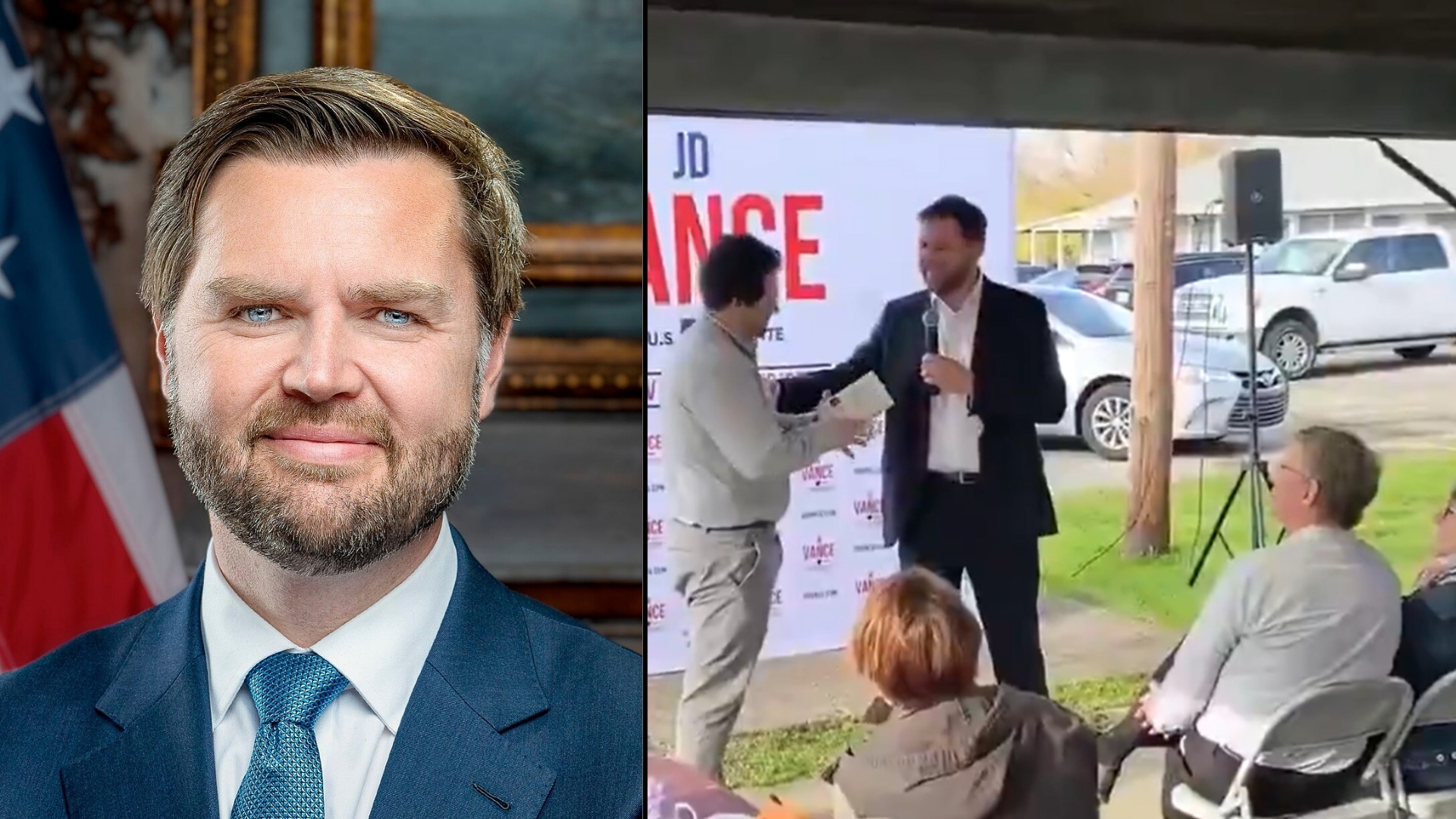
A recent public appearance by Vice President JD Vance took an unexpected turn when an audience member approached him during a speech, requesting a refund for a copy of his own book, Hillbilly Elegy. The incident, which has since gone viral, highlights the challenges public figures face when confronted with direct criticism.
The exchange unfolded when a man handed Vance a copy of Hillbilly Elegy, asking for a refund of £16.99 (approximately $20). In the video circulating on social media, Vance appeared visibly unsettled as security personnel intervened to remove the man from the venue. “I just wanted to know if I could get a refund; I didn’t like the book very much,” the individual calmly stated, as Vance struggled to respond.
This moment, initially perceived as an awkward heckling incident, was later revealed to be a political prank orchestrated by the comedy duo known as The Good Liars. The pair has made a name for themselves by infiltrating political events to elicit reactions from speakers. Their antics often involve absurd setups that challenge the reputations of political figures and their supporters.
The book at the center of this exchange is Vance’s bestselling memoir, which explores his upbringing in a working-class Appalachian family in Ohio. In it, he details his journey through poverty, family struggles, and addiction, ultimately rising to attend Yale Law School and entering politics. Critics of Hillbilly Elegy argue that it overlooks systemic issues affecting the working class.
Reactions to the incident have been mixed. Some viewers found humor in the confrontation, with comments such as, “This is very funny… all heroes don’t wear capes!” Others interpreted the prank as a reflection of Vance’s inability to handle criticism, particularly given his role as a political figure. One user remarked, “Typical politician; they love to dish it out but can’t take it.”
The video has sparked discussions about free speech and political tolerance. While Vance has been an advocate for these principles, the incident raises questions about how public figures respond to dissenting voices. One comment noted, “Escorted out for asking a question he didn’t like?” Another added, “Vance supports free speech until it hurts his feelings.”
The incident serves as a reminder of the complexities of public engagement, especially for political leaders navigating a landscape where criticism can come in unexpected forms. As social media continues to amplify such moments, the interplay between public figures and their audiences remains a critical area of discussion in contemporary politics.