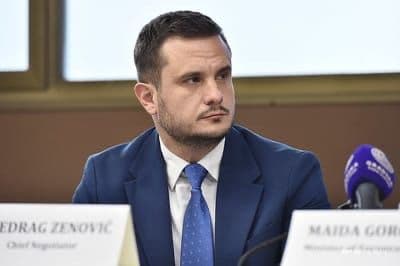
Montenegro is set to intensify its efforts to finalize its negotiations for European Union (EU) membership by the end of 2026. In an exclusive interview with Pobjeda, Montenegro’s chief negotiator with the EU, Predrag Zenović, outlined a focused strategy aimed at closing 21 chapters of the accession process, emphasizing the need for full implementation of commitments and the avoidance of any backsliding.
In the first half of 2026, the negotiating team will concentrate on chapters that are technically ready for closure while ensuring that remaining obligations are met with clearly defined deadlines and responsibilities. The challenges are expected to peak in areas deemed critical for assessing the maturity of the process, particularly in Chapter 27, which pertains to environmental protection.
Zenović highlighted that progress in the rule of law remains a fundamental indicator of the overall accession process. He noted that there is a visible balance between reforms in this domain and advancements in other chapters, evidenced by strengthening institutional capacities and tangible results in combating organized crime and high-level corruption.
To meet the ambitious goal of closing all negotiating chapters by December 2026, Zenović announced plans for “intensive and continuous work throughout the year across all chapters.” This approach will involve nearly daily communication with the European Commission and member states, ensuring that specific chapters meet the necessary final benchmarks for closure.
The chief negotiator underscored the importance of political consensus among EU member states, stating that the closure of chapters is not solely a technical matter but also a political decision requiring unanimity. Montenegro will be expected to ensure full compliance with its commitments while maintaining momentum in necessary reforms across all areas.
Cyprus and Ireland are set to preside over the EU Council in the next two semesters, and Zenović believes their experience with complex accession processes will further support Montenegro’s EU agenda. He noted that the cooperation with civil society is essential, as NGOs play a vital role in areas such as the rule of law, environmental protection, fundamental rights, and media freedoms.
The negotiations with the EU are framed as a collective societal endeavor rather than the sole responsibility of a single government or institution. Zenović emphasized that an inclusive approach helps make the results of reforms more resilient and irreversible.
Montenegro currently enjoys strong and ongoing support from several EU member states, both from its immediate region and established members. This backing manifests through political advocacy for continued and accelerated enlargement policies, alongside technical assistance and collaborative initiatives designed to strengthen Montenegro’s path toward EU membership.
Zenović remarked, “This support is not merely a gesture of solidarity but reflects the belief that an enlargement respecting rules, standards, and fundamental values makes the Union stronger.” He believes that Montenegro could become the 28th EU member by 2028, thus introducing its culture and traditions to every household across the Union.
As Montenegro enters a critical year in the accession process, the focus will be on completing chapters that are technically ready for closure and ensuring the full implementation of obligations. The goal is to demonstrate stability and consistency, essential for maintaining the strength of its European aspirations.
In summary, the upcoming year holds significant potential for Montenegro as it endeavors to finalize its EU accession talks, with a strong emphasis on strategic planning, transparency, and collaboration with civil society.