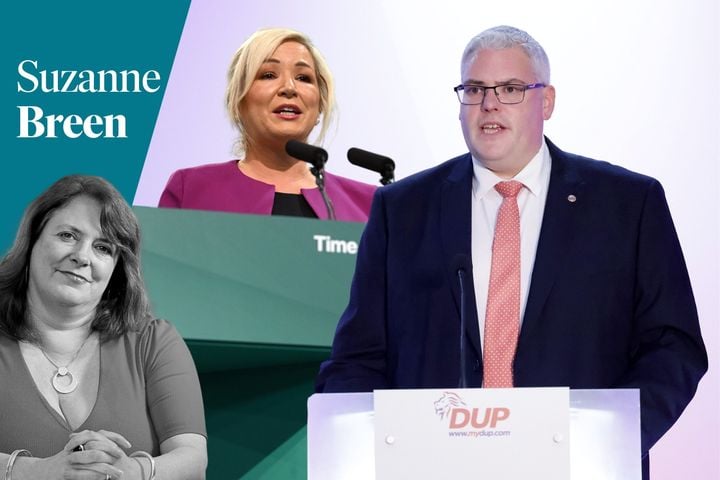
As Northern Ireland approaches the crucial elections in 2026, its political parties are facing significant challenges. Following a lackluster performance in 2025, both the Democratic Unionist Party (DUP) and Sinn Féin must elevate their strategies to regain and secure voter support. The DUP, under the leadership of Gavin Robinson, appears poised to adopt a more combative stance towards its rival, Sinn Féin, led by Michelle O’Neill.
DUP’s Strategy: A Shift in Approach
The DUP’s approach to power-sharing in the upcoming elections is likely to be one of confrontation. Robinson, who was previously viewed as a moderate, is now expected to take a firmer stance in an attempt to recover support lost to the Traditional Unionist Voice (TUV). This shift in strategy suggests that the DUP is responding to internal pressures and the need to solidify its voter base.
Robinson’s leadership will be critical as the DUP navigates the complexities of Northern Ireland’s political landscape. The party’s historical reliance on unionist support may compel it to adopt a more hardline position, particularly as rival factions gain traction. The DUP’s focus will likely center on appealing to traditional unionist voters while simultaneously countering the rising influence of TUV.
Sinn Féin’s Challenge: Grassroots Wins Needed
Meanwhile, Sinn Féin is tasked with ensuring that its electoral gains translate into meaningful support at the grassroots level. O’Neill’s leadership will be pivotal in maintaining momentum following the party’s successes in recent elections. The challenge for Sinn Féin lies in not only consolidating its existing base but also in reaching out to undecided voters who may be swayed by the DUP’s renewed aggression.
The party’s ability to secure wins in local elections will be crucial for its long-term strategy. Sinn Féin must demonstrate that it can effectively address the concerns of its constituents, thereby reinforcing its position as a viable governing party in Northern Ireland.
As both parties prepare for the 2026 elections, the political dynamics in Northern Ireland remain fluid. With the DUP and Sinn Féin both seeking to solidify their standings, the coming months will be critical in shaping the future of the region’s political landscape.
In summary, the upcoming elections are not merely a test of political strategy but also a reflection of the evolving sentiments among voters in Northern Ireland. Both the DUP and Sinn Féin must adapt to the shifting political currents to ensure their relevance and effectiveness in the years to come.