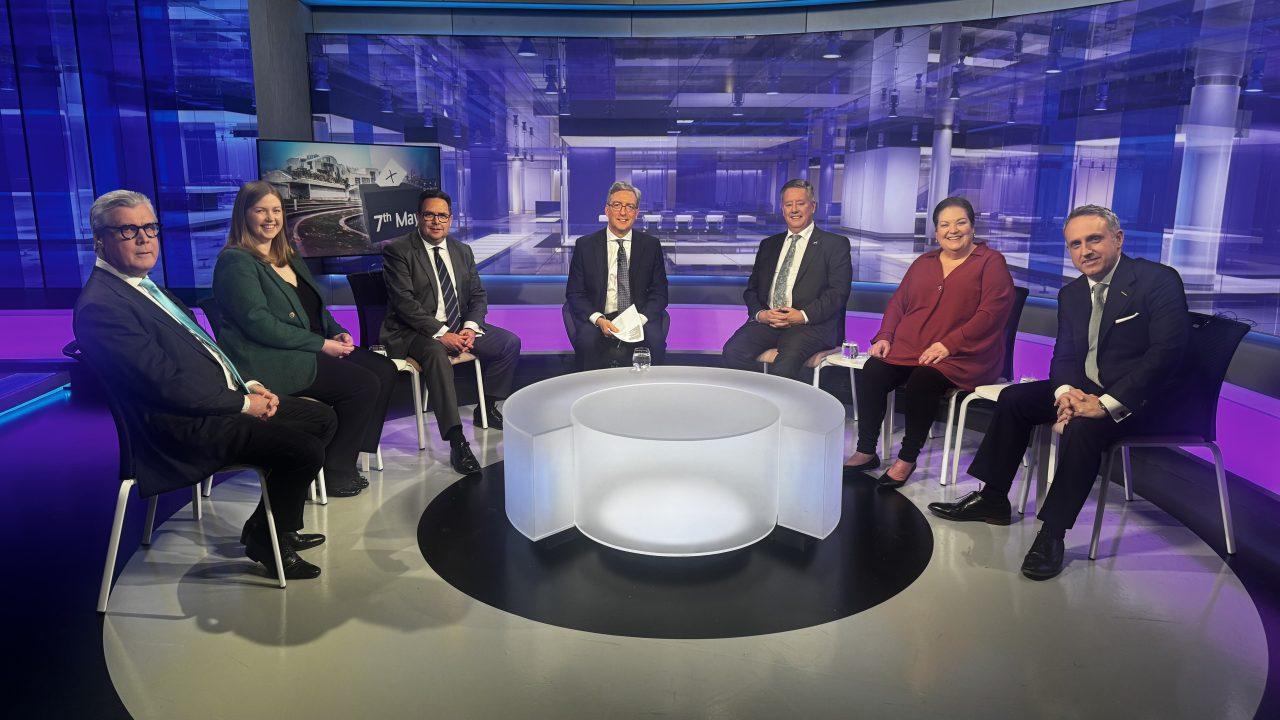
Senior representatives from six major political parties in Scotland faced off in a live debate on *Scotland Tonight*, addressing key issues ahead of the upcoming Holyrood elections scheduled for May. The discussion, moderated by STV’s political editor Colin MacKay, featured leaders from the SNP (Scottish National Party), Scottish Conservatives, Scottish Labour, Scottish Greens, Scottish Liberal Democrats, and Reform UK. Topics ranged from immigration to the cost of living and Scotland’s constitutional future.
During the debate, Keith Brown, deputy leader of the SNP, emphasized his party’s commitment to achieving a “fresh start for Scotland” through independence and rejoining the European Union. He underscored the significance of securing a majority of Holyrood seats—specifically, 65—as a mandate for a second independence referendum. Brown stated, “It happened before, it sets a precedent, of course it can happen… I can see nothing but a positive future for Scotland.”
In contrast, Jackie Baillie, deputy leader of the Scottish Labour party, argued that the electorate’s focus is on pressing issues such as health services and education rather than another referendum. “After 20 years of the SNP, people do not want another referendum,” she asserted. Baillie further highlighted that polls consistently show independence ranks low among public priorities.
The debate turned to the environment, with Gillian Mackay, co-leader of the Scottish Greens, who advocated for affordable childcare and addressing the climate crisis. Mackay, who previously voted against independence in 2014, expressed a shift in perspective, contending that many voters—including younger citizens—deserve another chance to voice their opinions on independence. She commented, “We were promised big things and we ended up with Brexit and Boris. We’re in a different place now.”
Amid discussions of independence, Alex Cole-Hamilton, leader of the Scottish Liberal Democrats, maintained that another referendum would not solve Scotland’s pressing problems. “The answers to Scotland’s problems are not to be found in another referendum,” he stated, pointing to issues like healthcare access and the rising cost of living as immediate concerns.
Immigration also emerged as a contentious topic. Lord Malcolm Offord, who recently switched to Reform UK from the Conservatives, defended his party’s stance on immigration, stating it reflects a genuine sentiment within certain communities that feel strained by current policies. “Reform is reflecting a movement, particularly in our more disadvantaged communities,” he explained.
On the other hand, Craig Hoy, representing the Scottish Conservatives, asserted that his party had not been “outpromised” on immigration policy. He emphasized the need for a reasoned debate and practical solutions, rejecting what he termed “back of a fag packet solutions” proposed by Reform UK.
The discussion further delved into Scotland’s economy, with the Greens’ Mackay advocating for a fairer taxation system to support public services. She argued, “It’s right that the wealthy pay what they should so we can have those good public services.” In contrast, Offord criticized the Scottish Parliament for its focus on constitutional debates over economic growth.
As the political landscape shifts in the lead-up to the elections, the debate highlighted the diverse perspectives and priorities of Scotland’s political parties. Voters will have the opportunity to determine which issues resonate most as they head to the polls in May. The full debate can be viewed on the STV Player.