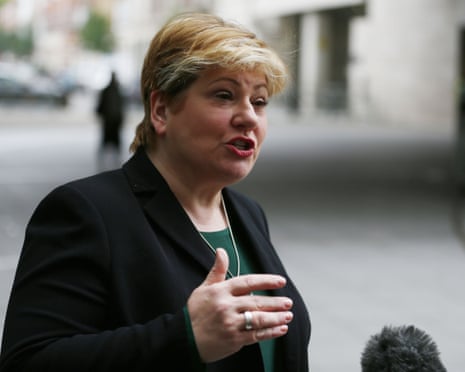
The UK government has come under fire for its handling of the case involving activist Alaa Abd el-Fattah, with calls for accountability following the recent controversies surrounding his return to the country. Emily Thornberry, chair of the Commons foreign affairs committee, criticized the “embarrassing failures” in managing Abd el-Fattah’s situation, suggesting that the government could have prevented such issues by appointing a special envoy for complex cases involving Britons detained abroad.
Thornberry highlighted the “serious shortcomings” in information sharing that have emerged during this case. In a letter to Yvette Cooper, the current Foreign Secretary, she stated, “Had an envoy been established [in 2024], it is clear to me that such embarrassing failures of due diligence and information sharing would have been avoided.” She emphasized that a dedicated official could have conducted necessary background checks and social media reviews to mitigate the fallout.
Abd el-Fattah, who arrived back in the UK on Boxing Day after being pardoned and released from prison in Egypt, has recently faced backlash due to inflammatory social media comments he made over a decade ago. The activist, granted British citizenship in 2021 during Boris Johnson‘s tenure as Prime Minister, has been a focal point of UK government efforts advocating for his release from Egyptian imprisonment.
The situation escalated when past tweets from Abd el-Fattah surfaced, including statements that referred to violence against various groups and derogatory remarks about British citizens. Following the re-emergence of these comments, Prime Minister Keir Starmer, who initially expressed happiness over Abd el-Fattah’s return, condemned the tweets, stating he was unaware of their existence prior to their recent exposure.
Political tension has intensified, with members of the Conservative Party and Reform UK suggesting that Abd el-Fattah should be deported and his British citizenship revoked. Robert Jenrick, the Shadow Home Secretary, has been particularly vocal in these calls, citing social media posts from Abd el-Fattah’s sister, Mona Seif. In these posts, she praised the “imagination” of Hamas in its recent attacks on Israel, further complicating the narrative surrounding Abd el-Fattah’s case.
In light of these events, Cooper has initiated a review into the “serious information failures” that have characterized the handling of Abd el-Fattah’s situation. Government sources have indicated that the Home Office is unlikely to revoke his citizenship, as his past social media activity does not meet the legal threshold for such a measure. Human rights advocates have voiced concerns, labeling any potential citizenship revocation as an “extremely authoritarian step.”
As the government navigates the fallout from this case, it faces scrutiny on multiple fronts regarding its foreign policy and domestic approaches to handling complex detention scenarios involving its citizens abroad. The ongoing discussions highlight the delicate balance between national security concerns and the protection of individual rights.