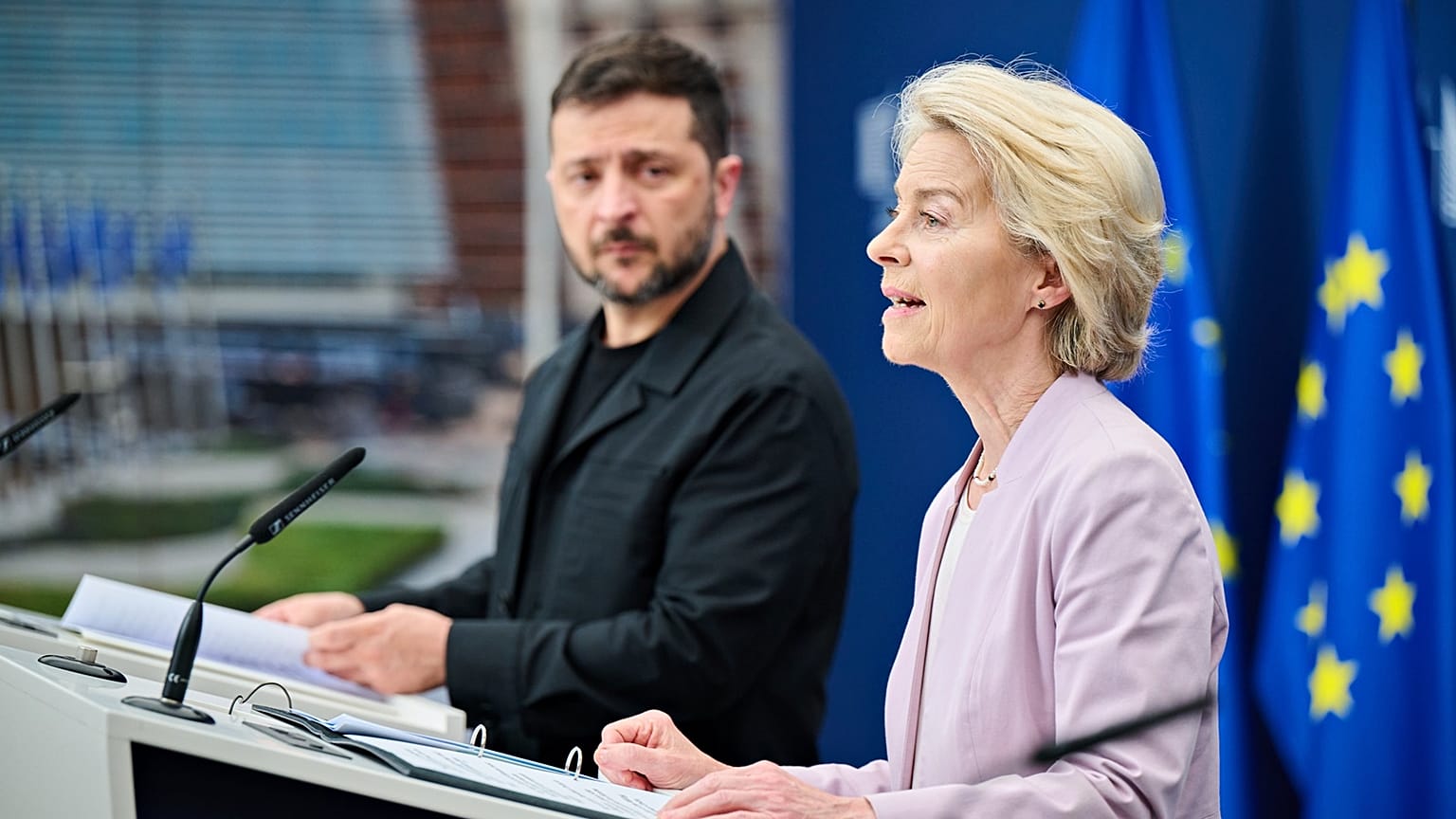
European Commission President Ursula von der Leyen has urged European Union member states to reach a consensus on funding Ukraine’s substantial budget deficit of €135.7 billion for the years 2026 and 2027. This plea comes as EU leaders prepare for a crucial summit in December, where the future of financial support for Ukraine will be a central topic.
In a letter addressed to the leaders of the 27 EU countries, von der Leyen emphasized the urgency of establishing a clear commitment to address Ukraine’s military and financial needs. The funding request includes €83.4 billion earmarked for Ukraine’s military forces and €55.2 billion aimed at stabilizing the economy and addressing the budget deficit. These figures are based on projections from the International Monetary Fund (IMF) and Ukrainian authorities, under the assumption that the ongoing conflict with Russia will conclude by late 2026, though this remains uncertain.
Funding Challenges and Options
Von der Leyen’s letter highlights the challenges that lie ahead. “Clearly, there are no easy options,” she wrote, stressing that Europe cannot afford to be paralyzed by hesitation or the search for unattainable solutions. She outlined three possible avenues for financing Ukraine’s needs.
The first two options involve increasing the fiscal burden on member states. This could be accomplished through direct cash contributions from individual countries or by raising new funds in the financial markets. The third option proposes utilizing a reparations loan, which would avoid adding to national debt or new expenses. This approach would rely on cash balances from the frozen assets of the Russian Central Bank, primarily held at Euroclear, a central securities depository located in Brussels.
Belgium has emerged as a key player in these discussions. The country is cautious and demands full legal assurances regarding its involvement, particularly to protect itself from potential retaliatory actions from Russia if disputes over the funds arise. Last Friday, von der Leyen met with Bart De Wever, the Prime Minister of Belgium, to further negotiations, which have so far made limited progress.
Looking Ahead to December
As EU leaders prepare for the summit in December, the stakes are high. The potential consequences of failing to secure funding could have significant implications for Ukraine’s ongoing defense efforts and economic recovery. Von der Leyen has reiterated the importance of reaching an agreement swiftly, as time is of the essence.
The forthcoming discussions will not only address the immediate funding needs of Ukraine but will also set the tone for the EU’s long-term commitment to supporting the country amid one of the most significant crises in recent European history. The pressure is mounting, and EU member states must navigate complex financial and political landscapes to ensure that the necessary support for Ukraine is delivered effectively.