
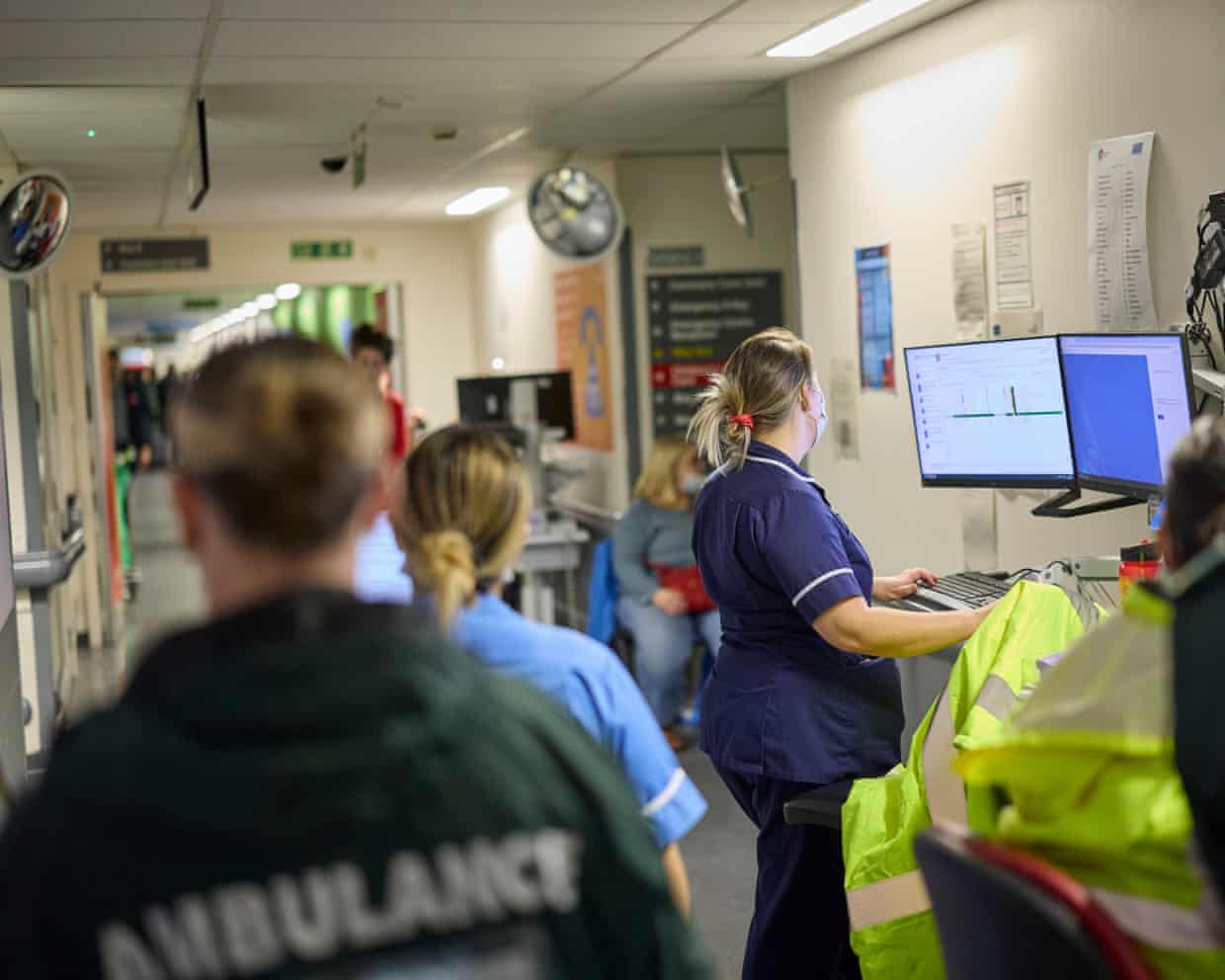
Hospitals across England are implementing artificial intelligence to address the ongoing challenge of lengthy waiting times in emergency departments this winter. The newly introduced A&E forecasting tool predicts peak demand periods, enabling healthcare trusts to optimize staffing and bed availability. This predictive algorithm utilizes historical data, including trends related to weather, school holidays, and illness rates for flu and Covid-19, to forecast how many patients are likely to visit Accident & Emergency (A&E) departments.
The government has emphasized that this technology allows healthcare professionals to focus on patient care rather than administrative tasks. Ian Murray, the Minister for Digital Government and Data, stated, “The front door of the NHS is the A&E department. You’ve no idea how many people will come through the door… unless you have a heatwave, of course.” He highlighted that the forecasting tool helps hospitals prepare for busy periods by analyzing seasonal trends and specific busy days.
By understanding potential patient inflow, hospitals can strategically assign more consultants and nursing staff to the departments likely to experience the highest demand. This proactive approach also allows for better management of hospital beds, facilitating quicker discharges and freeing up capacity for incoming patients. Murray noted that some trusts are already reporting positive outcomes, asserting that “we are seeing great results” from the implementation of this technology.
The A&E forecasting tool is accessible to all NHS trusts in England, with approximately 50 NHS organizations currently utilizing it. The initiative is part of Keir Starmer’s AI Exemplars programme, which aims to integrate advanced technology into public services. In a statement made in January, the Prime Minister remarked that artificial intelligence would “drive incredible change in our country,” underscoring the government’s commitment to modernizing healthcare.
Prof Julian Redhead, the National Clinical Director for Urgent and Emergency Care at NHS England, emphasized the significance of early and effective planning during peak periods. He remarked, “New tech like the AI tool has the potential to make a real difference to the way we manage care for patients.” This initiative reflects a growing trend in the healthcare sector to leverage technology to enhance operational efficiency and improve patient outcomes.
As hospitals brace for a challenging winter, the integration of AI in managing A&E services represents a crucial step towards improving healthcare delivery in England. By harnessing data-driven insights, the NHS aims not only to alleviate pressure on emergency services but also to ensure a higher standard of care for patients in need of urgent medical attention.


