A significant astronomical event is unfolding as the interstellar object known as 3I/ATLAS approaches a powerful coronal mass ejection from the Sun. Discovered on July 1, 2025, by the ATLAS survey in Chile, this is only the third observed interstellar object to enter our solar system. The anticipated collision, which occurred during the object’s closest approach to the Sun on October 29, 2025, offers a rare opportunity for scientists to study how an alien body interacts with solar activity.
The collision between 3I/ATLAS and the Sun’s plasma cloud presents a unique scientific opportunity. As the coronal mass ejection—a massive burst of solar wind and magnetic fields—collides with the object, researchers are eager to see how it will respond. This interaction could lead to observable changes in the object’s structure, such as the formation or alteration of a tail of gas and dust, known as a coma.
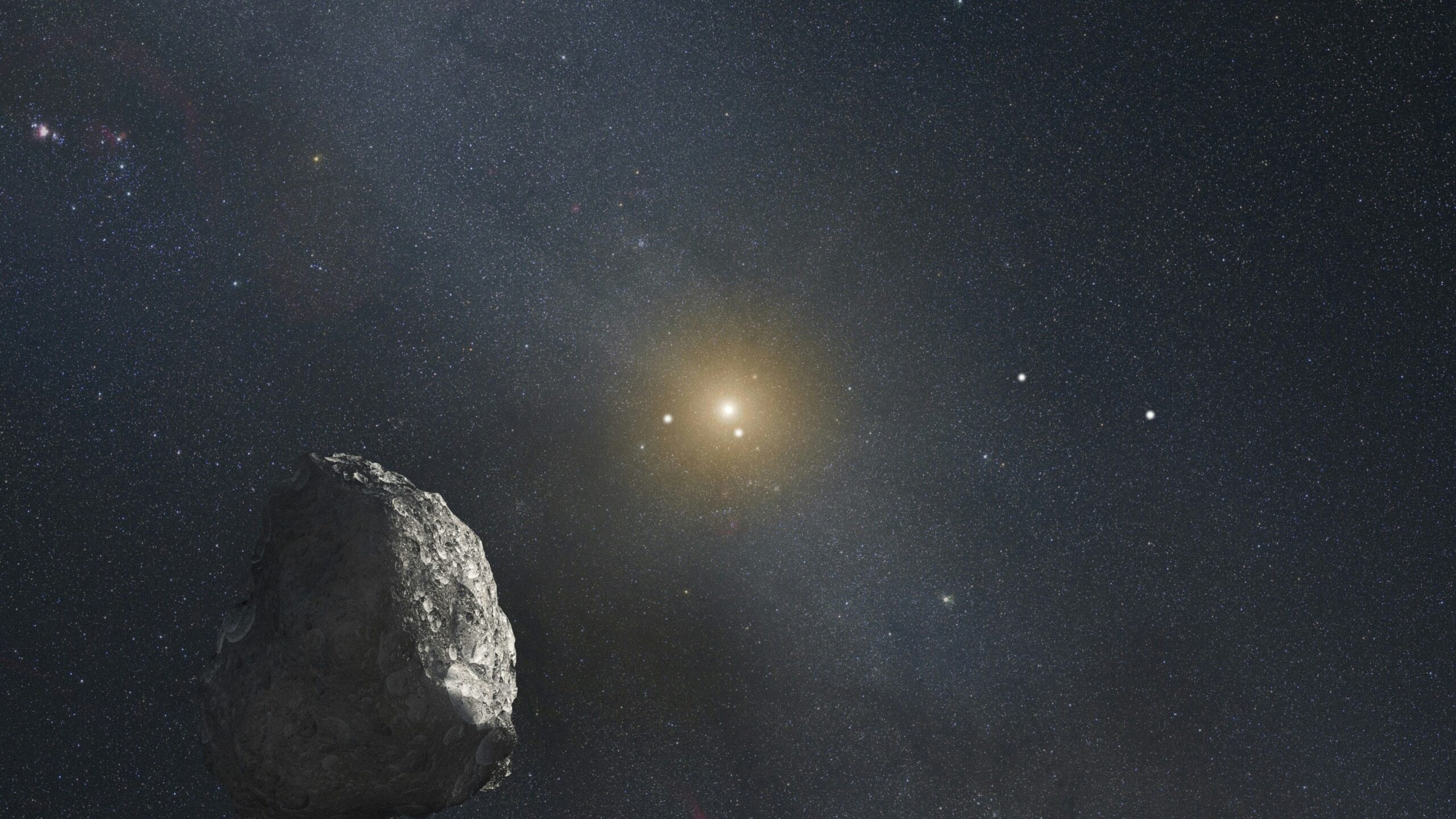
Previous encounters have provided insights into similar interactions. In April 2007, an asteroid from within our solar system experienced a comparable event when it interacted with solar material. The NASA STEREO A spacecraft captured the moment when the asteroid briefly lost its tail due to the solar blast, although it quickly reformed. In contrast, 3I/ATLAS is not a familiar asteroid; it is an interstellar object with a mass estimated at around 33 billion tons and a nucleus measuring between 440 meters and 5.6 kilometers in diameter.
Recent observations from the James Webb Space Telescope and the Hubble Space Telescope have confirmed that 3I/ATLAS is an active comet with an unusual composition that appears to be rich in nickel. This raises questions about its origins and structure. The object’s size and chemical makeup suggest that its response to the solar event could yield unexpected results, prompting speculation about whether it will withstand the blast or shed its outer layers.
As 3I/ATLAS approaches Mars, more powerful telescopes will be able to provide clearer observations. The Virtual Telescope Project is set to livestream views of the object on November 16, 2025, allowing astronomers to capture the aftermath of the solar interaction and further analyze its characteristics.
The scientific community is also engaged in a debate about the nature of this interstellar object. Harvard astronomer Avi Loeb has put forth a provocative theory, suggesting that the object could be an alien craft due to its unusual speed of 137,000 miles per hour and its peculiar shape, which includes jets of material pointing toward the Sun. While this hypothesis has garnered attention, it has been met with skepticism from others in the field, including NASA.
Adding to the intrigue, astronomers using the MeerKAT radio telescope in South Africa recently detected a faint radio signal from 3I/ATLAS. This signal, identified as the chemical signature of hydroxyl radicals, is indicative of water vapor and suggests that the object is outgassing as it is heated by the Sun. This natural explanation aligns with the understanding that 3I/ATLAS is likely a comet rather than an artificial construct.
As the data from the solar blast continues to be analyzed, astronomers are poised to either confirm the natural origins of 3I/ATLAS or uncover new anomalies that could keep the debate about its true nature alive. The scientific community watches closely, waiting for insights that could reshape our understanding of interstellar objects and their interactions within our solar system.