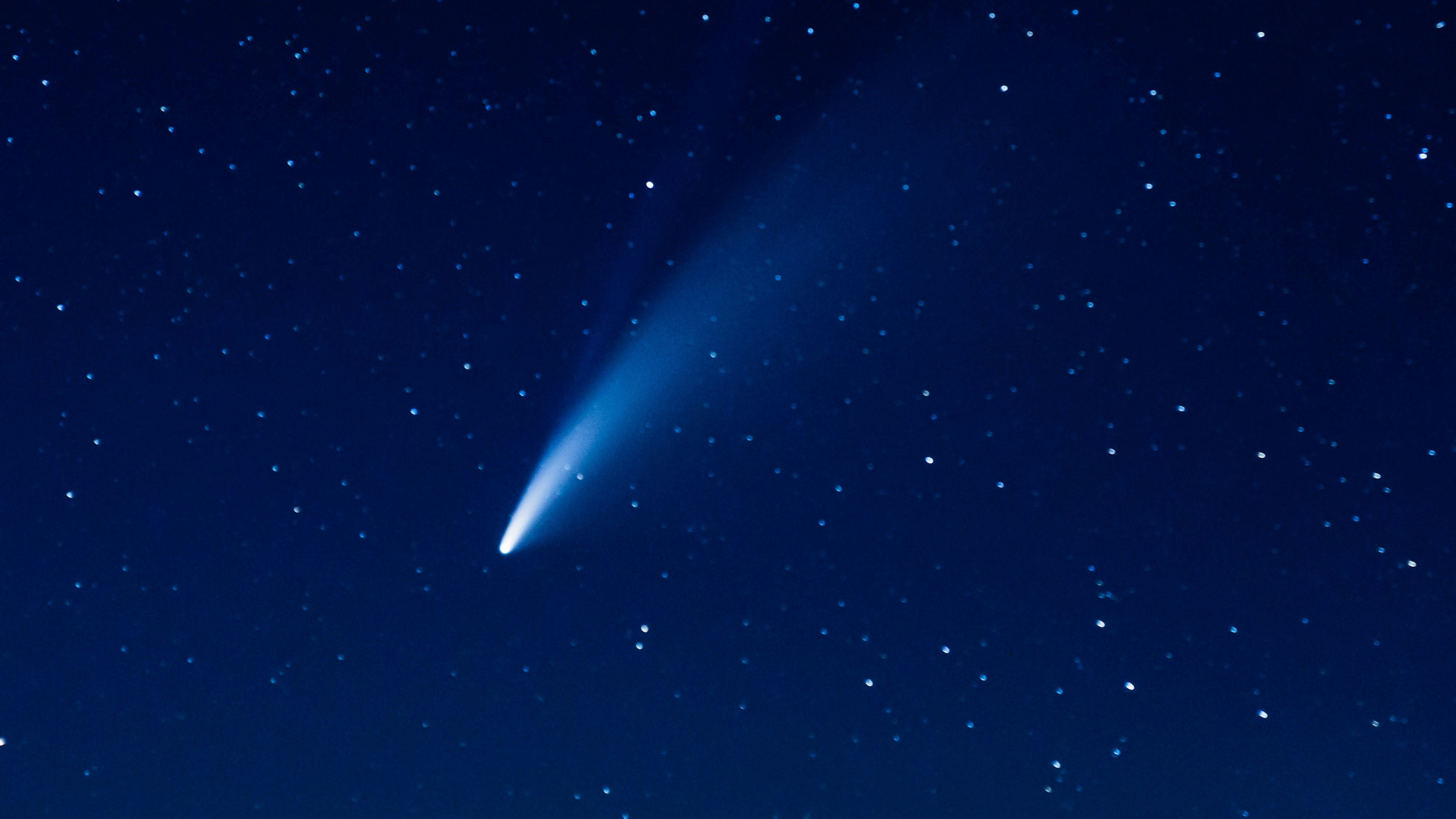
A significant astronomical event is unfolding as the interstellar object 3I/ATLAS becomes visible from Earth after a period obscured by the Sun’s brightness. Tonight, the object re-emerges, allowing both professional astronomers and amateur enthusiasts to observe it in a continuous monitoring effort. This event marks a unique opportunity for scientists to collect comprehensive data on 3I/ATLAS as Earth rotates, facilitating a collaborative global observation campaign.
With a magnitude of +10.9, 3I/ATLAS is currently located just above the eastern horizon in the constellation Virgo. While it remains invisible to the naked eye, small amateur telescopes can capture its soft glow against the backdrop of sharp stars. Observers are encouraged to use modest magnification and longer exposure times to reveal the comet’s delicate ion tail. As it moves further from the Sun, visibility is expected to improve, providing a chance for detailed analysis.
Global Collaborative Effort Begins
The Virtual Telescope Project, based in Manciano, Italy, will spearhead the observation efforts with a public livestream starting at 11:15 p.m. ET on November 16 (04:15 GMT on November 17). This live broadcast aims to provide real-time visuals of 3I/ATLAS as it accelerates away from the Sun. Gianluca Masi, founder of the Virtual Telescope Project, emphasized the importance of this moment, stating, “3I/ATLAS has now cleared the solar glare, and we are once again able to observe it from Earth. This is the moment astronomers have been waiting for.”
The current observation window is critical, as 3I/ATLAS is expected to make its closest approach to Earth on December 19, 2023. This timeframe offers a rare opportunity for researchers to gather a continuous series of data, documenting changes in brightness, tail morphology, thermal emission, and potential fragmentation. Previous interstellar visitors, such as ʻOumuamua and 2I/Borisov, have presented challenges regarding their origins, and 3I/ATLAS is already revealing complexities, particularly in its tail direction and luminosity.
Astronomers will utilize a combination of stacked exposures and long integrations to refine their understanding of this interstellar object. The stakes are high, as the resulting data could significantly enhance planetary defense strategies and provide deeper insights into the nature of such celestial phenomena.
Amateur Observers Play Key Role
The collaborative nature of this event highlights the importance of amateur astronomers in the observation process. As telescopes across Europe, North America, South America, Asia, and Australia share their findings, a continuous flow of data is anticipated. Amateur observers are crucial in this effort, contributing sharp images, meticulous logs, and timely uploads to assist professional researchers in filling gaps in data.
As 3I/ATLAS continues its journey through the solar system, the astronomical community is poised to document one of the most extensively recorded interstellar events to date. The combination of professional and amateur efforts promises to yield valuable insights into the behavior and characteristics of 3I/ATLAS, enhancing our understanding of interstellar visitors and their impact on our solar system.