Researchers at the Max Planck Institute for Extraterrestrial Physics (MPE) and their colleagues from the Centro de Astrobiología (CAB) have made a significant discovery in the field of astrophysics. They have identified the largest sulfur-bearing molecule ever found in space, known as 2,5-cyclohexadiene-1-thione (C6H6S). This groundbreaking finding was achieved through a combination of laboratory experiments and astronomical observations.
The molecule is located in the molecular cloud designated as G+0.693–0.027, situated approximately 27,000 light-years from Earth, near the center of the Milky Way galaxy. The discovery adds to the growing body of knowledge regarding the complex chemistry that occurs in space.
Implications for Astrobiology and Chemistry
The identification of C6H6S not only highlights the diverse molecular compositions present in interstellar environments but also opens new avenues for research in astrobiology. Understanding sulfur-containing compounds can provide insight into the chemical processes that may lead to the formation of life in the universe.
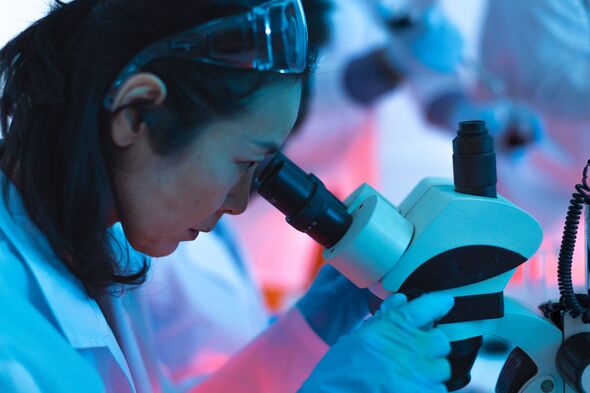
Laboratory experiments conducted at MPE simulated conditions found in space, allowing researchers to analyze how these molecules could form under such extreme environments. Combined with observational data from powerful telescopes, the team was able to confirm the presence of this molecule in the molecular cloud, marking a significant step in the exploration of cosmic chemistry.
The findings, published in March 2024, are expected to inspire further studies into the role of sulfur in space, particularly in relation to the organic chemistry that may be essential for life on other planets.
Future Research Directions
This discovery prompts future investigations into other complex molecules that may exist in similar environments. As researchers continue to explore the vastness of space, the presence of such sulfur-bearing compounds could lead to an enhanced understanding of planetary formation and the potential for life beyond Earth.
The collaboration between MPE and CAB exemplifies the importance of interdisciplinary approaches in scientific research. By merging experimental techniques with observational astronomy, scientists are better equipped to unravel the mysteries of the universe.
In summary, the identification of the largest sulfur-bearing molecule, C6H6S, represents a pivotal moment in astrophysics and astrobiology, shedding light on the intricate chemical processes that may ultimately contribute to the emergence of life in the cosmos.