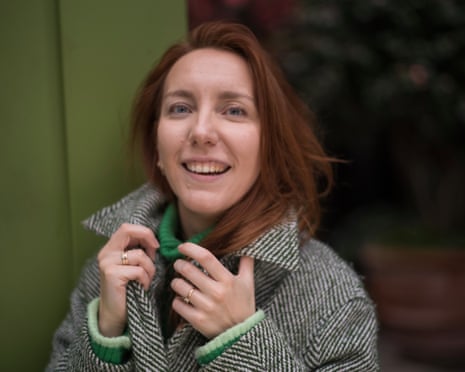
In her new book, Dr. Bot: Why Doctors Can Fail Us – and How AI Could Save Our Lives, health researcher Charlotte Blease examines the potential of artificial intelligence (AI) to enhance healthcare delivery. Blease, who hails from East Belfast, argues that the limitations of human clinicians can lead to serious consequences, including misdiagnoses that result in hundreds of thousands of deaths annually in Western countries.
Addressing Human Limitations in Medicine
Blease emphasizes that doctors are not infallible. “Doctors aren’t gods, they can’t do it all,” she points out. This acknowledgment is pivotal as she investigates the pressures faced by medical professionals, including the overwhelming amount of information they must process and the increasing demands of patient care. “Our brains weren’t designed for this level of multitasking and information overload,” she states, highlighting that even the best-funded healthcare systems encounter biological limits.
With a background as a former lecturer at Queen’s University Belfast, Blease currently serves as an associate professor at Uppsala University in Sweden and is involved with the Digital Psychiatry Program at Beth Israel Deaconess Medical Center at Harvard Medical School. Her research delves into the biases that can affect clinical decisions, such as those based on race, gender, and socioeconomic status. “Doctors, like everyone else, are also susceptible to bias,” she notes.
This book is not an indictment of doctors, Blease stresses, but rather a call to prioritize patient care. “It’s about what’s the best thing for patient care,” she asserts. This perspective is particularly relevant in the context of the rising popularity of AI tools, which have reignited discussions around the reliability of online medical information.
AI Tools and Patient Engagement
The emergence of generative AI tools, such as ChatGPT, has sparked renewed debate on how patients engage with medical information. Blease observes that while some doctors express disdain towards patients using AI for symptom analysis, many are using these tools themselves. “There’s a degree of hypocrisy,” she remarks. “That’s quite paternalistic.”
As patients increasingly turn to AI chatbots for symptom discussions, especially in areas like Northern Ireland where healthcare access can be challenging, Blease sees this as a rational response to systemic inefficiencies. “Seeing a doctor takes effort, often two hours out of your day for a 20-minute appointment,” she explains. “AI, by contrast, is immediate and conversational.”
Although AI tools can make errors, Blease argues that the key question is who makes fewer mistakes. “These tools are getting better and better, and ultimately they’re going to make fewer mistakes than human doctors would,” she asserts. The need for better patient outcomes, she believes, should take precedence over concerns about job security for medical professionals.
Her personal experiences have shaped her understanding of the healthcare system’s failings. Blease recounts the challenges faced by her family members, including her late father, who suffered from dementia. She describes the emotional distress caused by unnecessary trips to emergency departments, suggesting that smarter AI-driven triage systems could alleviate such pressures.
AI is already proving beneficial in areas like breast cancer screening, where studies in Sweden have shown improvements in early detection rates and reduced clinician workloads. Blease highlights the use of “ambient scribes” in general practice, which automatically generate consultation notes, thereby freeing doctors from burdensome administrative tasks and reducing the risk of errors.
In what may be a controversial assertion, Blease claims that AI might even rival human clinicians in perceived empathy. Studies suggest that AI-generated responses are sometimes rated as more empathetic than those produced by doctors. “Nobody goes through 10 years of medical school to become an empathiser,” she argues, challenging the notion that empathy is solely the domain of healthcare professionals.
Looking Ahead: Ethical Considerations and Future of AI in Healthcare
Blease acknowledges the profound ethical questions surrounding AI in healthcare, such as data privacy, clinical accountability, and algorithmic bias. “These are messy conversations,” she notes. While she recognizes that we are not yet at a tipping point, she believes that the adoption of these technologies is inevitable. “Technology won’t go away. People are adopting it,” she states.
Her primary message is clear: improving patient care should be the focus, irrespective of the emotional responses of healthcare providers. “You’ve got to talk about patient outcomes, not about hurting doctors’ feelings,” she insists. With the reality of misdiagnoses affecting many individuals, Blease advocates for open discussions about these challenges.
Dr. Bot: Why Doctors Can Fail Us – and How AI Could Save Our Lives is published by Yale Books and is now available for readers seeking insight into the intersection of AI and healthcare.